



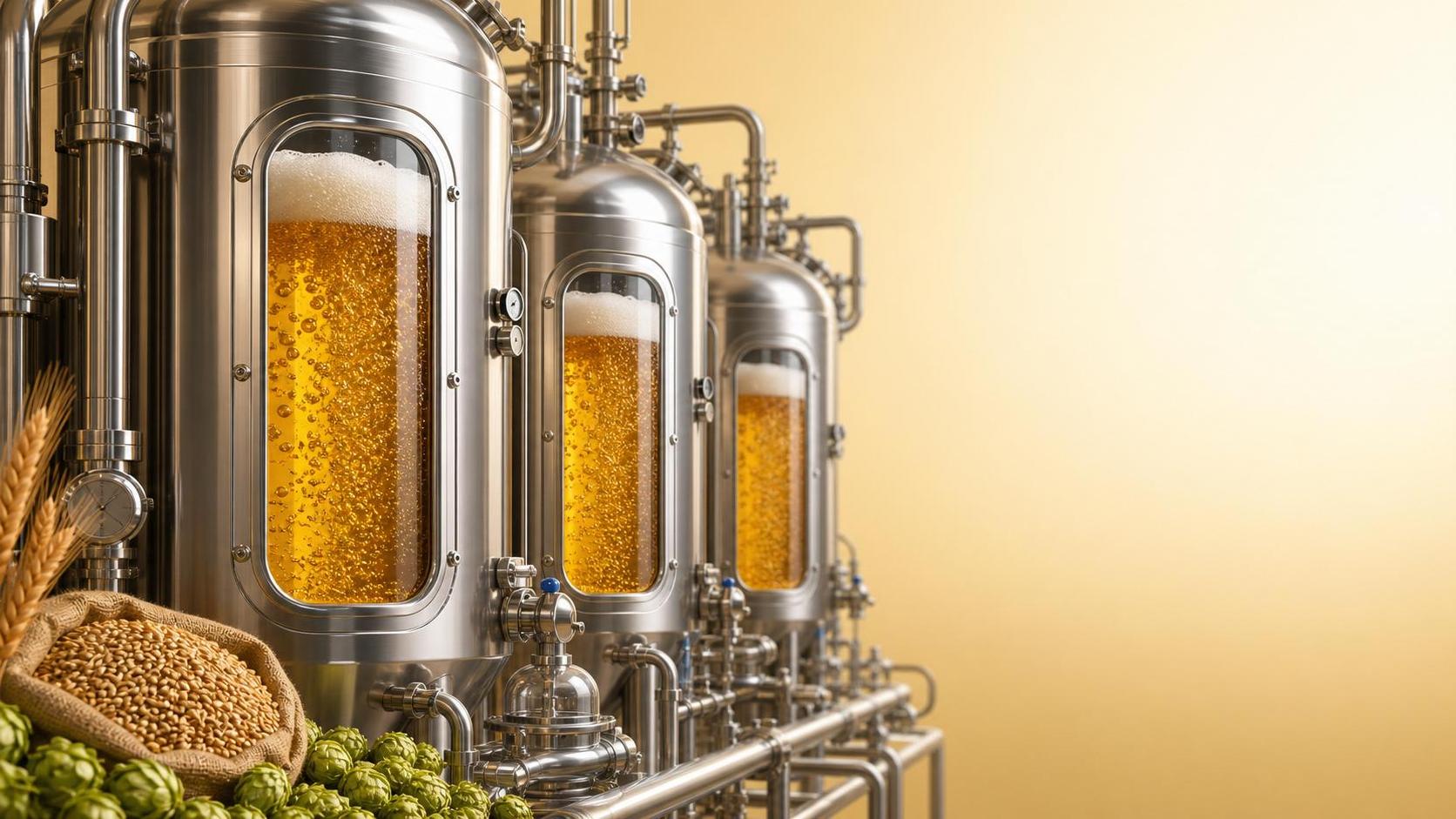
High-Gravity Lager Fermentation: What Affects Yield and Flavor
High-gravity lager fermentation is widely used to raise brewhouse capacity and reduce unit cost.
Yet stronger wort does not automatically deliver better economics.
Yield gains can disappear when yeast stress, incomplete attenuation, or flavor imbalance starts to build.
That is why high-gravity lager performance should be judged through both output and sensory stability.
In practical evaluation, the real question is simple.
Can the process produce more saleable beer without diluting lager character or increasing correction work later?
The answer depends on raw material quality, oxygen delivery, yeast health, fermentation control, and post-fermentation handling.
When these variables are aligned, high-gravity lager can support consistent output and scalable commercial production.
Why Gravity Level Changes the Fermentation Balance
High-gravity lager starts with wort above standard fermentation strength, then reaches target alcohol after controlled dilution or blending.
This approach improves tank utilization, energy efficiency, and packaging flexibility.
However, increasing original extract also raises osmotic pressure on yeast.
Sugar concentration, alcohol buildup, and dissolved solids all make metabolism more demanding.
A modest gravity increase may still behave like normal lager production.
A more aggressive increase often exposes weaknesses in oxygenation, nutrient supply, and yeast handling.
This is where technical review becomes more meaningful than simple extract calculations.
The key is not the highest gravity possible, but the highest gravity that remains repeatable across batches.
Typical effects of higher gravity
- Slower yeast growth during the early phase.
- Greater risk of stuck or sluggish fermentation.
- Higher formation of esters and higher alcohols.
- Reduced foam stability if protein balance is poor.
- More sensitivity to dilution water quality later.
Raw Materials Set the Ceiling for Yield and Flavor
High-gravity lager cannot outperform weak raw materials.
Malt selection influences fermentability, nitrogen profile, and flavor neutrality.
For clean lager styles, highly modified malt can improve conversion, but it must not create thin body after dilution.
Adjunct use can reduce cost and support lighter sensory results.
Still, heavy adjunct loading may lower free amino nitrogen and weaken yeast performance.
Hop choice matters as well.
Bitterness in high-gravity lager should remain firm enough to survive dilution, yet smooth enough to avoid harsh finish.
Water chemistry is another overlooked variable, especially when final blending water reshapes bitterness, pH, and mouthfeel.
What to verify in raw material review
- Wort fermentability and attenuation potential.
- Free amino nitrogen adequacy for the selected yeast strain.
- Protein balance for foam and palate retention.
- Hop utilization under concentrated boil conditions.
- Microbiological stability of dilution water.
Yeast Health Is the Core Variable in High-Gravity Lager
If one factor dominates high-gravity lager outcomes, it is yeast condition.
A healthy lager strain can tolerate stronger wort and still finish clean.
A stressed culture quickly shifts from efficient fermentation to flavor drift and variable yield.
Pitch rate must usually be higher than for standard-gravity brewing.
That adjustment helps reduce growth pressure and shortens the vulnerable lag phase.
Yeast age, storage time, and cropping practice also deserve close attention.
Repeated repitching under high-gravity lager conditions can gradually reduce vitality, even when viability still looks acceptable.
That gap between viability and vitality often explains why some breweries see normal cell counts but weaker attenuation.
Warning signs of yeast stress
- Delayed gravity drop after pitching.
- Elevated diacetyl or sulfur persistence.
- Unexpected ester rise in a clean lager profile.
- Higher terminal gravity than process target.
- Poor flocculation consistency between batches.
Oxygenation and Nutrient Balance Directly Affect Fermentation Yield
High-gravity lager needs more precise oxygen management than standard lager.
Yeast requires oxygen to build sterols and maintain membrane function during early fermentation.
When dissolved oxygen is too low, cells struggle to reproduce and tolerate rising alcohol.
When oxygen is excessive or unevenly delivered, oxidative risks and process inconsistency can grow.
Nutrient balance works the same way.
Free amino nitrogen, zinc, and trace minerals support enzyme activity and cleaner fermentation behavior.
From a technical standpoint, oxygen and nutrients should be assessed together, not as separate corrections.
A weak nutrient profile can make proper oxygenation look ineffective, even when oxygen dosing is accurate.
Temperature Control Shapes Both Flavor and Consistency
Temperature strategy is often where high-gravity lager succeeds or fails in sensory terms.
Lower fermentation temperatures help maintain clean lager character.
But temperatures that are too low can slow metabolism and extend tank residence unnecessarily.
A controlled rise later in fermentation often improves diacetyl reduction and finishing behavior.
The best profile depends on strain, gravity, and tank geometry.
More importantly, the profile must be reproducible under full production load.
Uneven cooling or delayed heat removal can push ester formation higher than expected in high-gravity lager batches.
Operational checkpoints
- Confirm actual tank temperature, not only jacket setpoint.
- Track heat generation during peak extract consumption.
- Use a defined diacetyl rest trigger.
- Compare flavor data across different fill volumes.
Dilution, Maturation, and Packaging Decide Final Perceived Quality
High-gravity lager is not finished when primary fermentation ends.
Final quality depends heavily on dilution control, maturation time, and oxygen pickup management.
Dilution water must match microbiological and mineral standards.
Otherwise, bitterness can flatten, body can thin, and shelf life can shorten.
Maturation also deserves a realistic schedule.
Concentrated fermentation may save tank days upfront, but flavor cleanup still requires time.
At packaging, dissolved oxygen should remain tightly controlled because high-gravity lager can show staling faster after dilution.
A technically efficient brew loses value quickly if packaged flavor stability is weak.
How to Evaluate Commercial Viability of High-Gravity Lager
A useful assessment combines process data with sensory and business outcomes.
Higher extract throughput alone is not enough.
Commercially sound high-gravity lager should reduce cost per saleable liter while preserving target flavor and shelf stability.
In real supply projects, that means checking whether the process remains stable across channels, volumes, and recipe variations.
For breweries offering OEM, ODM, or private-label programs, this stability matters even more.
Different market requirements can change bitterness, calorie targets, or functional positioning.
A capable partner should show that high-gravity lager can be adapted without losing fermentation discipline.
Jinpai Beer develops and manufactures classic lager, German wheat, sugar-free low-calorie beer, fruit beer, and specialty functional products.
That broader production experience is useful when evaluating whether a supplier can balance scale, customization, and process control.
The strongest signal is consistent fermentation performance under changing commercial requirements.
Practical evaluation checklist
- Compare attenuation and alcohol yield across several gravity levels.
- Review yeast vitality, not only viability.
- Check oxygen and nutrient records batch by batch.
- Validate dilution water specifications and blending repeatability.
- Test packaged flavor stability through shelf-life simulation.
Final Takeaway
High-gravity lager works best when efficiency targets and flavor targets are designed together.
Gravity level, malt composition, oxygenation, nutrient balance, yeast vitality, temperature profile, and dilution control all move as one system.
When one part is weak, yield and flavor usually decline together.
When the full process is controlled, high-gravity lager can deliver higher capacity with stable lager character.
That is the standard worth using in any technical or commercial assessment.
The most reliable next step is to evaluate trial data, sensory results, and packaging stability together before scaling further.
Thank you very much for writing to us. Please leave your message and contact information, we will reply to you within 24 hours.