



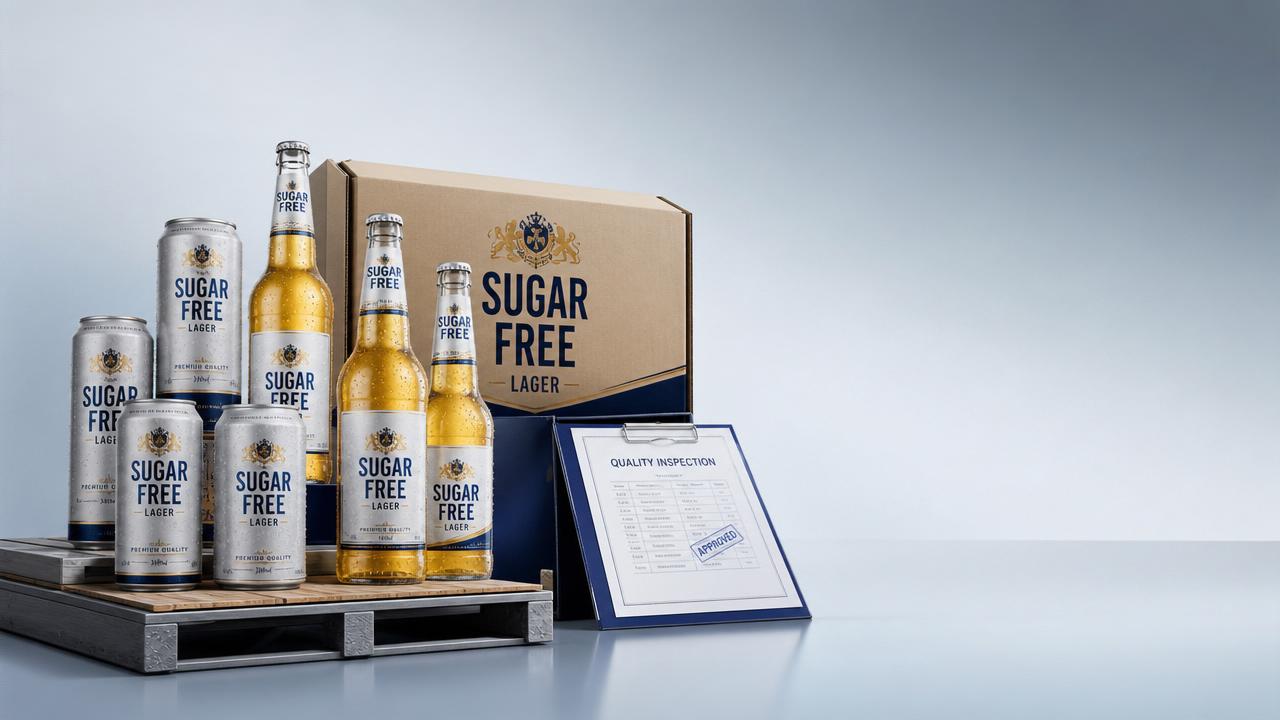
For finance decision-makers, choosing a sugar-free beer supplier China is not only about unit price, but also about margins, compliance, product consistency and long-term supply stability. A qualified partner can help reduce sourcing risk while meeting rising demand for healthier beer options. This article examines whether the cost is justified and what factors truly affect return on investment.
For most buyers, the short answer is yes, but only when the supplier supports margin protection, quality consistency, regulatory readiness and dependable delivery. A low quote alone rarely creates the best financial outcome.
The real question is not whether a sugar-free beer supplier China costs more than standard sourcing. It is whether the supplier helps your business avoid hidden losses while capturing demand in a growing segment.
What finance decision-makers are actually trying to evaluate
When financial approvers search this topic, they usually want a commercial answer. They are comparing total procurement value, not simply asking whether sugar-free beer is expensive to manufacture or import.
Their concerns are practical. Will the product sell at a premium, rotate fast enough, meet labeling rules, avoid quality claims and arrive on time without disrupting channel commitments?
That is why supplier selection should be treated as an investment decision. The most relevant metrics include gross margin, inventory turnover, order reliability, defect rates and long-term account stability.
Is a sugar-free beer supplier China worth the cost in commercial terms?
In many cases, yes. Chinese suppliers can offer a cost structure that supports competitive pricing, especially for importers, private-label buyers and regional distributors building healthier beverage portfolios.
However, the answer depends on the supplier’s operating maturity. Savings on production can be erased by inconsistent batches, delayed shipments, weak documentation or poor flavor stability after transport.
For finance teams, the better approach is to compare landed value instead of ex-factory price. A slightly higher supplier price may still deliver lower total cost of ownership over a year.
If the supplier can provide stable formulation, compliant paperwork, flexible packaging options and reliable production scheduling, the premium often becomes financially justified.
Why sugar-free beer can create stronger margin opportunities
Sugar-free and low-calorie beer appeals to health-conscious consumers, younger urban drinkers and channels that want more differentiated beverage menus. That demand can support better pricing than standard mass-market beer.
Restaurants, bars, supermarkets and online stores often benefit from an added premium positioning story. Sugar-free claims can help the product stand out without requiring a completely unfamiliar category launch.
For distributors, that means margin opportunity comes from both price and mix. Even if unit procurement cost is higher, contribution margin may improve if the product lifts basket value or attracts new buyers.
This matters especially in mature beer markets where standard lager is heavily commoditized. A sugar-free line can help protect profitability by reducing direct price competition.
Where the hidden costs usually appear
Many procurement decisions look attractive on paper until indirect costs appear. These are often more damaging than the visible purchase price difference between one supplier and another.
The first hidden cost is inconsistent product quality. If flavor, carbonation, clarity or shelf stability changes between batches, customer trust drops and channel partners become less willing to reorder.
The second cost is compliance failure. Sugar-related claims, alcohol labeling, ingredients declarations and nutrition information may differ by destination market. Errors can create delays, relabeling expense or customs problems.
The third cost is supply disruption. A supplier that cannot maintain production plans during peak periods can force buyers into emergency sourcing, air freight or lost shelf space.
The fourth cost is weak customization execution. If packaging files, carton details, can specifications or barcode management are handled poorly, launch timelines can slip and retail listings may be affected.
From a finance perspective, these issues directly impact working capital, gross profit and forecast accuracy. They should be part of the sourcing model from the beginning.
How to calculate the real ROI of a sugar-free beer supplier China
A useful ROI review should start with landed cost, not factory quote. Include product price, packaging, freight, duties, testing, compliance preparation and expected wastage.
Then estimate revenue by channel. Sugar-free beer may perform differently in supermarkets, bars, convenience stores and online retail, so average sell-through assumptions should be segmented.
Next, compare margin scenarios. Measure expected gross margin against your current beer portfolio and check whether the sugar-free line improves category profitability or simply replaces existing sales.
Do not ignore inventory effects. A slower-moving specialty SKU can tie up capital, but a successful differentiated product can also justify larger repeat orders with stronger margin retention.
Finally, factor in risk-adjusted costs. Add a realistic allowance for delays, customer complaints, promotional support, reformulation or relabeling. This creates a more honest procurement decision framework.
If the supplier still performs well under that model, the cost is usually worth it. Finance teams should favor durability of returns over headline unit savings.
What separates a low-price supplier from a high-value supplier
Not every manufacturer offering sugar-free beer delivers the same financial value. The difference often lies in process control, product development strength and export execution experience.
A high-value supplier typically has stable R&D capability, proven brewing systems, standardized quality checks and the ability to scale across multiple product variants without losing consistency.
They also support commercial flexibility. That includes OEM and ODM options, packaging customization, sample development, channel-oriented specifications and better responsiveness during planning cycles.
For buyers serving different retail formats, flexibility matters. A supplier capable of classic lager, German wheat, sugar-free low-calorie beer, fruit beer and functional specialty beer can support portfolio strategy more effectively.
That wider capability reduces dependence on multiple factories and can simplify vendor management. Over time, this can lower transaction costs and improve purchasing efficiency.
Why compliance and documentation matter more than many buyers expect
For alcoholic beverages, export success depends heavily on documentation accuracy. Even excellent product quality cannot compensate for missing or incorrect regulatory paperwork.
Finance approvers should confirm whether the supplier can support ingredient disclosure, nutritional information, shelf-life data, certificates and market-specific labeling requirements before placing volume orders.
This is especially important for sugar-free positioning. Claims must align with target-market definitions and allowable wording. A compliant claim in one country may not be accepted in another.
When suppliers understand these requirements early, buyers avoid expensive redesigns, shipment holds or damaged launch schedules. That translates directly into fewer unplanned costs and better capital efficiency.
How product consistency affects long-term profitability
Consistency is often underestimated because it is difficult to quantify before launch. Yet in beverage distribution, repeat purchase depends heavily on stable sensory experience and packaging reliability.
If one batch tastes lighter, sweeter, flatter or more bitter than another, customer satisfaction declines. Retailers and distributors then face more returns, more discounting and lower reorder confidence.
Packaging consistency matters too. Leaking cans, damaged cartons, weak tray strength or print variation all affect sellability and brand perception in stores and hospitality settings.
A reliable sugar-free beer supplier China should have batch controls, testing routines and packaging standards that protect product performance from production through international logistics.
That reliability may not appear in the initial quote, but it often determines whether the business case remains profitable after six or twelve months.
When paying more is financially justified
Paying more makes sense when the supplier reduces operational uncertainty. A moderate premium can be justified if it lowers defect risk, shortens development time and improves fill-rate reliability.
It also makes sense when the supplier strengthens marketability. Better taste stability, cleaner packaging presentation and stronger customization support can raise channel acceptance and improve sell-through.
For private-label programs, a capable supplier can accelerate launch and reduce coordination burden. That saves internal labor and lowers the cost of managing external partners.
In contrast, choosing the cheapest supplier often increases management effort. Procurement, quality, logistics and sales teams may spend more time solving preventable problems, which creates hidden overhead.
When the cost may not be worth it
The investment may not be justified if your market has weak demand for sugar-free beer, limited premium pricing acceptance or low consumer understanding of the category.
It may also be a poor fit if your channel mix depends mainly on deep-discount volume sales, where differentiation has little impact and price sensitivity is extremely high.
Another warning sign is supplier overpromising. If a manufacturer offers aggressive pricing but lacks export references, customization discipline or stable production planning, the risk profile rises significantly.
Finance teams should be especially cautious when internal forecasting is uncertain. Specialty products need realistic volume planning, or stock pressure can offset any strategic benefit.
Questions finance approvers should ask before approving a supplier
Ask for a breakdown of total landed cost across order sizes. This shows whether the economics still work when freight, packaging and documentation costs are fully included.
Ask how the supplier manages formulation consistency and batch testing. Request evidence of quality controls, shelf-life validation and packaging performance standards.
Ask what export markets they currently serve and what compliance support they provide. A supplier with broad international experience is often better prepared for documentation accuracy and labeling adaptation.
Ask about MOQ flexibility, lead times and peak-season capacity. These points affect inventory planning, cash flow and your ability to respond to changing demand.
Ask whether they offer OEM or ODM development and what the approval process looks like. Customization can improve market fit, but only if managed efficiently.
Finally, ask for a sample-based evaluation linked to your commercial goals. Procurement should not approve on price alone when repeat sales depend on actual drinking experience.
What a strong supplier partnership can look like
A strong partner does more than manufacture beer. They help align product style, packaging, compliance and delivery with your route-to-market strategy and margin goals.
For example, a brewery with craft beer R&D capability and a broad product range can help buyers test sugar-free beer alongside classic lager, wheat beer, fruit beer or functional specialty lines.
This gives distributors and retailers more room to build a balanced assortment rather than sourcing every product from different factories. The commercial benefit is greater coordination and lower complexity.
Suppliers that support OEM, ODM, wholesale and customized solutions are often more useful to businesses selling through restaurants, supermarkets, bars and mixed retail channels.
That kind of partnership can improve speed to market and strengthen portfolio economics, which is exactly what finance decision-makers should be measuring.
Final verdict: worth the cost if value is measured correctly
A sugar-free beer supplier China can absolutely be worth the cost, but only when the evaluation goes beyond unit price. The best choice is the supplier that protects margin and reduces avoidable risk.
For financial approvers, the most important factors are landed cost, compliance readiness, consistency, supply reliability and realistic channel demand. These elements determine true return on investment.
If the supplier combines strong brewing capability, export experience, customization support and stable delivery, the additional cost is often not an expense but a profitability safeguard.
In short, do not ask only whether the supplier is cheap. Ask whether the supplier helps your business sell confidently, plan accurately and grow profitably in the sugar-free beer segment.
Thank you very much for writing to us. Please leave your message and contact information, we will reply to you within 24 hours.