



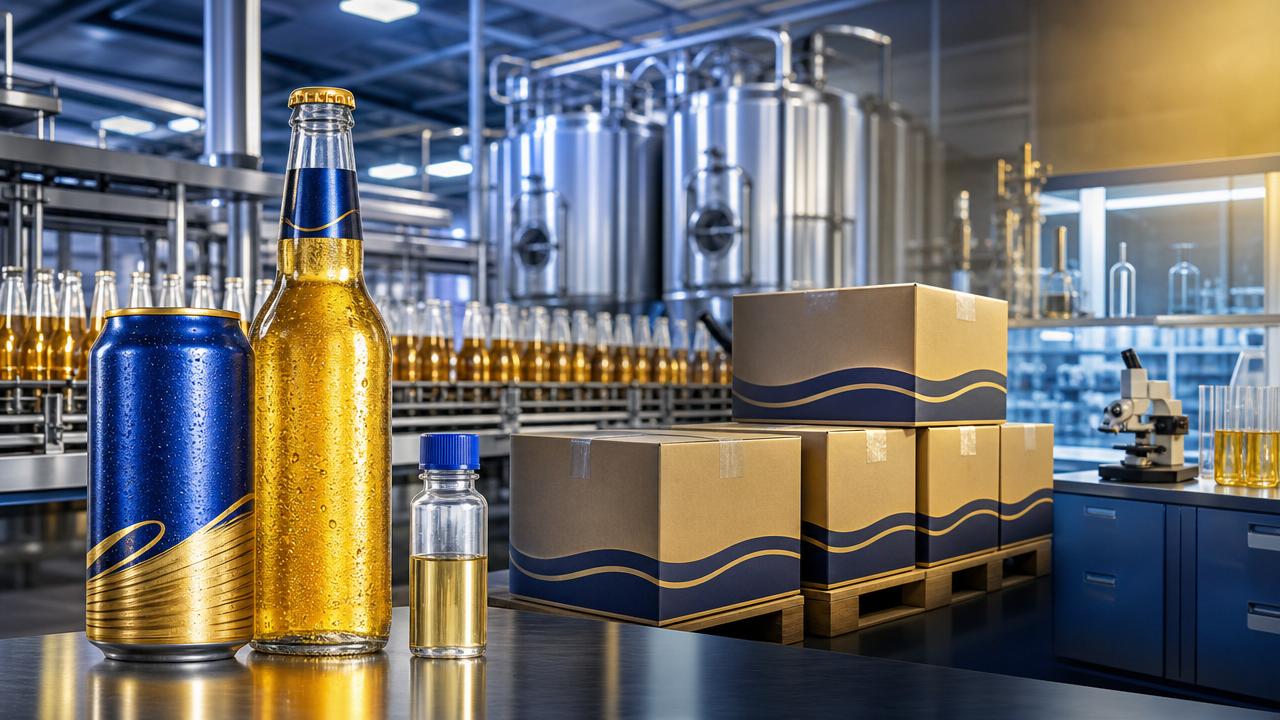
Can a sugar-free beer supplier China satisfy the strict quality, safety and documentation requirements of global markets? For export-focused beverage programs, the answer depends on more than price or flavor. It depends on production discipline, ingredient control, batch consistency, labeling accuracy and full evidence that the beer is made under export-ready systems. Suppliers such as Jinpai Beer combine craft beer R&D, sugar-free low-calorie formulations, OEM/ODM support and bulk supply capabilities to align product development with international expectations.
Why export readiness needs a checklist
A sugar-free beer project often looks simple at first. In practice, export approval can fail because of small gaps in records, ingredient declarations, test reports or packaging compliance.
That is why a checklist matters. It turns a broad supplier review into specific verification points. When assessing a sugar-free beer supplier China, a structured checklist reduces risk, shortens qualification time and improves confidence before shipment.
For beer exports, the most important questions are practical. Can the supplier maintain sugar-free positioning during scale-up? Can each batch be traced? Can documents match destination market rules? Can the factory support repeat orders without changing flavor, alcohol level or shelf stability?
Core checklist for evaluating a sugar-free beer supplier China
- Verify formulation control. Confirm how residual sugar is measured, how low-calorie targets are maintained, and whether the brewing process supports stable sensory performance in every production lot.
- Review ingredient traceability. Check malt, hops, yeast, enzymes, flavor additions and processing aids, with supplier records that connect incoming materials to finished beer batch numbers.
- Inspect factory systems. Ask for GMP, HACCP, sanitation routines, calibration records, water treatment control and preventive maintenance evidence for fermentation, filtration and filling equipment.
- Request compliance testing. Confirm microbiological, physicochemical and shelf-life reports, including alcohol content, extract, bitterness, CO2, dissolved oxygen and packaging seal integrity.
- Check allergen and additive declarations. Make sure labels, specifications and export documents clearly state ingredients, processing details and claims relevant to the destination market.
- Audit packaging suitability. Review can, bottle or keg performance, carton strength, pallet standards and transport protection for long-distance sea freight or mixed-channel distribution.
- Examine OEM/ODM capability. Confirm whether the supplier can customize ABV, flavor profile, branding, pack size and label language without weakening compliance or process stability.
- Validate export documentation. Ask for COA, ingredient sheet, MSDS where needed, health certificates, origin documents and product specifications aligned with customs clearance requirements.
- Test communication speed. Evaluate response quality for technical questions, artwork revisions, sample adjustments and nonconformance handling before relying on large-volume orders.
- Confirm scalable capacity. Match brewing capacity, lead time, storage conditions and shipping coordination with forecast demand so the sugar-free beer program remains reliable after launch.
What export standards usually mean in beer supply
Export standards are not a single global rulebook. They are a combination of food safety law, labeling rules, import documentation and commercial specifications required by each target country.
For a sugar-free beer supplier China, this usually means proving that the product is consistently brewed, correctly labeled and supported by accurate technical files. It also means the factory can show disciplined controls from raw material intake to finished goods release.
In beverage exports, “sugar-free” needs careful handling. The claim may depend on local thresholds, nutrition panel rules and wording restrictions. A compliant supplier should not rely on marketing language alone. It should back every claim with formulation logic, lab data and market-specific label review.
Quality systems that matter most
- Use controlled SOPs for brewing, fermentation, filtration, filling and cleaning to prevent variation that could affect sugar content, taste stability or shelf performance.
- Maintain in-house and third-party testing to support release decisions, customer audits and destination-market inquiries during customs or retail compliance reviews.
- Record deviations and corrective actions so recurring quality issues can be identified early and prevented before future export batches are packed.
Scenario-based checks for different market channels
Retail supermarket programs
Retail channels usually require stable shelf appearance, barcode accuracy, nutrition labeling and packaging durability. Here, a sugar-free beer supplier China must manage not only beer quality but also display-ready consistency.
Private label programs need tighter artwork approval, carton marking control and repeatable color standards. Short-term savings on packaging often create long-term claims if labels peel, cans dent or shelf-life coding is unclear.
Bars, restaurants and on-trade supply
On-trade customers care about flavor freshness, pouring performance and reliable replenishment. Keg, bottle and can options should be matched to service speed, cold-chain exposure and outlet turnover.
A supplier with broad craft beer experience, such as lager, German wheat, fruit beer and functional beer development, can usually adjust sensory profile more precisely for this channel.
Cross-border e-commerce and mixed distribution
This scenario adds complexity because products may pass through bonded storage, parcel handling or multiple regional resellers. Packaging strength and digital documentation become more important.
For this reason, a sugar-free beer supplier China should provide specification sheets, high-resolution label files and consistent batch coding that supports both customs review and platform compliance checks.
Commonly overlooked risks
Claim mismatch between formula and label
A sugar-free statement may be acceptable in one market and restricted in another. If the label is translated without technical review, the shipment may face rejection or relabeling costs.
Inconsistent taste after scale-up
Pilot samples can pass, while commercial batches drift in body, aroma or finish. This often happens when fermentation control, filtration settings or dissolved oxygen limits are not tightly managed.
Weak document coordination
Even a good beer can be delayed if the invoice, specification sheet, certificate and outer carton details do not match exactly. Documentation errors are a common avoidable export problem.
Packaging chosen only by unit cost
Low-cost materials may increase breakage, leakage or label damage during transport. Final landed cost rises when repacking, claims or retail deductions are added.
Practical execution steps before placing an order
- Start with a technical brief covering ABV, sugar-free claim, calorie target, flavor profile, packaging format, shelf-life expectation and destination compliance requirements.
- Request samples from at least two production points, then compare taste, appearance and lab data to check whether the formula remains stable over time.
- Review the full document pack before production, not after shipment, including labels, specifications, certificates and any country-specific declarations.
- Run a packaging transit assessment for sea freight, warehousing and retail handling to confirm the chosen bottle, can or carton system is export-safe.
- Lock change-control rules into the purchase agreement so ingredients, process adjustments or packaging substitutions cannot happen without written approval.
Conclusion and next action
Yes, a capable sugar-free beer supplier China can meet export standards, but only when quality systems, formulation control, testing, packaging and documentation work together. Export readiness is proven through process discipline, not claimed through brochures.
Jinpai Beer supports craft beer R&D, production and global distribution across classic lager, German wheat, sugar-free low-calorie beer, fruit-flavored beer and functional specialty beer categories. With OEM/ODM service, wholesale supply and customized solutions, the company can support projects that require both product flexibility and export-focused execution.
The most effective next step is simple: build a supplier review around the checklist above, request a complete technical file and validate one pilot order under real export conditions. That approach gives clear evidence of whether the selected sugar-free beer supplier China is ready for long-term international business.
Thank you very much for writing to us. Please leave your message and contact information, we will reply to you within 24 hours.