



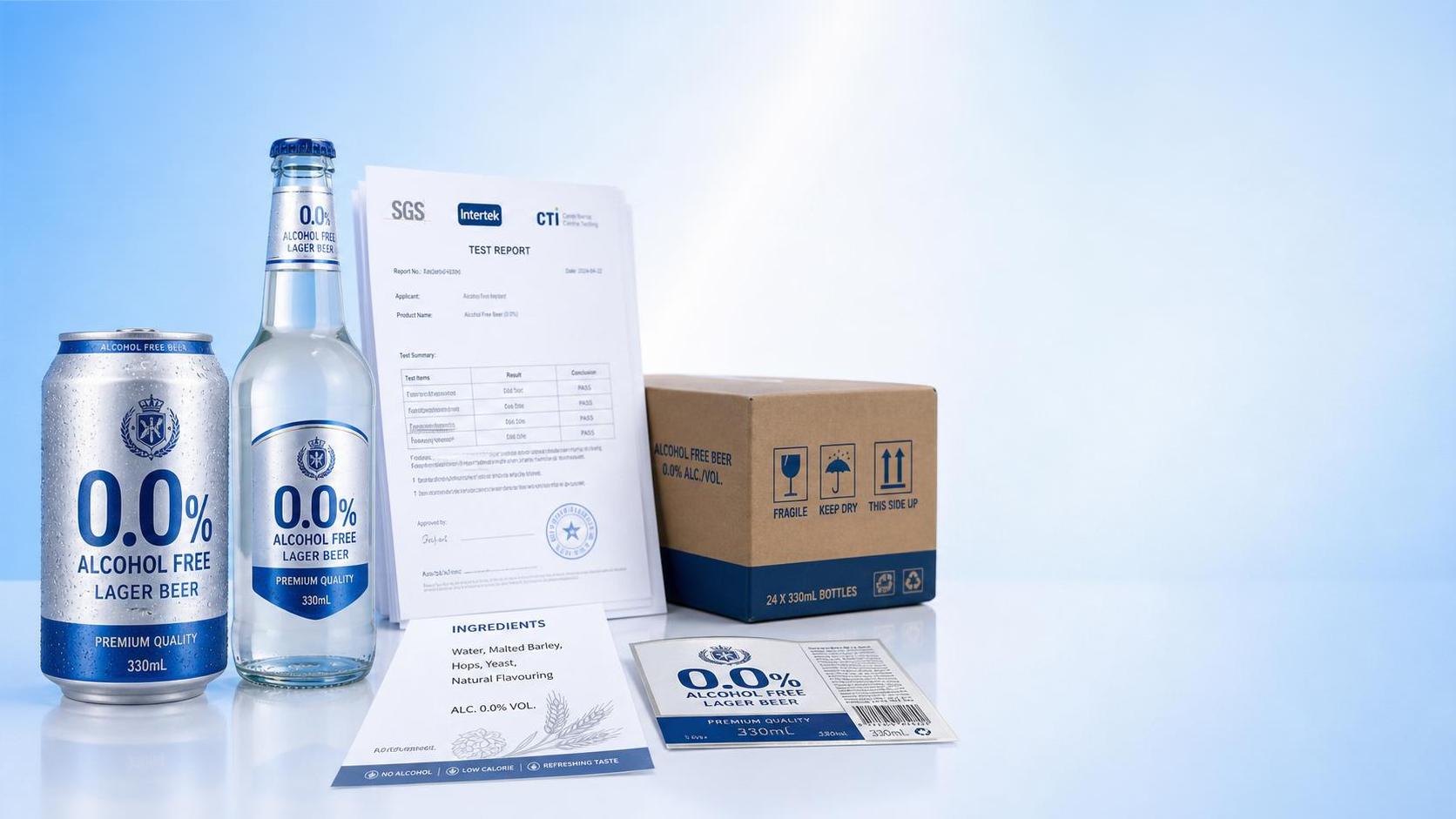
Importing 0.0% alcohol beer from China: where is the real safety line?
Is it safe to import 0.0% alcohol beer from Chinese factories? It can be, but only when the product is verified against your destination market rules.
That matters because “0.0%” is not just a marketing phrase. It is a compliance claim tied to testing limits, labeling rules, and documentation consistency.
In practice, the biggest risks are rarely visible in the sample can. They usually appear in lab reports, ingredient statements, artwork files, and shipping records.
China has mature brewing capacity, including craft beer, sugar-free low-calorie beer, fruit-flavored beer, and functional specialty lines. Many suppliers also support OEM and ODM projects for different retail channels.
Still, import safety depends on process control, not broad claims. A factory may produce stable lager and wheat beer well, yet still mishandle non-alcohol labeling in export versions.
Does “0.0% alcohol beer” always meet the legal definition in every market?
No, and this is usually the first misunderstanding. Different countries define alcohol-free, non-alcoholic, and 0.0% products using different thresholds and wording rules.
Some markets allow a small residual alcohol level under a legal maximum. Others treat “0.0%” as a stricter representation requiring results below the reporting threshold.
So when asking, “Is it safe to import 0.0% alcohol beer from Chinese factories?” the real question is whether the test result supports the exact front-label claim.
A product can be safe for consumption and still fail market access. Customs, food regulators, and retailers may reject it if the declared value and the certified value do not align.
A more reliable review starts with three checks:
- Which legal term is permitted in the target country.
- Which laboratory method is used to detect ethanol.
- Whether the certificate covers the same batch and packaging format.
This is especially relevant for customized export projects. Once label text changes across supermarket, bar, and online retail channels, one formula may require several compliance reviews.
Which documents should be checked before placing a 0.0% alcohol beer order?
Supplier qualification is only the starting point. Import decisions should be based on a document set that connects formula, production, testing, and labeling.
The most useful review file is not long, but it must be consistent. If values conflict across documents, clearance delays become much more likely.
For repeat orders, it is worth checking whether these files are version-controlled. A capable exporter usually maintains revision records for formula updates, ingredient changes, and packaging edits.
What labeling mistakes create the biggest import risk?
Labeling errors are often more serious than minor sensory issues. A good-tasting shipment can still be held if the declared facts are incomplete or misleading.
The highest-risk point is the alcohol statement itself. “0.0% alcohol,” “alcohol-free,” and “non-alcoholic beer” are not always interchangeable.
Another problem appears with ingredient transparency. Fruit-flavored beer, sweeteners, botanical extracts, vitamins, or functional additions may trigger extra declaration or claim restrictions.
More common labeling issues include:
- Missing allergen statements for wheat, barley, or flavor carriers.
- Nutrition values copied from a domestic version, not the export formula.
- Net content, date coding, or shelf-life format not matching local requirements.
- Health-style wording that turns a beverage into a regulatory grey area.
This is why label review should happen before mass production. Once cans, crowns, trays, and cartons are printed, correction costs rise quickly.
For customized lines from broad product portfolios, the risk grows because classic lager, wheat beer, sugar-free beer, and specialty products rarely share identical declarations.
How can you judge whether a Chinese factory controls 0.0% alcohol beer reliably?
The better indicator is not the sales pitch. It is the factory’s ability to explain its alcohol reduction process, verification points, and release criteria clearly.
In actual audits, stable control usually shows up in records. You want to see how the producer prevents unintended fermentation drift during production and shelf life.
A useful judgment checklist includes:
- Defined production method for 0.0% beer, such as arrested fermentation or dealcoholization.
- Batch sampling plan for alcohol verification and microbiological release.
- Control of sweetener, flavor, and functional ingredient addition points.
- Validated packaging integrity for cans or bottles under export logistics conditions.
- Traceability from raw materials to finished lots and shipment records.
Factories serving multiple channels often perform better here. Experience with supermarkets, restaurants, bars, and private-label projects usually forces stronger document discipline.
That said, do not assume scale guarantees compliance. A broad export footprint helps, but batch-level evidence is still what protects the importer.
What usually goes wrong after production, during shipping and market entry?
Many teams focus on formula and forget the border stage. Yet post-production mistakes are exactly where otherwise acceptable shipments start to fail.
One issue is document mismatch. The product name on the invoice, packing list, certificate, and label should describe the same item in the same compliance language.
Shelf-life handling is another point. If transit is long, storage conditions and remaining shelf life at arrival may affect retailer acceptance, even when customs clearance succeeds.
A practical pre-shipment review often covers these questions:
This stage often decides whether importing 0.0% alcohol beer from China feels routine or risky. Most preventable problems come from unaligned files, not hidden defects.
So, is it safe to import 0.0% alcohol beer from Chinese factories?
Yes, when “safe” includes legal accuracy, batch verification, and export-ready labeling. No, if the decision is based only on a supplier promise or a generic sample report.
The strongest approach is to review the product as a full compliance package. Check the alcohol threshold, validate ingredients, approve label wording, and match every document before shipment.
Where suppliers offer broad brewing capability and customized solutions, the opportunity is real. The control point is making sure the exact SKU you import is the SKU that was tested and approved.
A practical next step is to build a short import checklist for each destination market. Include legal naming, alcohol test method, ingredient review, artwork approval, and pre-shipment document matching.
That kind of discipline reduces relabeling costs, border delays, and brand risk. More importantly, it turns a “0.0%” claim from a packaging promise into a defensible compliance position.
Thank you very much for writing to us. Please leave your message and contact information, we will reply to you within 24 hours.