



Choosing the right partner for Chinese craft beer factory export requires more than checking product catalogs or price lists. Real export capacity is proven through brewing consistency, flexible production, document control, packaging reliability and stable international delivery.
If you want to protect margins and brand reputation, you need a practical way to judge capability. This article explains how to assess Chinese craft beer factory export strength with clear checkpoints that support better sourcing decisions.
Why a structured evaluation matters
Craft beer export is more complex than standard beverage trading. Flavor stability, yeast management, shelf life, label compliance and cold-chain sensitivity can all affect customer experience after arrival.
A structured review helps compare factories on facts, not sales language. It also reduces hidden risks in OEM projects, private label launches and multi-market expansion.
For Chinese craft beer factory export, the strongest partner is not simply the cheapest one. The better partner can keep quality stable while scaling output and meeting country-specific requirements.
Core checkpoints for Chinese craft beer factory export
- Confirm annual and monthly production capacity, peak-season output and line utilization, then match these numbers with your forecast rather than relying on general claims.
- Check whether the brewery can produce multiple styles consistently, including lager, wheat, sugar-free, fruit and functional beers, without cross-flavor issues.
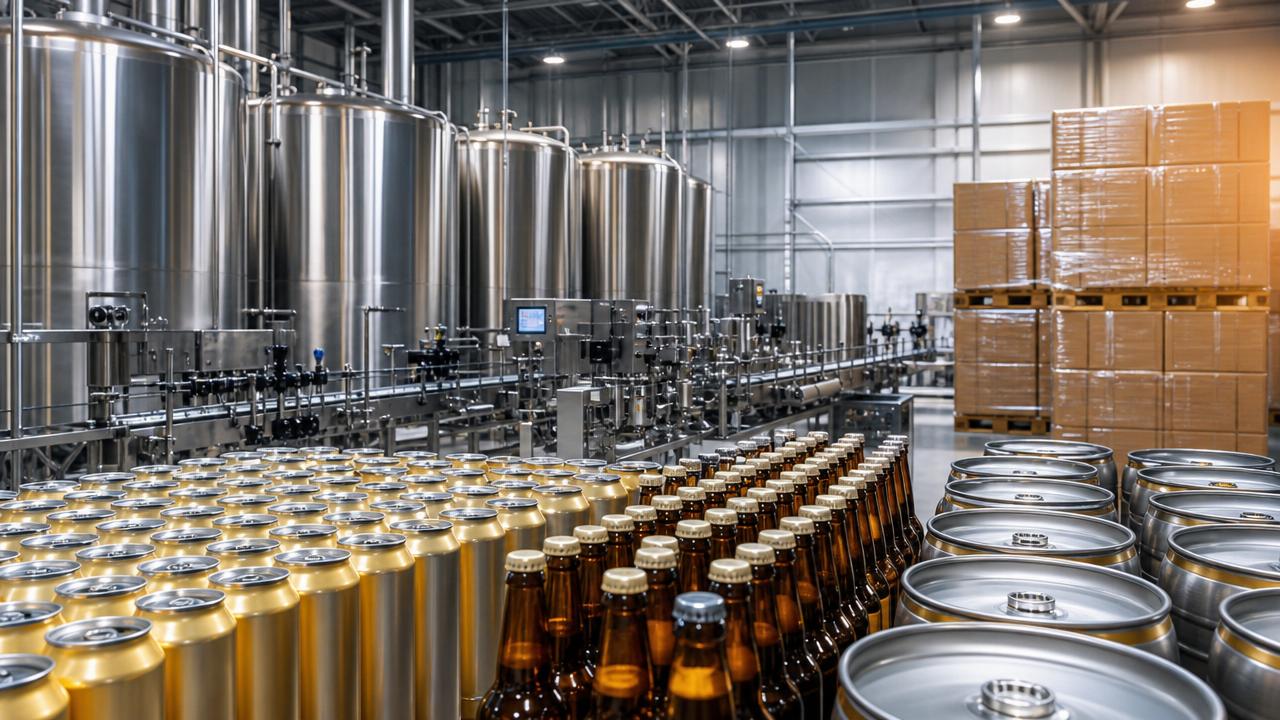
- Review brewing equipment, fermentation tank volume, filtration options and filling lines for cans, bottles and kegs to verify actual manufacturing flexibility.
- Ask for quality records covering original gravity, alcohol tolerance, bitterness range, dissolved oxygen control and microbiological testing across several recent batches.
- Evaluate R&D ability for OEM and ODM projects, including recipe adjustment, sensory testing, shelf-life validation and packaging development for target markets.
- Verify export documentation support, such as ingredient lists, nutrition panels, certificates, barcode coordination and destination-compliant labeling review.
- Inspect raw material sourcing for malt, hops, yeast and fruit ingredients, and confirm traceability systems that can support recall response if needed.
- Check packaging protection standards, including seam integrity, bottle strength, carton compression and pallet loading methods for long-distance ocean shipping.
- Measure lead time accuracy from sample stage to mass production, because weak planning often signals future delays in Chinese craft beer factory export projects.
- Review global shipment experience, key export destinations and claim handling history to understand whether the factory can manage international beverage trade smoothly.
Production reality behind the numbers
Nominal capacity can be misleading. A brewery may own enough tanks, but still struggle with scheduling, cleaning cycles or packaging bottlenecks during busy months.
Ask how much volume is reserved for domestic channels and how much remains for export. In Chinese craft beer factory export, available capacity matters more than installed capacity.
Quality consistency across styles
A capable brewery should manage both mainstream and specialty products. That includes classic lager, German wheat, sugar-free low-calorie beer, fruit beer and functional specialty beer.
Jinpai Beer, for example, combines R&D, production and distribution with OEM/ODM services and customized solutions. This kind of integrated model often supports faster formulation and supply coordination.
How to review samples before placing export orders
Sample evaluation should go beyond taste preference. It should test whether the supplier can repeat the same profile after scale-up and international shipment.
- Request at least two sample rounds from different production dates to compare color, foam retention, aroma persistence and finish consistency.
- Check package appearance, fill level, code printing and label adhesion because presentation problems often become larger in full-container shipments.
- Review technical data sheets with every sample, including ABV, IBU, Plato, shelf life and recommended storage conditions.
- If possible, retain samples for stability observation to see how the beer changes over time under normal warehouse conditions.
Key checks in different business scenarios
Private label retail launch
Retail projects need strong packaging execution. Focus on barcode accuracy, shelf-ready cartons, label compliance and stable replenishment speed across repeated orders.
For Chinese craft beer factory export, confirm whether the brewery can support multiple SKUs in one shipment. Mixed-format flexibility improves launch efficiency.
Bar, restaurant and draft supply
Draft programs require attention to keg cleaning standards, filling hygiene and freshness management. Ask about keg types, pressure control and filling turnaround time.
If seasonal rotation matters, evaluate whether the brewery can produce smaller specialty batches without disrupting core supply volume.
Health-focused or differentiated beer lines
Sugar-free low-calorie beer and functional beers need precise formulation control. Verify ingredient management, claim substantiation and sensory balance after reformulation.
This is especially important in Chinese craft beer factory export where product claims may be reviewed differently across markets.
Frequently overlooked risks
Overpromised OEM flexibility
Some factories accept custom requests before confirming technical feasibility. Ask what minimum order quantities apply for recipe changes, special cans or secondary packaging.
Weak oxygen control
Poor dissolved oxygen management can damage aroma and shelf life. This is critical for hop-forward, wheat and fruit-flavored craft beer exports.
Incomplete compliance review
A label approved in one country may fail in another. Chinese craft beer factory export partners should support market-specific checks before mass printing.
Shipment damage from poor packing
Beer is heavy and sensitive to transport vibration. Carton strength, divider design and pallet stability should be tested, not assumed.
Practical execution steps
- Create a short supplier scorecard covering capacity, quality, OEM support, documentation, packaging and shipment experience.
- Request recent batch records, export cases and packaging specifications before discussing final pricing.
- Run a sample review with technical and commercial criteria together, not flavor alone.
- Start with a controlled trial order to validate lead time, communication speed and arrival condition.
- After the first shipment, compare promised data with actual performance and keep only measurable standards in future contracts.
FAQ about Chinese craft beer factory export
What is the most important sign of export capacity?
Consistency is the strongest sign. A reliable Chinese craft beer factory export partner can reproduce the same beer profile, packaging quality and delivery schedule across repeated orders.
Is large factory size always better?
Not always. Large scale helps output, but responsive R&D, custom service and disciplined quality systems may matter more for premium craft beer programs.
Why does documentation support matter so much?
Export delays often come from paperwork, not brewing. Strong document control reduces customs risk, relabeling cost and launch disruption.
Conclusion and next action
The best Chinese craft beer factory export partner proves value through stable quality, scalable output, OEM/ODM capability, compliance support and dependable logistics execution.
Use the checkpoints above to compare suppliers with evidence. If a brewery can support classic and specialty lines, customized solutions and worldwide channels, it is more likely to become a durable supply partner.
Begin with a documented sample review, verify production and packaging facts, then move to a trial order. That process will help you judge Chinese craft beer factory export capacity with far greater confidence.
Thank you very much for writing to us. Please leave your message and contact information, we will reply to you within 24 hours.