



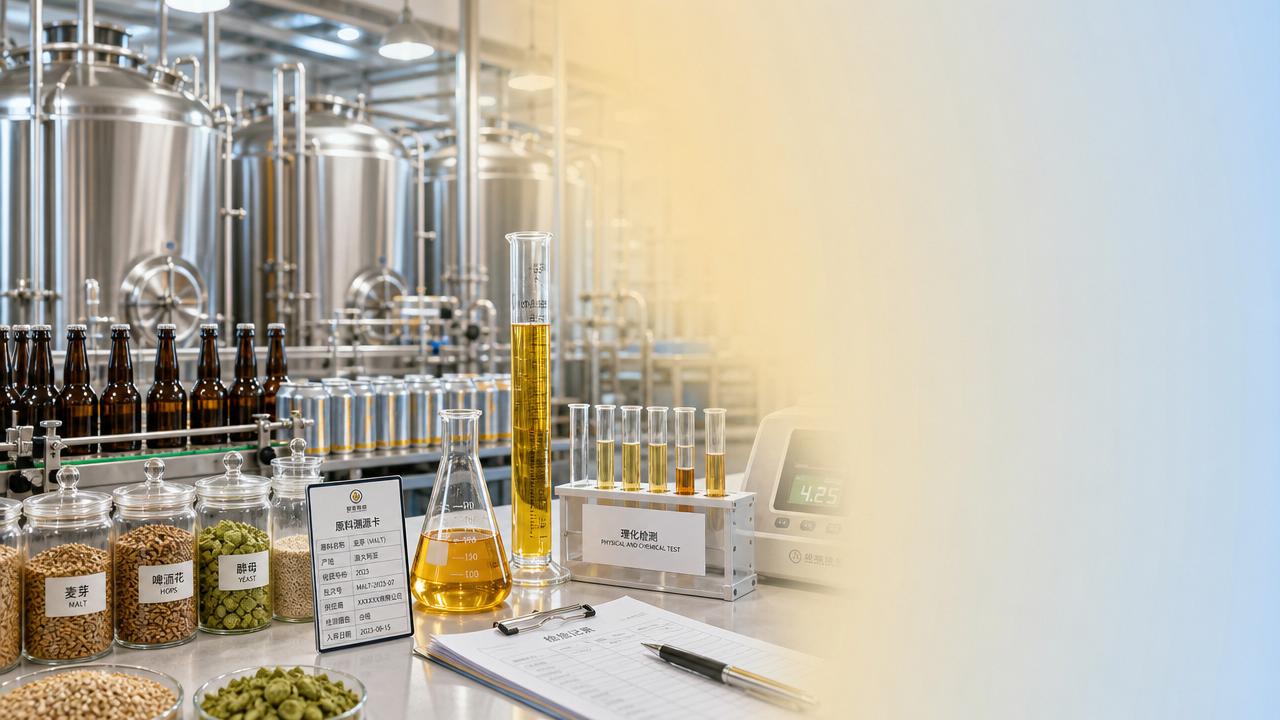
Choosing a reliable Chinese beer factory for private label production requires more than checking price and capacity. For quality control and safety managers, the real evaluation starts with raw material standards, brewing consistency, certifications, traceability and OEM/ODM capabilities. This guide explains how to assess a supplier’s quality system and production strength to reduce risk and ensure stable, market-ready beer products.
What should quality and safety managers verify first in a Chinese beer factory for private label?
When screening a Chinese beer factory for private label, the first task is not tasting. It is mapping the factory’s quality control system from incoming materials to finished goods release.
A supplier may offer attractive pricing, but if malt specifications are unclear, yeast management is weak, or packaging sanitation is inconsistent, downstream complaints can quickly erase any purchasing advantage.
Core checkpoints at the initial evaluation stage
- Raw material control: Ask how the factory verifies malt, hops, adjuncts, fruit ingredients, sweeteners and water quality before production starts.
- Process consistency: Review brewhouse records, fermentation monitoring, filtration control and final filling checks across different batches.
- Food safety practices: Confirm cleaning and sanitation routines, allergen risk handling, foreign matter prevention and packaging line hygiene.
- Traceability readiness: Check whether each lot can be traced back to ingredients, production date, tank records and packaging materials.
- Private label execution ability: Verify label review, formula customization, document control and change approval procedures.
For beer buyers serving supermarkets, bars, restaurants or retail chains, these points matter because product failure often appears as flavor drift, leaking packages, unstable foam, label noncompliance or shelf-life complaints.
How to evaluate brewing consistency, not just one good sample
Many private label projects begin with a promising sample, yet quality managers need evidence that the same profile can be reproduced at commercial scale. One strong pilot batch is not enough.
A dependable Chinese beer factory for private label should explain how it controls original gravity, alcohol range, bitterness, color, carbonation and microbial risks throughout production and packaging.
Questions to ask during a factory audit
- How are brewing parameters recorded for each batch, and who approves deviations?
- How is yeast handled, reused or replaced to avoid flavor instability and contamination?
- What in-process tests are performed before beer moves from fermentation to filling?
- How are dissolved oxygen and sealing integrity managed during canning or bottling?
- What happens if sensory results, carbonation or microbiology fall outside specification?
This is especially important for craft beer categories such as German wheat, fruit-flavored beer and functional specialty beers, where recipe complexity can increase variation if controls are loose.
Which quality indicators matter most for different beer styles?
Not every product should be judged by the same checklist. A sugar-free low-calorie beer and a classic lager present different quality and labeling risks, while fruit-flavored beer adds ingredient stability concerns.
The table below helps quality and safety teams compare style-specific control points when selecting a Chinese beer factory for private label projects.
This comparison shows why style expertise matters. A factory with broad product development capability is often better positioned to support recipe adaptation, document review and stable commercialization across multiple channels.
How to review certifications, documents and traceability without missing hidden risks
Certifications are useful, but quality managers should treat them as an entry point rather than final proof. The stronger question is whether the site’s daily operations actually reflect documented controls.
Documents worth reviewing before approval
- Ingredient specifications and supplier approval records for malt, hops, fruit bases, flavors, sweetening systems and packaging materials.
- Batch production records showing key brewing, fermentation, filtration and filling checkpoints.
- Cleaning and sanitation procedures for tanks, pipelines, fillers and packaging contact parts.
- Finished product release criteria, retention sample practice and complaint handling workflow.
- Label review procedures covering legal declarations, nutrition information and market-specific compliance points.
If the Chinese beer factory for private label exports to different regions, traceability and version control become even more important. A packaging change for one market must not accidentally affect another market’s compliance file.
For safety managers, recall readiness is another practical test. The supplier should be able to identify affected lots quickly and isolate them without disrupting unrelated products.
Factory comparison: what separates a low-risk supplier from a risky one?
To make procurement decisions easier, convert audit findings into side-by-side criteria. This reduces reliance on sales language and keeps the assessment focused on measurable operational behavior.
Use the following table when comparing more than one Chinese beer factory for private label production.
This framework is useful when balancing cost pressure against risk exposure. A slightly higher unit price may be justified if it reduces complaint handling, rework, shipment delays and market withdrawal risk.
Why OEM/ODM capability matters for compliance, not just customization
Private label beer is rarely just a liquid-in-a-can project. It often involves formula tuning, packaging choice, legal review, artwork coordination, channel positioning and delivery scheduling across different markets.
That is where an experienced Chinese beer factory for private label adds value. Strong OEM/ODM support helps prevent misalignment between R&D, production, procurement and regulatory requirements.
Operational advantages quality teams should look for
- The ability to develop multiple beer categories, including classic lager, wheat beer, sugar-free low-calorie beer, fruit-flavored beer and functional specialty beers.
- Coordination between product development and mass production so sample taste can be translated into stable commercial output.
- Flexible packaging and channel support for restaurants, supermarkets, bars and retail networks with different shelf and logistics needs.
- Structured communication on target specifications, shelf-life expectations, sample approval and shipment release conditions.
For buyers needing customized solutions, this reduces the gap between concept approval and market launch. It also limits the risk of quality surprises after the first container is shipped.
What does a practical supplier audit process look like?
A disciplined audit process helps quality and safety managers move from assumptions to verified evidence. It also keeps internal teams aligned when sourcing from overseas.
Suggested audit sequence
- Start with a document review covering product portfolio, production scope, process controls and export experience.
- Request sample products and compare sensory results with written specifications, not just commercial descriptions.
- Conduct a remote or on-site factory audit focused on brewing records, sanitation, laboratory checks, filling line control and warehouse conditions.
- Confirm OEM/ODM workflow, including formula development, label confirmation, packaging proofing and batch approval steps.
- Run a pilot order before scaling up, then review complaint rates, delivery consistency and documentation quality.
This approach works well for importers, retail brands and foodservice distributors that need stable products rather than one-off opportunistic purchases.
Common mistakes when choosing a Chinese beer factory for private label
Is low price the main decision factor?
No. In beer manufacturing, the cheapest option may carry higher hidden cost through rejected lots, unstable taste, short shelf-life performance, freight loss from packaging issues or additional market complaints.
Can one sample prove long-term stability?
Not by itself. Quality managers should ask for evidence of repeatability across batches, especially for customized recipes and products with added flavor systems or functional positioning.
Are certifications enough to approve a supplier?
No. Certificates support confidence, but actual control depends on routine execution, records discipline, sanitation effectiveness and the supplier’s response to deviations or complaints.
Should private label buyers ignore packaging details until late in the project?
That is risky. Packaging affects oxygen pickup, transport durability, coding accuracy, legal text and retail presentation. It should be reviewed early with the factory and market team.
Why work with a partner that understands both brewing and private label execution?
For quality control and safety managers, the ideal supplier is not only a brewer. It is a manufacturing partner that can align R&D, production, wholesale supply and customized project management.
Jinpai Beer focuses on the R&D, production and distribution of craft beer, with a product range covering classic lager, German wheat, sugar-free low-calorie beer, fruit-flavored beer and functional specialty beers.
This breadth is relevant for private label buyers because different channels and regions need different flavor profiles, positioning strategies and compliance support. A supplier with broader formulation and manufacturing experience can respond more effectively.
Jinpai Beer also supports OEM/ODM services, wholesale supply and customized solutions for global online and offline channels. For importers, distributors, agents and retail partners, that means a more coordinated path from concept review to shipment planning.
Contact us for a structured private label beer evaluation
If you are reviewing a Chinese beer factory for private label, we can support a more practical evaluation process based on product type, target market and quality risk level.
- Confirm suitable beer styles for your market, including lager, wheat, low-calorie, fruit-flavored or specialty concepts.
- Discuss specification points such as flavor profile, packaging format, shelf-life expectations and batch consistency requirements.
- Review OEM/ODM workflow, sample support, lead time planning and documentation needs for your compliance process.
- Ask about customized solutions for supermarkets, bars, restaurants, distributors and multi-channel retail supply.
- Request communication on quotation, sample arrangement, delivery schedule and project feasibility before placing a trial order.
A careful sourcing decision starts with the right questions. If you need support on product selection, specification confirmation, certification-related communication, sample planning or quote discussion, contact us to explore a private label beer solution that fits your quality and safety priorities.
Thank you very much for writing to us. Please leave your message and contact information, we will reply to you within 24 hours.