



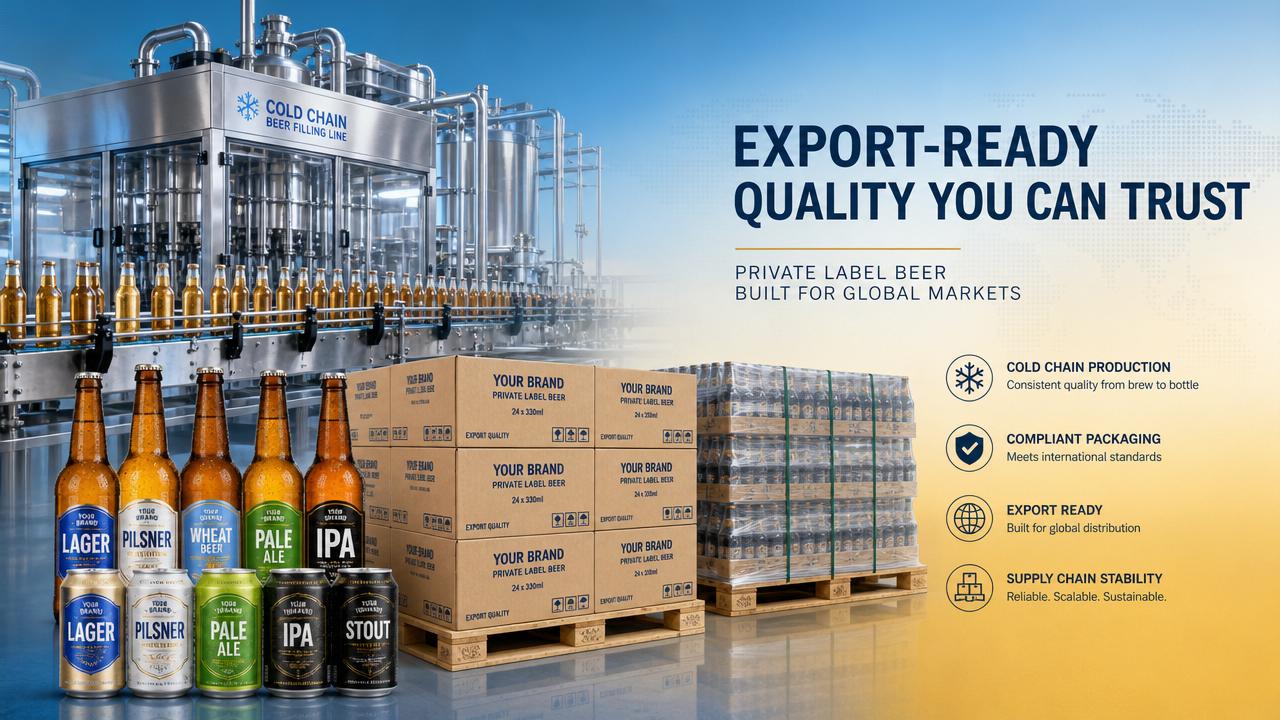
Choosing a Chinese beer factory for private label can unlock cost advantages and product flexibility, but export success in 2026 will depend on how well buyers assess compliance, quality consistency and supply chain risk. For business evaluators, understanding these key risks early is essential to selecting a reliable partner and protecting long-term market performance.
Why business evaluators are paying closer attention to a Chinese beer factory for private label in 2026
The private label beer market is becoming more attractive as retailers, importers, restaurant groups and beverage distributors seek better margin control and differentiated product portfolios. A Chinese beer factory for private label can support this strategy, especially when buyers want broad style coverage, flexible packaging and scalable OEM or ODM cooperation.
However, 2026 will bring tighter scrutiny in export documentation, labeling compliance, sugar and calorie claims, ingredient declaration and destination market customs review. For business evaluation teams, price alone is no longer a reliable selection tool. Supplier resilience, technical response speed and quality management now matter just as much.
In the beer and beverage industry, export risk is rarely caused by one major failure. More often, it comes from small gaps across recipe confirmation, packaging validation, shelf-life planning, container loading and after-sales traceability. A capable manufacturing partner should help buyers identify these gaps before volume production begins.
- Retail buyers need stable taste, packaging accuracy and smooth replenishment cycles across supermarkets and convenience channels.
- Hospitality buyers need product variety, smaller batch flexibility and branding that fits bars, restaurants and seasonal promotions.
- Importers need reliable documents, container planning and low complaint rates after customs clearance and local distribution.
What are the main export risks when selecting a Chinese beer factory for private label?
Business evaluators usually face several linked concerns at once. The most important risks can be grouped into compliance risk, product consistency risk, supply chain risk, commercial communication risk and market-fit risk. Looking at them together gives a more realistic picture than checking factory price lists in isolation.
1. Compliance and labeling risk
Beer exports often face detailed local rules on alcohol statement, ingredients, allergens, nutrition panels, language requirements, date coding and claims such as sugar-free or low-calorie. Even if the liquid quality is acceptable, non-compliant labels can delay customs release or force relabeling after arrival.
2. Quality consistency risk
Private label buyers depend on repeatability. Differences in bitterness, color, carbonation, foam retention or fruit flavor balance can create customer complaints and damage retailer confidence. This risk increases when samples are approved without a clear specification sheet or retention sample process.
3. Shelf-life and logistics risk
Beer is sensitive to heat, oxygen exposure and transport time. If packaging choice, pasteurization approach, storage guidance and shipping route are not aligned, the final product may arrive with reduced freshness. This is especially important for craft styles, fruit-flavored beer and functional specialty beers.
4. Commercial execution risk
An attractive quotation can hide practical issues such as weak artwork review, unclear MOQ rules, long lead times during peak season or poor change-management after sample approval. These issues increase internal workload for procurement and can weaken launch timing.
The table below helps business evaluators map export risks when comparing a Chinese beer factory for private label with internal launch requirements.
For evaluation teams, the value of this matrix is practical. It turns vague supplier risk into measurable checkpoints that can be discussed with procurement, technical, legal and sales departments before signing an annual supply plan.
How to assess product fit across retail, bar and distributor channels
Not every beer style works equally well in every channel. A Chinese beer factory for private label should be able to advise on style selection, packaging format and positioning based on where the product will actually be sold. This is where broad beverage portfolio capability becomes commercially useful.
Jinpai Beer focuses on craft beer research, production and distribution, with offerings that include classic lager, German wheat, sugar-free low-calorie beer, fruit-flavored beer and functional specialty beers. For business evaluators, this range matters because channel strategy increasingly depends on portfolio flexibility rather than one single flagship SKU.
Channel-specific fit considerations
- Supermarkets usually prioritize stable volume, shelf appeal, predictable consumer taste and cost-controlled packaging.
- Bars and restaurants often prefer more distinctive styles, seasonal launches and packaging suited to premium presentation.
- Online retail may need strong label storytelling, compact case design and better tolerance for courier handling.
- Distributors usually want flexible SKU architecture so they can serve mixed customers without carrying excessive slow-moving stock.
The following table compares common private label beer directions for different sales channels and evaluation priorities.
This comparison shows why product fit should be discussed before quotation approval. A lower-cost recipe is not always the best business choice if it weakens channel performance or creates avoidable rework in packaging and sales support.
What procurement teams should verify before approving a supplier
When reviewing a Chinese beer factory for private label, business evaluators need a checklist that combines quality, operations and commercial practicality. The right questions reduce the risk of selecting a supplier that looks efficient on paper but becomes difficult during execution.
Core evaluation checklist
- Confirm whether the factory can translate target market requirements into artwork review, claim screening and export document preparation.
- Ask how recipe approval is documented, including alcohol range, flavor profile, appearance and packaging specifications.
- Review available product categories and whether the supplier can support both mainstream and innovation SKUs under one cooperation framework.
- Check lead time logic from sample confirmation to mass production, especially if your business depends on launch windows or seasonal demand.
- Evaluate communication quality. Fast replies are useful, but accurate replies tied to action points are more important.
Jinpai Beer’s advantage for many buyers is not only product breadth but the ability to support OEM, ODM, wholesale supply and customized solutions across global channels. For evaluators, this can simplify vendor management when a project includes several styles, multiple packaging concepts or different customer segments.
How compliance, certification logic and documentation affect export success
In beverage exports, compliance should be treated as a process, not a final paperwork step. Requirements vary by market, but buyers commonly need alignment on food safety management, product specification files, ingredient declarations, shelf-life data, packaging information and origin-related documents.
It is also important to separate general manufacturing controls from destination market approvals. A factory may operate with internal quality procedures, but importers still need label review and document matching specific to local regulations. This distinction is often underestimated during supplier onboarding.
- Check whether product claims such as sugar-free or low-calorie are supported by suitable formulation and label wording review.
- Verify coding format for production date and shelf-life so downstream warehouses and retailers can manage stock correctly.
- Make sure carton marks, pallet labels and customs paperwork match the approved commercial documents.
Cost control is important, but what hidden costs should buyers watch?
The appeal of a Chinese beer factory for private label often starts with manufacturing cost. Yet the total landed cost can rise quickly if the project suffers from redesigns, delayed approval cycles, short shelf-life on arrival, packaging damage or excess MOQ that slows inventory turnover.
Business evaluators should compare suppliers not only by unit price, but also by process efficiency and risk-adjusted cost. A supplier with stronger technical coordination may save money indirectly through fewer corrections, better shipment planning and smoother product launches.
The table below highlights common hidden costs in private label beer sourcing and how to reduce them during evaluation.
This cost view is especially relevant when comparing multiple suppliers. The cheapest quote may expose the buyer to more internal correction work, slower market entry and weaker customer retention after launch.
Common misconceptions when working with a Chinese beer factory for private label
“If the sample is good, mass production will be the same.”
Not necessarily. Buyers should ask how sample approval is transferred into formal production control. Without written tolerances and packaging confirmation, a good sample does not guarantee stable repeat orders.
“Only large orders get reliable service.”
Volume matters, but project structure matters more. A supplier with OEM and ODM experience can often support staged growth, helping buyers start with realistic SKUs and expand once market feedback is verified.
“Compliance can be fixed after shipment.”
This is risky and expensive. In alcohol beverages, post-shipment correction can affect customs clearance, retail onboarding and consumer trust. Preventive review is much cheaper than reactive correction.
FAQ for business evaluators
How should I compare suppliers beyond price?
Use a scorecard that includes recipe consistency, label review support, packaging suitability, MOQ flexibility, lead time stability, communication quality and channel fit. This produces a stronger decision than comparing cost per unit alone.
Which beer categories are most practical for private label export?
Classic lager and German wheat are often practical starting points because they suit broad consumer demand. Sugar-free low-calorie beer, fruit-flavored beer and functional specialty beers can add margin or differentiation when matched to the right channel and compliance review.
What should I ask about delivery planning?
Ask for sample lead time, artwork confirmation time, production queue timing, packaging procurement cycle and shipment booking coordination. Evaluators should also ask how the factory handles changes if forecasts shift after initial planning.
Is one supplier better than multiple suppliers?
That depends on your product strategy. One capable Chinese beer factory for private label can simplify quality control and communication, especially when it offers a full portfolio and customization support. Multiple suppliers may diversify risk, but they can also increase complexity in specifications, branding and logistics.
Why choose us for private label beer export projects
Jinpai Beer combines craft beer R&D, production and distribution with a product range that covers classic lager, German wheat, sugar-free low-calorie beer, fruit-flavored beer and functional specialty beers. This helps buyers build a portfolio that fits supermarkets, bars, restaurants, distributors and online channels without switching between unrelated suppliers.
Our OEM and ODM cooperation model is designed for real purchasing workflows. We can discuss product selection, packaging direction, channel fit, sample planning, delivery cycle and customized solutions based on your target market and launch objectives. For business evaluators, this supports faster internal review and clearer supplier comparison.
If you are assessing a Chinese beer factory for private label in 2026, contact us to discuss specification confirmation, suitable beer styles, packaging options, expected lead times, sample support, certification-related document preparation and quotation planning. A structured early discussion can reduce export risk before your first production order is placed.
Related Posts
- ▶ What Makes a Chinese Beer Factory Competitive in Global Contract Brewing? Quality Consistency, Scalability, and IP Protection Frameworks
- ▶ How Chinese Beer Factory Export Performance Differs by Destination: EU Tariff Quotas vs. Southeast Asia Local Content Rules
- ▶ Why Malt Drink Factories Often Underestimate Water Treatment Needs for Beer Production — Hardness, Chlorine, and Silica Implications
Online Message
Thank you very much for writing to us. Please leave your message and contact information, we will reply to you within 24 hours.