



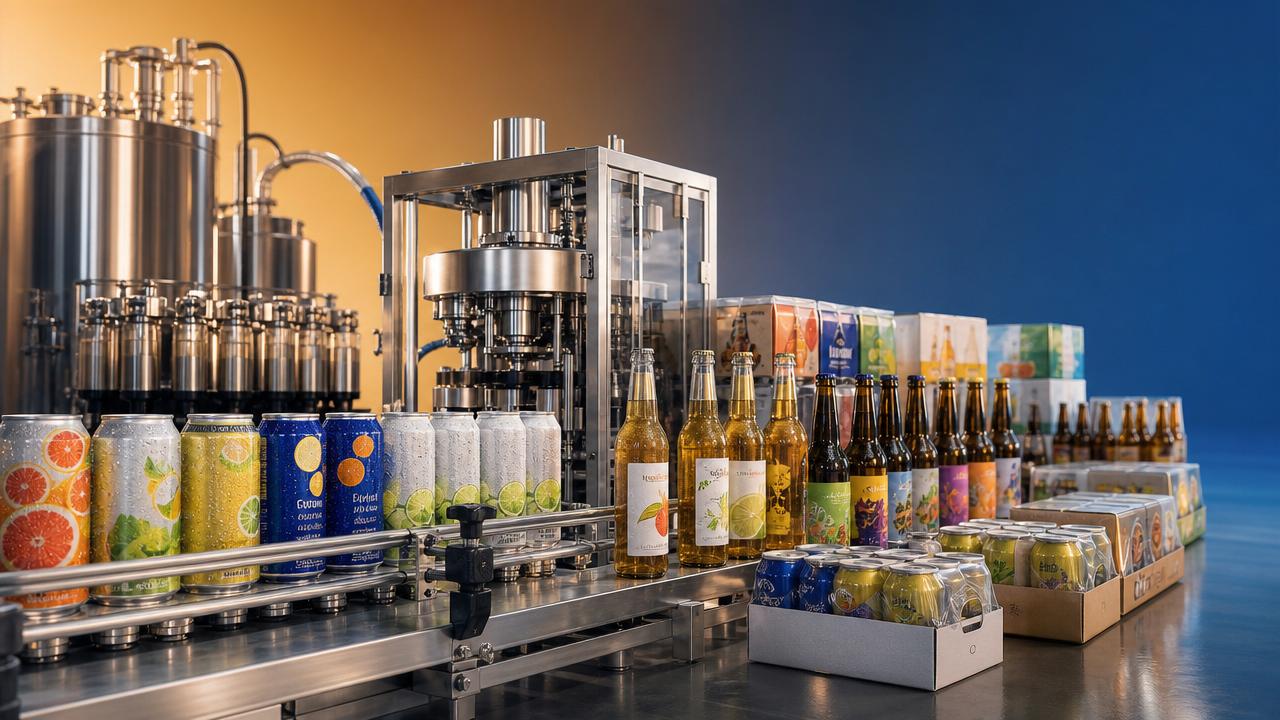
Why a Chinese Beer Factory for Private Label Matters More in 2026
Choosing a Chinese beer factory for private label in 2026 is no longer a simple price comparison.
The decision now affects product speed, legal readiness, taste innovation, packaging flexibility and long-term brand value.
In beer and beverage markets, private-label growth is moving beyond low-cost replication.
Buyers increasingly want distinctive recipes, healthier formats and packaging that fits regional retail and hospitality channels.
That is why the right Chinese beer factory for private label must deliver more than production capacity.
It must support formulation, compliance, customization and stable supply across different market conditions.
Jinpai Beer addresses this shift through craft beer R&D, flexible manufacturing and OEM/ODM services for global distribution partners.
Its portfolio includes classic lager, German wheat, sugar-free low-calorie beer, fruit-flavored beer and functional specialty beer.
The core strategic question remains clear: should a private-label beer line choose OEM or ODM in 2026?
2026 Signals a Shift from Basic Contract Brewing to Brand-Led Innovation
Several market signals show why the Chinese beer factory for private label model is evolving rapidly.
Retail shelves are becoming more segmented, and consumers expect variety within a single beverage category.
Low-calorie, sugar-free and fruit-infused beer are gaining space beside traditional lager and wheat beer.
At the same time, bars, restaurants and supermarkets want exclusive labels that reduce direct price comparison.
Cross-border e-commerce is also raising expectations for design, compliance labeling and faster launch cycles.
As a result, a Chinese beer factory for private label must help brands compete through differentiation, not only through low manufacturing cost.
This trend strongly favors factories with recipe development capability and broad packaging adaptability.
What is pushing this transition
OEM and ODM Are No Longer Interchangeable Choices
In 2026, OEM and ODM serve different growth strategies.
A Chinese beer factory for private label should explain those differences clearly before production begins.
When OEM fits better
- You already own a beer recipe, taste profile or packaging concept.
- You want tighter control over brand identity and product positioning.
- You need a production partner to execute your existing specifications consistently.
- You have market insight and prefer to protect a proven formula.
When ODM fits better
- You want to launch quickly without developing every formula from zero.
- You need R&D support for craft beer, fruit beer or low-calorie beer concepts.
- You want market-ready solutions adapted from proven brewery experience.
- You aim to test several market segments with lower development complexity.
A practical comparison for 2026
How the Choice Affects Product, Packaging and Market Performance
The OEM versus ODM decision shapes more than production workflow.
It influences flavor uniqueness, launch timing, packaging options and margin structure.
For private-label beer, these factors can directly affect repeat purchase and shelf visibility.
A Chinese beer factory for private label with broad product capability can reduce the trade-off between speed and differentiation.
Jinpai Beer supports this with multiple beer styles and customized solutions for varied retail environments.
Key business effects to watch
- Recipe flexibility affects whether the brand can follow fast-moving flavor trends.
- Packaging adaptability influences suitability for supermarkets, bars and online sales.
- Quality consistency affects consumer trust and reorder stability.
- Compliance support reduces export delays and relabeling costs.
- MOQ and production planning shape inventory pressure and cash flow.
In this environment, a capable Chinese beer factory for private label becomes a growth partner rather than a simple bottling supplier.
What Global Partners Should Prioritize Before Selecting a Factory
The strongest factory choice in 2026 will align technical capability with brand strategy.
This is especially important in beer, where taste, freshness perception and package identity all influence buying decisions.
Before choosing a Chinese beer factory for private label, several checkpoints deserve close attention.
Core evaluation points
- Does the factory offer both OEM and ODM, or only one route?
- Can it develop trend-driven products such as sugar-free or fruit-flavored beer?
- Is there experience serving restaurants, supermarkets, bars and mixed retail channels?
- Can the supplier support custom labels, packs and market-specific documentation?
- How stable are production schedules, quality controls and export coordination?
Jinpai Beer stands out because it combines craft beer R&D, broad style coverage and customized manufacturing support.
This creates more room to build a private-label beer line that is both scalable and differentiated.
A Balanced Decision Framework for OEM or ODM in 2026
There is no universal answer for every private-label beer project.
The better choice depends on how much product ownership, speed and innovation support the business needs.
In many cases, the most effective strategy is phased.
Start with ODM for speed, then shift selected winning products into deeper OEM customization.
A flexible Chinese beer factory for private label can support that transition without disrupting supply continuity.
What to Do Next if You Want a Competitive Private-Label Beer Line
The next step is to define your market position before discussing volumes.
Clarify whether the target is classic lager demand, wheat beer differentiation, low-calorie growth or fruit-flavored novelty.
Then match that direction with the right OEM or ODM pathway.
If speed, concept testing and technical support are urgent, ODM may be the stronger entry point.
If proprietary taste and long-term brand control matter most, OEM will usually offer better strategic value.
Jinpai Beer helps global partners evaluate both routes through customized beer development, wholesale supply and export-ready production support.
For brands seeking a dependable Chinese beer factory for private label, the best outcome comes from combining trend awareness with manufacturing flexibility.
That is how private-label beer lines become more competitive in 2026 and beyond.
Related Posts
- ▶ What Makes a Chinese Beer Factory Competitive in Global Contract Brewing? Quality Consistency, Scalability, and IP Protection Frameworks
- ▶ How Chinese Beer Factory Export Performance Differs by Destination: EU Tariff Quotas vs. Southeast Asia Local Content Rules
- ▶ Why Malt Drink Factories Often Underestimate Water Treatment Needs for Beer Production — Hardness, Chlorine, and Silica Implications
Online Message
Thank you very much for writing to us. Please leave your message and contact information, we will reply to you within 24 hours.