



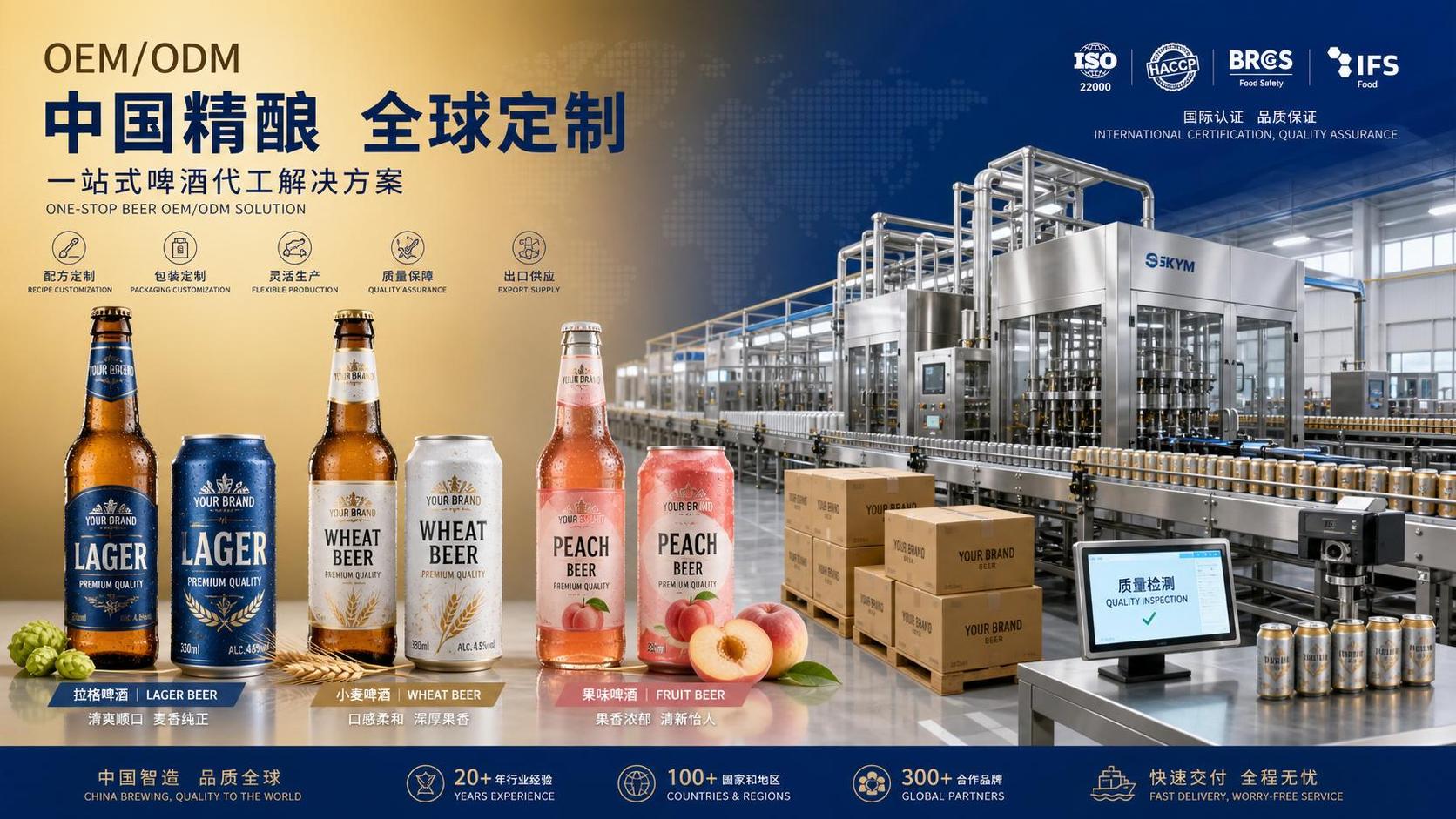
Wondering how to choose a Chinese beer factory for private label success? The right partner should offer stable quality, flexible OEM/ODM service, strong R&D capability and reliable global supply. From classic lager and German wheat to sugar-free, fruit and functional beers, choosing an experienced manufacturer can help you build a distinctive brand, control costs and enter international markets with confidence.
For importers, distributors, retailers, bar chains, and brand owners, the decision goes far beyond price. A capable brewery partner affects taste consistency, label compliance, launch speed, reorder reliability, and long-term brand reputation across 3 to 5 sales channels.
If you are evaluating how to choose a Chinese beer factory for private label programs, this guide breaks down the practical criteria that matter most: production capability, formulation support, packaging flexibility, quality control, export readiness, and communication efficiency.
Why the Right Chinese Beer Factory Matters for Private Label Growth
Private label beer can deliver stronger margin control, sharper market positioning, and faster category expansion than reselling a standard product. However, these benefits usually appear only when the manufacturer can support stable output over 2 to 4 production cycles.
In beverage sourcing, inconsistent flavor, delayed shipping, or weak packaging execution can create losses quickly. A single issue in carbonation, filling accuracy, or carton strength may affect retail shelves, bar service, and online customer reviews at the same time.
Key business reasons buyers look to China
- Access to broad beer styles, from classic lager and German wheat to low-calorie and fruit beer
- Flexible OEM/ODM development for different alcohol levels, bitterness profiles, and flavor trends
- Scalable production suitable for trial runs, seasonal launches, and container-based repeat orders
- Cost structure that can support wholesale, supermarket, restaurant, and private distribution models
Common sourcing risks to avoid
When buyers ask how to choose a Chinese beer factory for private label business, the biggest risks usually involve 4 areas: unstable taste, unclear MOQ, slow sampling, and poor export document handling. These problems can delay launch by 30 to 60 days.
Another frequent issue is weak product-market fit. A brewery may produce good beer, but without R&D support for sweetness, aroma, color, or calorie targets, the final product may not match local consumer demand.
What a strong partner should deliver
- Consistent brewing and packaging quality across repeated batches
- Clear OEM/ODM workflow from formula discussion to final shipment
- Fast technical response, ideally within 24 to 72 hours for active projects
- Practical export support for labels, documents, loading plans, and shelf-life management
How to Evaluate Production Capability and Product Range
A reliable answer to how to choose a Chinese beer factory for private label starts with production fundamentals. You need to know whether the brewery can make your target style repeatedly, not just once for a sample.
For example, a supplier serving multiple channels should ideally handle mainstream and specialty lines, such as classic lager, wheat beer, sugar-free low-calorie beer, fruit beer, and functional specialty beer. This breadth helps brand owners expand from 1 SKU to 3 or more.
Questions to ask about brewing capability
- Can the factory support different bitterness ranges, such as light, medium, and stronger hop profiles?
- Can alcohol content and calorie level be adjusted for local market positioning?
- How many packaging formats can be offered for the same liquid?
- Can seasonal or promotional flavors be developed within 2 to 6 weeks?
The table below shows practical evaluation points when comparing beer factories for private label cooperation.
A factory with broader product capability gives buyers more than supply security. It creates room for brand architecture, including entry-level, premium, low-sugar, and seasonal extensions without changing the manufacturing base.
Why R&D matters in modern beer categories
Consumer demand is shifting beyond standard lager. In many markets, buyers now want lighter calories, more fruit notes, smoother wheat texture, or functional positioning. A private label brewery should support at least 3 types of product adaptation: taste, nutrition direction, and packaging presentation.
Jinpai Beer, for example, focuses on R&D, production, and distribution of craft beer, with product categories covering classic lager, German wheat, sugar-free low-calorie beer, fruit-flavored beer, and functional specialty beers. For distributors, this range can support both mass-market and niche retail planning.
OEM/ODM Service: What Flexibility Should You Expect?
A major part of how to choose a Chinese beer factory for private label lies in service flexibility. Many buyers do not need only contract production. They need development support, packaging coordination, and channel-specific recommendations.
A useful OEM/ODM system usually covers 5 steps: demand confirmation, sample development, packaging design adjustment, production approval, and shipment coordination. If one of these stages is weak, the project can slow down significantly.
OEM vs ODM in beer private label projects
Some buyers already have a target formula and only need brewing plus packaging execution. Others need full concept support, from flavor suggestion to label adaptation. The right factory should be able to handle both approaches without confusion.
The following table outlines the difference between OEM and ODM in practical beer projects.
For first-time importers, ODM or hybrid service often reduces development risk. For mature distributors, OEM may offer tighter control over positioning and cost structure. The best supplier can support both without forcing a one-size-fits-all workflow.
Packaging and channel fit
Beer that sells in bars may need a different presentation from beer designed for supermarkets or online bundles. A professional factory should discuss container format, secondary packaging, and transport protection before final confirmation.
Ask whether the supplier can support at least 3 common scenarios: restaurant supply, retail shelf display, and cross-border distribution. This is especially important when your launch plan includes both offline and online channels.
Useful checks before approving packaging
- Carton strength for long-distance shipping and container stacking
- Label readability after chilling, condensation, and handling
- Barcode and mandatory market information placement
- Color consistency between sample print and bulk production
Quality Control, Compliance, and Export Reliability
When discussing how to choose a Chinese beer factory for private label, quality control should be checked at 3 levels: raw material management, production monitoring, and finished goods inspection. Focusing on only one stage is not enough.
Buyers should also confirm how the brewery handles shelf life, storage conditions, and shipment timing. Beer is sensitive to heat, vibration, and prolonged warehousing. Even a well-brewed product can lose freshness if logistics are not planned carefully.
What to verify during quality review
- Batch records and sample retention for each production run
- Packaging inspection for sealing, fill level, label placement, and carton condition
- Pre-shipment checks covering quantity, appearance, and outer packing integrity
- Response process if product adjustment or claim handling is needed after delivery
The table below summarizes the main control points buyers should review before placing a larger reorder.
A dependable export brewery should also communicate realistic lead times. In many private label beer projects, sampling may take 7 to 15 days, artwork confirmation 5 to 10 days, and bulk production another 2 to 5 weeks depending on volume and packaging complexity.
Document and logistics readiness
Private label export success depends not only on the beer itself but on shipment execution. Ask the factory what documents are typically prepared, how cartons are marked, and how they coordinate loading for mixed SKUs.
If your route involves multiple retail markets, make sure the supplier can support label version control and packing list accuracy. Small documentation errors can delay customs clearance and raise storage costs.
How to Compare Suppliers and Make the Final Decision
Knowing how to choose a Chinese beer factory for private label means turning information into a decision framework. Instead of comparing only quoted price, score each supplier across 5 practical dimensions: product fit, quality system, service speed, packaging flexibility, and supply reliability.
A lower unit price may look attractive, but if the supplier cannot handle revisions, mixed flavors, or repeat orders on time, your total business cost can rise through launch delays, rework, and customer complaints.
A simple 5-point evaluation method
- Request product samples for 2 or 3 beer styles relevant to your market.
- Evaluate communication speed over a 7-day period.
- Check whether MOQ and lead time match your channel plan.
- Review packaging support for labels, cartons, and display needs.
- Confirm reorder capability for the next 1 to 2 quarters.
Who benefits most from this sourcing model
- Distributors building exclusive regional beer labels
- Supermarkets launching value and premium house brands
- Restaurant and bar groups seeking custom draft or packaged identity
- E-commerce sellers testing fruit, low-calorie, or functional beer niches
Signs you may have found the right factory
The supplier understands your target channel, asks detailed questions, offers realistic timelines, and proposes workable alternatives rather than generic promises. That level of detail usually indicates operational maturity and better long-term cooperation potential.
For buyers seeking a partner with craft beer R&D strength, broad style coverage, OEM/ODM support, wholesale supply, and customized solutions for restaurants, supermarkets, bars, and retail channels, Jinpai Beer represents a practical type of manufacturer to evaluate.
Choosing the right brewery is a strategic step in building a profitable beer brand, not just a purchasing task. The best private label partner combines product diversity, stable production, responsive development, export coordination, and channel-aware packaging support.
If you are planning your next launch in lager, wheat, sugar-free low-calorie, fruit, or functional beer categories, now is the right time to compare capabilities carefully. Contact us to discuss your private label goals, request samples, or get a customized beer solution for your market.
Thank you very much for writing to us. Please leave your message and contact information, we will reply to you within 24 hours.