



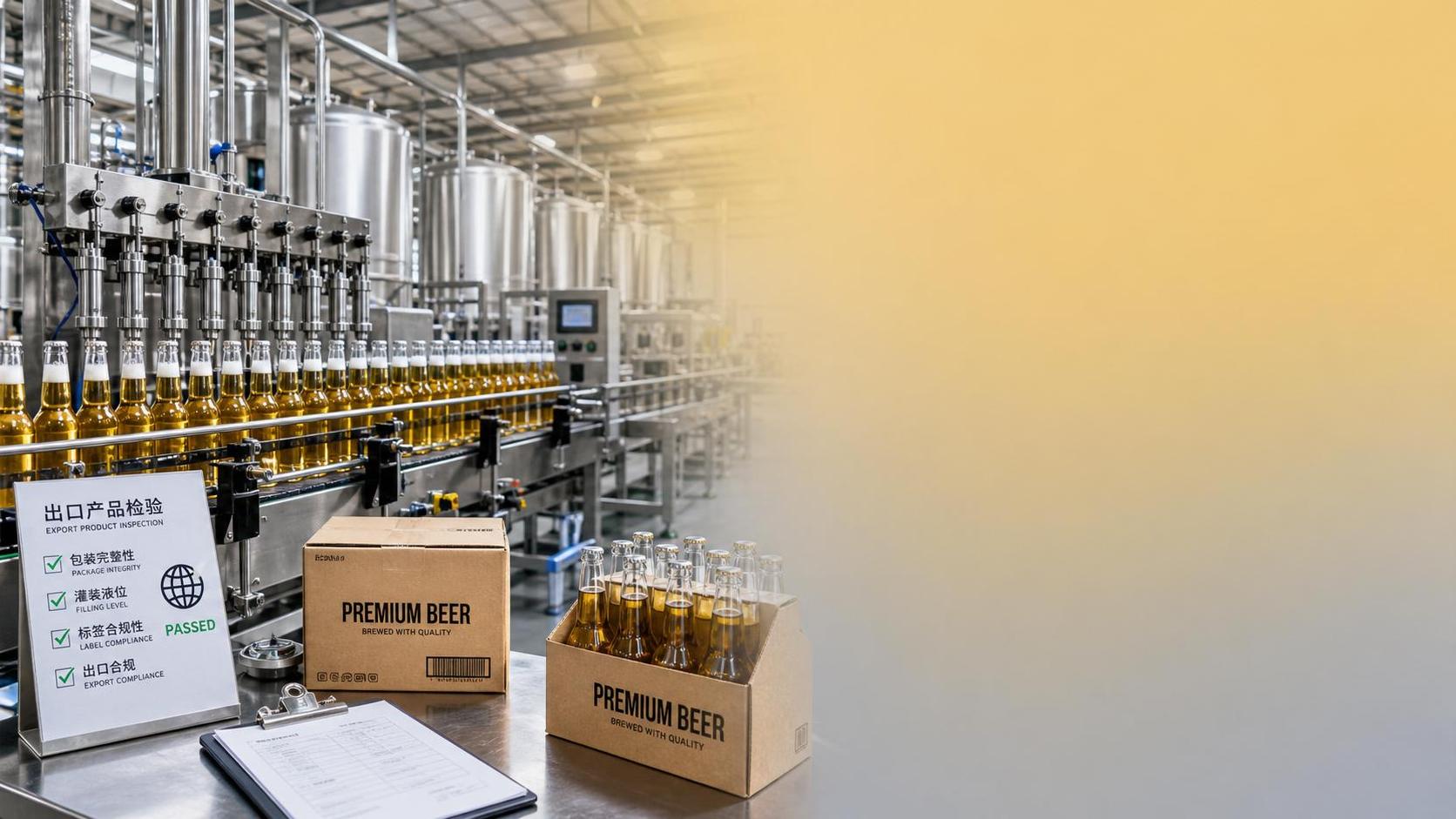
Working with a Chinese beer factory can open attractive opportunities, especially in craft beer, private label programs, and fast-moving retail channels. Still, the first order should never begin with price alone. A practical factory audit helps confirm whether the supplier can protect beer quality, meet export requirements, and support steady supply when the business grows.
In beer sourcing, small details often shape long-term results. Fermentation control, packaging stability, ingredient traceability, and OEM or ODM coordination all affect what finally reaches supermarkets, bars, restaurants, and online buyers. That is why a clear checklist matters before committing to a Chinese beer factory.
Why factory audits matter in beer sourcing
Beer is more sensitive than many packaged foods. Flavor consistency, shelf life, and transportation tolerance depend on how well the factory manages brewing and filling conditions.
A first-time importer also faces another layer of risk. Product claims, alcohol labeling, export documents, and destination market rules must align before shipment leaves the plant.
For this reason, auditing a Chinese beer factory is not just a formal step. It is a way to check whether the supplier can truly match commercial plans, compliance needs, and brand expectations.
Start with the factory’s real operating profile
Many suppliers present broad product catalogs, but an audit should verify what is produced regularly and what is only possible in theory.
A reliable Chinese beer factory should show clear information on brewing lines, fermentation tanks, filling formats, and monthly output. This helps judge whether small trial orders and larger repeat orders can both be supported.
It is also useful to compare product range with operational focus. Some factories perform best in standard lager. Others are better equipped for German wheat, fruit beer, sugar-free low-calorie beer, or functional specialty beer.
Jinpai Beer, for example, combines R&D, production, and distribution across several beer styles. That kind of structure is relevant because product diversity usually requires more disciplined process control, recipe management, and packaging coordination.
Core questions at this stage
- How many active production lines are running today, not just installed?
- Which beer categories are routine products?
- What is the minimum order quantity by SKU and package type?
- How much spare capacity is available during peak season?
- Can the plant handle mixed orders for multiple channels?
Check certifications, licensing, and export readiness
A Chinese beer factory may produce well, yet still create problems if paperwork is incomplete or market-specific requirements are poorly understood.
The audit should confirm business licenses, food production permits, and any quality or food safety certifications the factory claims to hold. If the target market requires additional testing, the factory should explain how that is handled.
Export experience matters too. A supplier serving global online and offline channels usually understands carton marks, pallet standards, customs documentation, and shipping coordination more clearly than a factory focused only on domestic trade.
Look closely at ingredients and brewing control
The value of a Chinese beer factory is not only in equipment. It also lies in how consistently the team manages malt, hops, yeast, water treatment, and adjunct ingredients.
This point becomes even more important for fruit-flavored beer, low-calorie beer, and functional specialty beer. These categories often involve added ingredients, claim-sensitive formulas, and more complex stability questions.
During the audit, ask for batch records, incoming material checks, and traceability procedures. A factory should show how raw materials are approved, stored, and linked to finished lots.
Brewing control should include measurable standards. Fermentation temperature, filtration steps, alcohol content, bitterness, dissolved oxygen, and microbiological monitoring all influence the final drinking experience.
Signs of stronger process discipline
- Documented supplier approval for key ingredients
- Lot-based traceability from raw material to shipment
- Routine sensory evaluation with recorded results
- Lab testing linked to release decisions
- Clear handling of non-conforming batches
Packaging quality is part of product quality
Importers often focus on the liquid and overlook packaging until the first complaint appears. In practice, cans, bottles, crowns, labels, trays, and cartons all affect saleability.
A Chinese beer factory should be able to explain filling line controls, seam or seal inspection, coding accuracy, and carton performance during export transport.
Label review deserves careful attention. Alcohol percentage, ingredients, shelf life, storage advice, barcode placement, and local language requirements should be checked before mass production.
This is especially relevant when products move across different retail channels. Bars may prioritize keg or bottle presentation, while supermarkets and online stores often require stronger carton consistency and clearer shelf communication.
OEM and ODM capability should be tested, not assumed
Many first projects involve private label or recipe adaptation. A Chinese beer factory may advertise OEM or ODM services, but the audit should reveal how mature that system really is.
Ask how new formulas are developed, approved, sampled, and locked for production. If packaging is customized, confirm artwork review steps, print lead times, and change control.
Factories with in-house R&D can usually respond faster when a market needs a lighter lager, a fruit-forward seasonal line, or a sugar-free low-calorie format. Still, speed should not replace documented validation.
For a business like Jinpai Beer, which offers wholesale supply and customized solutions, the important question is whether customization is supported by stable internal systems. The audit should confirm that product development and factory execution remain aligned.
Supply chain reliability often decides repeat business
A good tasting sample does not guarantee reliable long-term supply. Repeat business depends on procurement planning, production scheduling, inventory discipline, and communication during shipment preparation.
When evaluating a Chinese beer factory, review lead times for ingredients, packaging materials, and finished goods. Some delays begin outside the brewhouse, especially with custom cans, cartons, or imported brewing inputs.
It also helps to understand how the factory handles peak periods, urgent adjustments, and quality holds. A dependable operation should explain backup plans rather than relying on broad promises.
Useful audit checks for continuity
- Material inventory policy for regular SKUs
- Production scheduling visibility
- Finished goods storage conditions
- Container loading standards and inspection records
- Communication flow when delays or defects occur
How to turn audit findings into a practical decision
Not every issue discovered during an audit should end the discussion. Some gaps are manageable, while others point to structural weakness.
The most serious concerns usually involve unclear licenses, weak traceability, unstable filling control, or inconsistent response to non-conforming product. These directly affect risk exposure.
Less critical issues may include incomplete presentation materials or slower response during sample development. Those can often improve if the factory’s operational foundation is sound.
A simple scoring approach helps. Rate the Chinese beer factory across compliance, brewing control, packaging quality, OEM or ODM execution, and supply continuity. Then compare the score with your channel plan and tolerance for adjustment.
What to review before the first order
Before placing the first order, bring the audit back to commercial reality. Confirm product specification, packaging file approval, shelf-life evidence, sample sign-off, shipping term, and claims permitted in the destination market.
If the supplier supports restaurants, supermarkets, bars, and broader retail channels, ask which format performs best in each setting. That discussion often reveals whether the Chinese beer factory understands not just production, but channel fit.
The strongest next step is usually a controlled trial order with clear checkpoints. That allows a real test of quality consistency, communication, and delivery accuracy before larger commitments follow.
A factory audit is most useful when it becomes a decision framework, not a box-ticking exercise. With the right checklist, it becomes easier to compare suppliers, clarify risks, and decide whether a Chinese beer factory is ready for long-term cooperation.
Thank you very much for writing to us. Please leave your message and contact information, we will reply to you within 24 hours.