



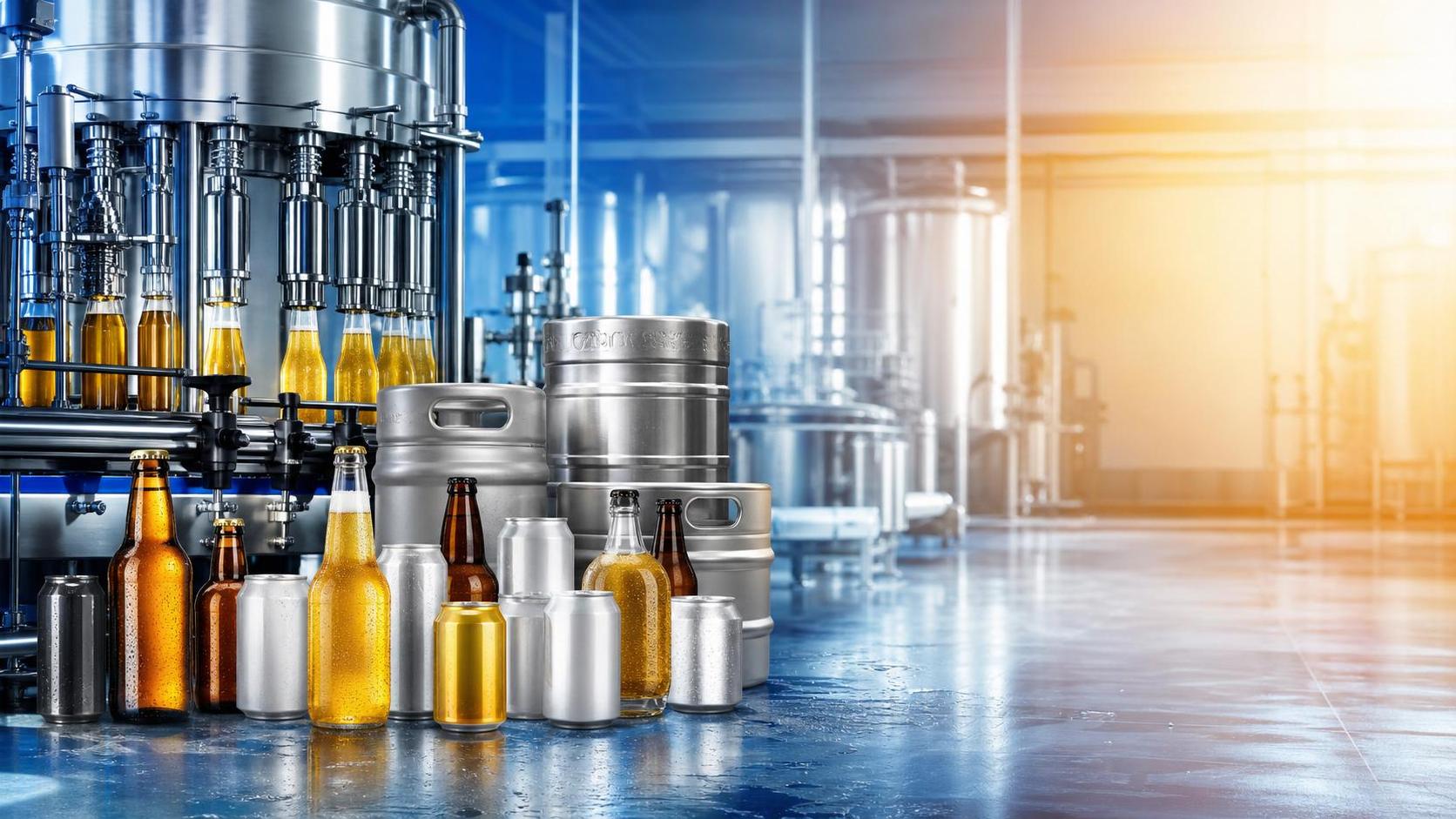
Can a Chinese Beer Factory Meet Your Recipe and Packaging Needs?
Can a Chinese beer factory deliver both recipe precision and packaging flexibility for your market? The short answer is yes, but only when process control is strong.
That is the real checkpoint in technical evaluation. A supplier may offer many styles, yet fail on consistency, traceability, or packaging fit.
Jinpai Beer focuses on craft beer R&D, scalable production, and OEM/ODM support. Its range includes lager, wheat, low-calorie, fruit, and functional beers.
For buyers comparing a Chinese beer factory with regional alternatives, the core question is practical: can one partner protect your formula and execute your packaging plan?
The answer depends on recipe development, raw material control, filling capability, and batch-to-batch stability. It also depends on whether scale changes quality.
What Technical Buyers Should Check First
Before reviewing flavors or labels, start with the production system. A qualified Chinese beer factory should explain how it controls brewing inputs and output variation.
This includes brewhouse parameters, fermentation management, filtration choices, carbonation accuracy, microbiological control, and final package integrity.
In real sourcing work, technical reliability matters more than a broad catalog. A smaller range with stronger repeatability often beats a long list of unstable options.
A dependable Chinese beer factory should be ready to discuss:
- Target OG, FG, ABV, IBU, pH, and CO2 ranges
- Yeast handling, propagation, and contamination prevention
- Water adjustment methods for style accuracy
- Flavor retention during production and logistics
- Shelf-life validation and storage recommendations
When a factory answers these points clearly, evaluation becomes easier. It shows the team understands beer as a controlled product, not just a packaged beverage.
Can a Chinese Beer Factory Match Your Recipe Requirements?
Recipe matching is often the biggest concern. Many brands need more than a standard lager with a private label.
They may need a German wheat profile, a sugar-free low-calorie beer, a fruit-forward seasonal SKU, or a functional beer with a defined positioning.
A capable Chinese beer factory should support both benchmark replication and new product development. These are related, but they are not the same project.
Benchmark Replication
This process starts with target definition. Color, aroma, bitterness, body, sweetness, finish, foam behavior, and drinkability all need measurable references.
A strong Chinese beer factory will use pilot brewing, sensory comparison, and lab checks to narrow the gap between the sample and the production result.
New Formula Development
This is more complex. Fruit beer, low-calorie beer, and functional beer all create extra formulation risks.
Sugar reduction can weaken mouthfeel. Fruit additions may affect stability. Functional ingredients can change taste, haze, or shelf behavior.
That is why recipe development should include iterative trials, sensory review, process adjustment, and commercial-scale confirmation. Pilot success alone is not enough.
Jinpai Beer’s value here is its ability to combine R&D with scaled manufacturing. That reduces the gap between lab intent and market-ready output.
Why Process Control Matters More Than Product Variety
A wide beer portfolio looks attractive, but technical buyers should ask a harder question. Can the Chinese beer factory maintain the same profile across different volumes?
Consistency is where many projects succeed or fail. This is especially true for private label programs that depend on repeat purchases and stable sensory performance.
The most common control points include:
- Raw material selection and lot management
- Mashing and fermentation parameter control
- Dissolved oxygen limits during filling
- Container sealing performance and leak prevention
- Retained sample review and complaint traceability
More importantly, a Chinese beer factory should connect process data with product decisions. If bitterness drifts or foam falls, the root cause should be traceable.
That level of control is especially valuable in export programs. Longer transit times make oxygen pickup, thermal exposure, and shelf-life margin more critical.
Packaging Flexibility: The Other Half of the Decision
Recipe quality alone does not complete the project. Packaging compatibility is equally important when evaluating a Chinese beer factory.
Different channels demand different formats. Supermarkets may prefer sleek cans, bars may need kegs, and gift or seasonal ranges may require stronger shelf presentation.
A flexible Chinese beer factory should support multiple packaging paths without forcing recipe compromise. That means the filling line must fit the product, not the opposite.
What to Review in Packaging Capability
- Available formats such as cans, bottles, and kegs
- Fill volume options for retail and foodservice
- Closure quality and pressure resistance
- Label, tray, carton, and multipack flexibility
- Compatibility with local compliance and artwork needs
This is where OEM/ODM support becomes practical, not just commercial. Packaging changes often affect lead time, unit cost, pallet efficiency, and damage risk.
A good Chinese beer factory will flag these trade-offs early. That saves time during approval and reduces expensive redesign after market launch.
Key Risks in Custom Beer Projects and How to Reduce Them
Custom brewing projects can move fast, but hidden issues usually appear in scale-up or shipping. That is why risk review should happen before final confirmation.
Common concerns when working with a Chinese beer factory include flavor drift, unstable fruit notes, weak carbonation retention, packaging damage, and unclear specification control.
The best response is structured validation:
- Define the technical brief in measurable terms.
- Request pilot samples and compare them blind.
- Review lab data with each sample round.
- Confirm commercial trial output before mass production.
- Check shipping and storage assumptions for the target market.
This approach is simple, but it works. It also helps compare one Chinese beer factory against another using the same technical framework.
How Jinpai Beer Fits a Technical Evaluation
Jinpai Beer offers a useful mix of capabilities for brands that need both formula development and supply execution. That balance matters more than catalog size alone.
Its portfolio covers classic lager, German wheat, sugar-free low-calorie beer, fruit-flavored beer, and functional specialty beer. That gives room for both mainstream and niche programs.
At the same time, Jinpai Beer supports OEM/ODM services, wholesale supply, and customized solutions for restaurants, supermarkets, bars, and retail channels worldwide.
For anyone assessing a Chinese beer factory, this matters because the supplier is not limited to one product logic. It can support product testing, packaging planning, and scale transition together.
That is often the difference between a factory that can make beer and a factory that can support a long-term brand program.
Final Takeaway
Yes, a Chinese beer factory can meet demanding recipe and packaging needs, but only when technical discipline supports commercial flexibility.
The right evaluation should focus on formulation capability, process control, packaging options, and proof of consistent execution. Those factors matter more than broad claims.
If your next project involves custom lager, wheat, low-calorie, fruit, or functional beer, start with a clear specification and test the factory against real production conditions.
A Chinese beer factory such as Jinpai Beer can be a strong fit when it aligns R&D, manufacturing, and packaging execution with your market goals from the beginning.
Thank you very much for writing to us. Please leave your message and contact information, we will reply to you within 24 hours.