



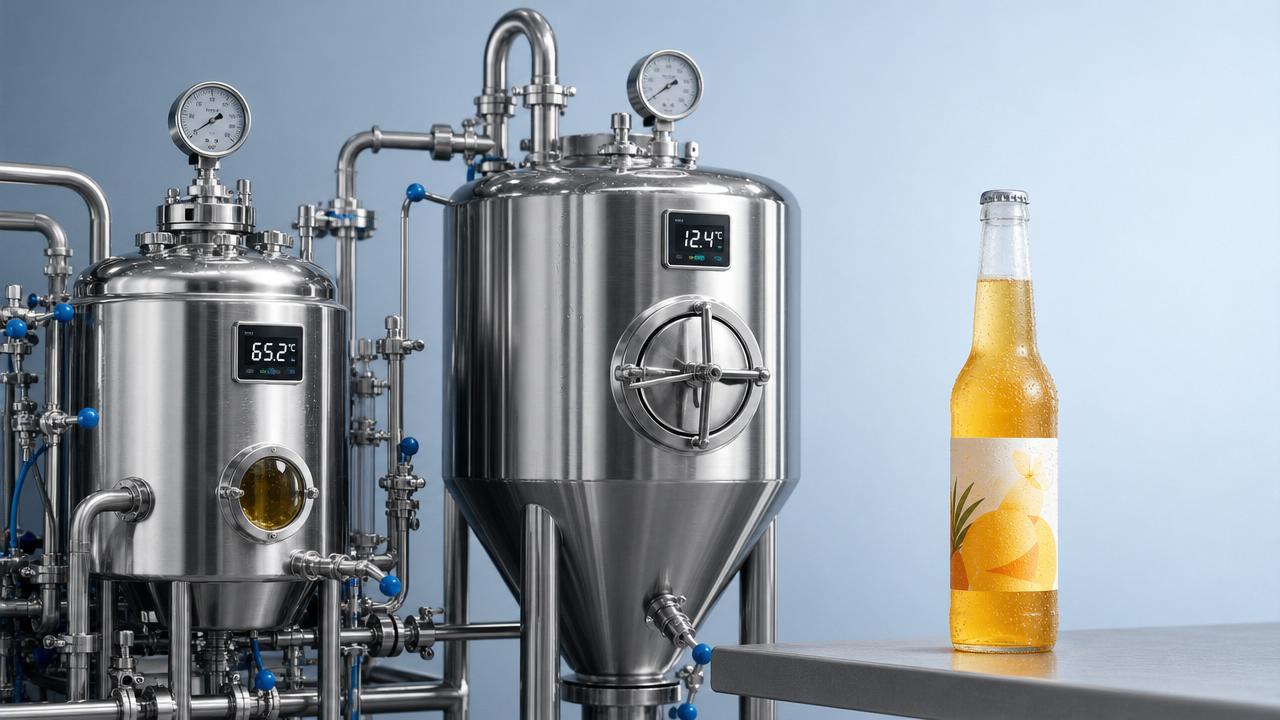
Struggling with slow sample approvals and missed launch windows? Jinpai Beer—a global craft beer OEM/ODM partner—helped one brand slash sample lead time by 60% through agile communication, in-house R&D, and rapid prototyping. If you’re asking how to find a reliable China beer OEM supplier, the answer lies not just in certifications or capacity—but in responsiveness, formulation expertise, and true partnership. Designed for brewers, brand owners, and procurement managers who need speed without compromising quality, this case reveals the operational levers that turn supplier selection into a competitive advantage.
Why Sample Speed Is Your Launch Lifeline
In craft beer, timing is non-negotiable. A delayed sample means postponed shelf placement, missed seasonal promotions (e.g., summer fruit beers or winter spiced ales), and lost shelf space to faster-moving competitors. For brand owners launching in EU or North American markets, every week of delay adds cost—freight rebooking, marketing calendar shifts, and distributor contract renegotiations.
Unlike commodity beverages, craft beer formulations demand iterative testing: yeast behavior under local water profiles, carbonation stability across shipping climates, label adhesion on textured cans, and sensory alignment with target demographics. That’s why “sample lead time” isn’t just about bottling—it’s about closed-loop feedback between brewer, lab, and production floor.
What Separates a Reliable China Beer OEM Supplier?
Many brands equate reliability with factory size or ISO certification. But those metrics don’t predict how fast your first 5L pilot batch arrives—or whether your sugar-free low-calorie variant hits target ABV ±0.1% and residual sugar ≤1.2g/L. True reliability in craft beer OEM hinges on three integrated capabilities:
- In-house brewing R&D team—not just QA staff—with documented experience scaling German wheat, hazy IPAs, and functional beers (e.g., CBD-infused or vitamin-enriched variants).
- Dedicated sample workflow: pre-approved ingredient libraries, shared digital spec sheets (with version control), and real-time photo/video updates at each stage (mashing, fermentation, filtration, canning).
- Regulatory agility: ability to pre-validate labels against EU FIC, US TTB, and ASEAN food labeling rules—and adjust formulations preemptively (e.g., swapping maltodextrin for erythritol to meet “sugar-free” claims in Canada).
How Jinpai Beer Delivered 60% Faster Sampling: A Breakdown
The client—a U.S.-based specialty beverage brand launching a line of tropical fruit-flavored seltzer-beer hybrids—faced 14-week sample cycles with their prior OEM partner. Jinpai reduced it to 5.6 weeks. Here’s how:
Crucially, Jinpai embedded the client’s QA lead into its weekly formulation sync—no timezone barriers, no translation lag. All sensory evaluations used standardized BJCP-style scorecards with timestamped video reviews. This eliminated “revise-and-resubmit” cycles common in email-only workflows.
Procurement Checklist: 5 Non-Negotiables When Evaluating China Beer OEM Partners
Don’t rely on brochures. Ask these questions—and demand evidence:
- “Show me your last 3 craft beer samples shipped to [your target market].” Verify actual shipping documents—not just lab reports.
- “Which yeast strains do you stock in-house for German wheat or kettle-soured styles?” Stocked cultures cut lag vs. third-party import.
- “How do you validate ‘sugar-free’ claims for low-calorie variants?” Look for AOAC Method 998.10 or equivalent enzymatic glucose/fructose assays—not just “no added sugar” statements.
- “Can your canning line handle 250ml slim cans at 45 CPM without seam defects?” Request video of current run speed on your exact format.
- “Who owns the formulation IP after sampling?” Ensure full transfer rights before NDA signing.
FAQ: Key Questions From Brand Owners & Procurement Managers
How to find a reliable China beer OEM supplier—beyond factory audits?
Audit the workflow, not just the walls. Request access to their sample tracking dashboard for one live project. Observe response time to technical queries (e.g., “How does your centrifuge affect haze stability in unfiltered NEIPAs?”). A reliable partner answers within 4 business hours—not 3 days.
What’s the realistic minimum sample lead time for a custom fruit-flavored craft beer?
With pre-qualified ingredients and shared specs: 4–6 weeks. Anything under 4 weeks usually sacrifices analytical rigor (e.g., skipping 28-day stability testing) or regulatory validation. Jinpai’s 5.6-week benchmark includes full microbiological hold testing and TTB formula approval support.
Do you support small-batch pilot runs (<500L) for market testing?
Yes. Jinpai operates dedicated 300L and 1,000L pilot systems calibrated to full-scale parameters. Clients pay per liter—not per batch—making test iterations financially scalable. Minimum order: 200L for lagers; 300L for high-yeast-demand styles (e.g., Belgian tripels).
Why Partner With Jinpai Beer for Your Next Craft Beer Launch?
We’re not a contract packager—we’re your formulation co-pilot. Our in-house team includes certified Master Brewers (MBAA), sensory scientists trained in ASTM E679 methods, and regulatory specialists fluent in TTB, EFSA, and MFDS requirements. We’ve scaled over 120 craft beer SKUs across 18 markets—including sugar-free low-calorie lagers compliant with Health Canada’s “Low Sugar” definition, and functional beers with clinically dosed L-theanine for calm focus.
Ready to cut your next sample cycle? Contact us today for:
- Free formulation feasibility review (share your spec sheet—we’ll flag scalability risks in <48 hrs)
- Sample timeline assessment with milestone map (including customs documentation handoff)
- Ingredient compliance report for your target market (EU, US, Australia, Japan, etc.)
- Wholesale MOQ confirmation and landed-cost breakdown (FOB + duty + VAT)
Thank you very much for writing to us. Please leave your message and contact information, we will reply to you within 24 hours.