



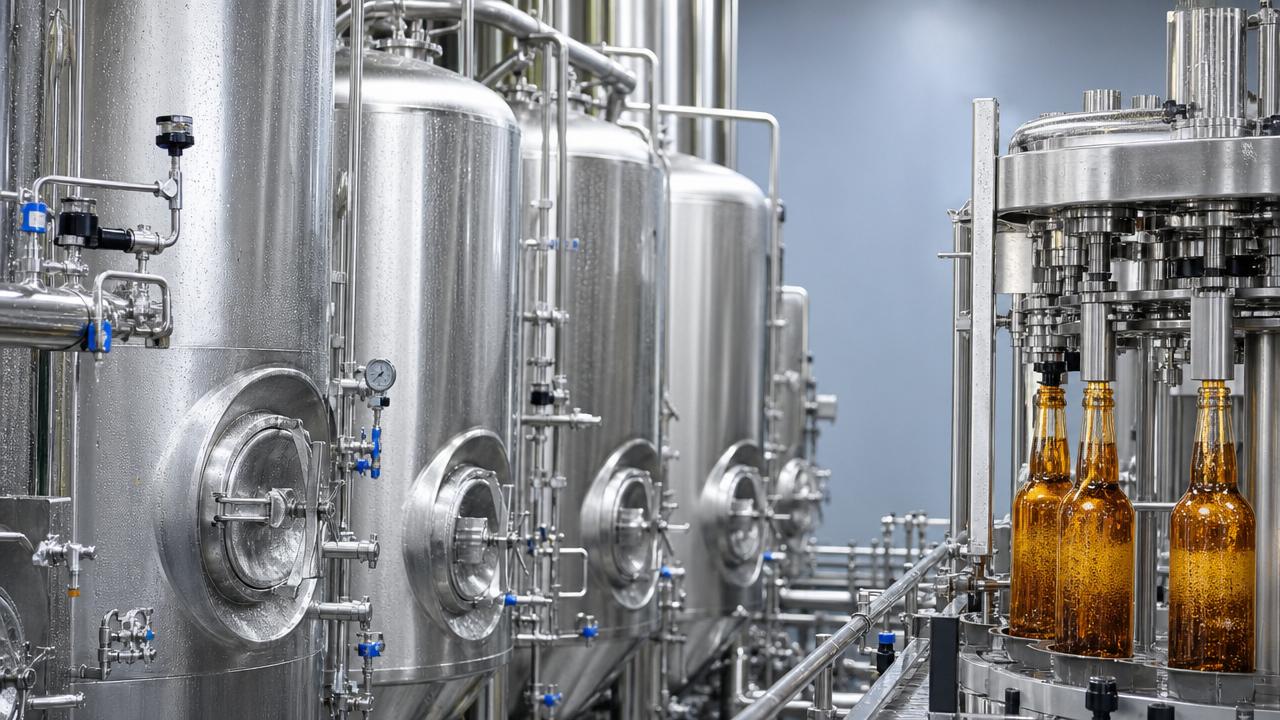
For finance approvers vetting China beer OEM suppliers, skipping on-site verification may seem like a time- and cost-saving shortcut—until hidden liabilities surface: inconsistent quality, compliance gaps, or delayed shipments that erode margins. How to find a reliable China beer OEM supplier isn’t just about certifications or quotes—it’s about verifying real production capacity, traceable raw materials, and audit-ready hygiene standards. At Jinpai Beer, we invite due diligence through transparent facility access, batch-level QA documentation, and flexible small-batch OEM trials—ensuring your investment aligns with brand integrity and ROI targets.
When “Paper Compliance” Fails Under Real Production Pressure
A factory certificate looks identical whether issued for a 200L pilot brewery or a 20,000L commercial line. Yet scaling from sample batches to full container loads exposes critical gaps: yeast propagation control, hop oil retention during pasteurization, or label adhesion under humid warehouse conditions.
Without physical verification, auditors rely on third-party reports dated months prior—or worse, self-declared ISO 22000 or HACCP status. These documents rarely capture seasonal bottlenecks (e.g., barley harvest delays), equipment calibration drift, or staff turnover in QC roles.
How to Find a Reliable China Beer OEM Supplier: 4 High-Risk Scenarios Where On-Site Checks Prevent Loss
Scenario 1: Launching a Sugar-Free Low-Calorie Craft Line
Stevia or monk fruit sweeteners behave unpredictably during fermentation and filtration. Off-site labs cannot replicate your exact cold-crash timing or carbonation pressure profile.
- On-site check confirms dedicated stainless-steel lines (no cross-contact with maltose-based batches)
- Verifies enzymatic activity logs for adjunct conversion consistency
- Validates CO₂ solubility testing at 2°C–4°C—not just room-temperature specs
Scenario 2: Sourcing German Wheat Beer with Authentic Hefeweizen Characteristics
True banana-clove esters require precise Bavarian yeast strain handling, open fermentation vessels, and strict temperature ramping. Many Chinese co-packers substitute cheaper hybrid yeasts or skip secondary conditioning.
- On-site visit observes yeast storage protocols (−80°C vials vs. reused slurry)
- Confirms absence of forced CO₂ sparging during transfer (preserves volatile esters)
- Reviews turbidity stability data across 90-day shelf life at 25°C
Scenario 3: Scaling Fruit-Flavored Beers for Retail Chains
Real fruit purées introduce microbiological variability. Pasteurization must balance pathogen kill with flavor compound preservation—a narrow thermal window.
- Verification checks steam-jacketed kettle calibration (±0.3°C tolerance)
- Confirms cold-side UV sterilization of fruit addition nozzles
- Validates pH shift tracking pre/post fruit dosing (critical for haze control)
Scenario 4: Launching Functional Specialty Beers (e.g., Adaptogen-Infused or Vitamin-Enhanced)
Regulatory alignment differs sharply between domestic Chinese health food rules and EU Novel Food or US FDA DSHEA frameworks. Ingredient sourcing transparency is non-negotiable.
- On-site review traces adaptogen powder origin (GMP-certified farms only)
- Confirms separation of functional ingredient blending zones from standard brewhouse
- Validates stability testing for vitamin degradation (e.g., B12 loss >12% after 60 days at 30°C)
What “Reliability” Actually Means Across Key Operational Dimensions
Three Overlooked Red Flags Even Experienced Buyers Miss
First: “Shared tank farms.” A supplier claiming “dedicated craft lines” may route your sugar-free batch through the same fermenter used for high-ABV imperial stouts—without proper caustic recycling or passivation.
Second: “Export-only labeling.” If labels are printed offshore and shipped separately, color registration drift or varnish adhesion failure often goes undetected until customs inspection—causing costly rework.
Third: “No small-batch OEM trials.” Reputable China beer OEM suppliers offer ≤500-L trial runs with full analytical reporting. Refusal signals inflexibility—or inability to meet your spec without major line reconfiguration.
Your Next Step: Turn Due Diligence Into Action
Jinpai Beer simplifies how to find a reliable China beer OEM supplier—not by eliminating verification, but by making it efficient and actionable:
- Schedule a live video walkthrough of our ISO 22000-certified brewhouse—including raw material quarantine zone and cold-fill line
- Request a free 200-L OEM trial of your formulation—with full QC dossier (IBU, SRM, diacetyl, ester profile, microbial plate counts)
- Access our shared portal for real-time batch release notifications and certificate-of-analysis downloads
Reliability isn’t proven in a PDF. It’s confirmed in the condensation on a fermenter jacket, the logbook signature beside a yeast viability test, and the unopened case sitting in your warehouse—exactly as specified, on schedule, every time.
Start your verified OEM partnership today. Contact Jinpai Beer for facility access, trial coordination, and custom compliance support tailored to EU, US, ASEAN, or GCC markets.
Thank you very much for writing to us. Please leave your message and contact information, we will reply to you within 24 hours.