



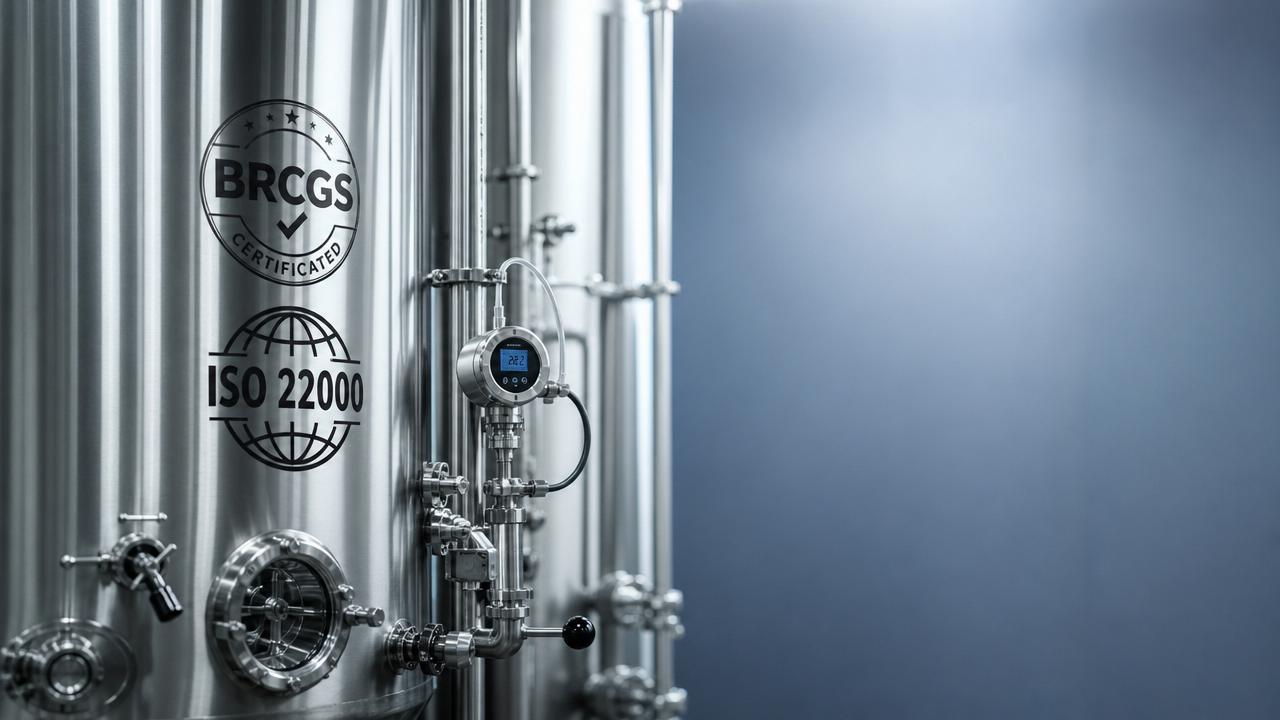
As craft beer contract brewing gains strategic traction in 2026, forward-thinking beverage companies are redefining agility, scalability, and innovation across their supply chains. For decision-makers navigating rising production costs, regulatory complexity, and shifting consumer demand—especially for sugar-free, fruit-infused, and functional craft beers—contract brewing is no longer just a cost-saving tactic, but a core growth enabler. Jinpai Beer, a full-service craft beer R&D and manufacturing partner, empowers global brands with end-to-end OEM/ODM solutions, from recipe development to compliant global distribution. Discover how smart contract brewing partnerships are accelerating time-to-market—and transforming supply chain resilience—in today’s competitive craft beer landscape.
Why Contract Brewing Is Now a Strategic Imperative
The craft beer market grew 12.3% globally in 2025—but profit margins shrank by 8.1%. Rising energy, raw material, and compliance costs have made in-house brewing facilities increasingly inefficient for emerging labels and diversified foodservice operators. Simultaneously, consumers demand faster innovation cycles: 68% of craft beer buyers tried three or more new styles in the past quarter, with top drivers being low-calorie profiles, botanical infusions, and functional benefits like digestive enzymes or adaptogens.
Contract brewing bridges this gap—not as a stopgap, but as an integrated capability. It decouples brand strategy from capital-intensive infrastructure, enabling rapid iteration on sugar-free lagers, German wheat variants, or fruit-forward sours without fixed-asset risk. In 2026, it’s less about “outsourcing production” and more about orchestrating responsive, compliant, and technically precise supply chain nodes.
The 2026 Craft Beer Contract Brewing Checklist
- Validate facility certifications *before* sample approval—including BRCGS Food Safety, HACCP, and regional alcohol licensing (e.g., TTB for U.S., HMRC for UK, NMPA for China).
- Require full traceability documentation for all inputs: malt origin batch codes, hop cryo-extract COA, yeast strain verification, and sweetener supplier compliance letters (e.g., FDA GRAS for erythritol).
- Confirm cold-chain compatibility for fruit-flavored and hazy IPAs—verify tank cleaning protocols, post-fermentation filtration specs, and inline oxygen pickup limits (<15 ppb).
- Lock in formulation IP terms upfront: specify whether recipe ownership, sensory benchmarks, and process parameters remain with the brand or transfer upon payment.
- Test scale-up fidelity with a 500L pilot batch before committing to 20,000L+ runs—especially for functional beers containing heat-sensitive probiotics or botanical extracts.
- Align labeling compliance early: verify bilingual ingredient statements, allergen declarations, nutrition panels (per local regulation), and ABV rounding rules across target markets.
- Secure minimum order volume (MOV) flexibility—ideally tiered (e.g., 3,000L for launch, 10,000L for scaling) with no penalty for 15% quarterly variance.
Application Scenarios: Matching Capacity to Intent
For restaurants and taproom groups launching proprietary house beers, contract brewing enables consistent quality across multiple locations without duplicating brewhouse CAPEX. Jinpai Beer supports this with co-branded keg programs, custom can artwork integration, and real-time inventory sync via API—reducing stockouts by up to 40% versus self-distribution models.
Supermarkets and convenience chains deploying private-label craft lines benefit from Jinpai’s modular platform: one base lager recipe can be adapted into sugar-free, citrus-kissed, or ginger-spiced variants using shared fermentation infrastructure—cutting SKU development time from 14 weeks to under 5.
Global distributors entering emerging markets leverage Jinpai’s dual-certified facilities (ISO 22000 + GMP) to meet import requirements in Southeast Asia, Latin America, and the Middle East—eliminating costly third-party repackaging and reducing customs clearance delays by 60%.
Commonly Overlooked Risks in Craft Beer Contract Brewing
Many brands assume “certified facility = guaranteed output.” But certification covers hygiene—not sensory consistency. Without defined QC thresholds (e.g., IBU ±2, SRM ±0.5, diacetyl <0.1 ppm), batches drift across production runs. Jinpai embeds real-time spectrophotometry and GC-MS validation at fill, not just pre-shipment.
Another frequent oversight: water chemistry alignment. A German wheat brewed with soft water in Berlin tastes different when replicated with high-sulfate municipal water in Texas—even with identical malt and yeast. Jinpai adjusts mineral profiles per style and region, documented in every batch report.
Finally, intellectual property leakage remains under-addressed. Verbal agreements on recipe confidentiality hold little weight during disputes. Jinpai requires binding NDAs covering not only formulas but also process innovations—like low-oxygen dry-hopping techniques or enzymatic clarity stabilization—valid across jurisdictions.
Actionable Next Steps for Brand Builders
Start with a technical discovery call—not a sales pitch. Share your top 3 SKUs (including one functional or low-calorie variant), target markets, and desired launch window. Jinpai responds within 48 hours with a feasibility matrix: certified capacity availability, raw material lead times, regulatory pathway map, and pilot batch timeline.
Request a blind sensory panel against your current benchmark product. Jinpai provides anonymized feedback from 12 trained tasters (BJCP-certified and commercial buyers) across aroma, mouthfeel, finish, and style authenticity—no cost, no commitment.
If scaling beyond 50,000 liters annually, initiate co-development of a proprietary yeast strain or hop blend. Jinpai’s R&D lab offers exclusive access to non-commercial cultures and cryo-hop libraries—ensuring long-term differentiation and supply security.
Conclusion: Build Brands, Not Breweries
In 2026, the strongest craft beer brands aren’t defined by stainless steel volume—they’re measured by speed of insight, precision of execution, and resilience across volatile inputs. Contract brewing, when executed with technical rigor and contractual clarity, transforms supply chains from cost centers into innovation accelerators.
Jinpai Beer delivers more than fermentation capacity. It delivers certified scalability for classic lager, German wheat, sugar-free low-calorie, fruit-flavored, and functional specialty beers—with full OEM/ODM support, global compliance scaffolding, and zero-compromise quality control. Whether you’re launching in Tokyo, stocking shelves in São Paulo, or expanding draft lines across Berlin, your next batch starts with a single specification sheet—not a construction permit.
Ready to align your vision with verified execution? Contact Jinpai Beer today for a confidential craft beer contract brewing assessment—tailored, technical, and ready for 2026’s market realities.
Thank you very much for writing to us. Please leave your message and contact information, we will reply to you within 24 hours.