



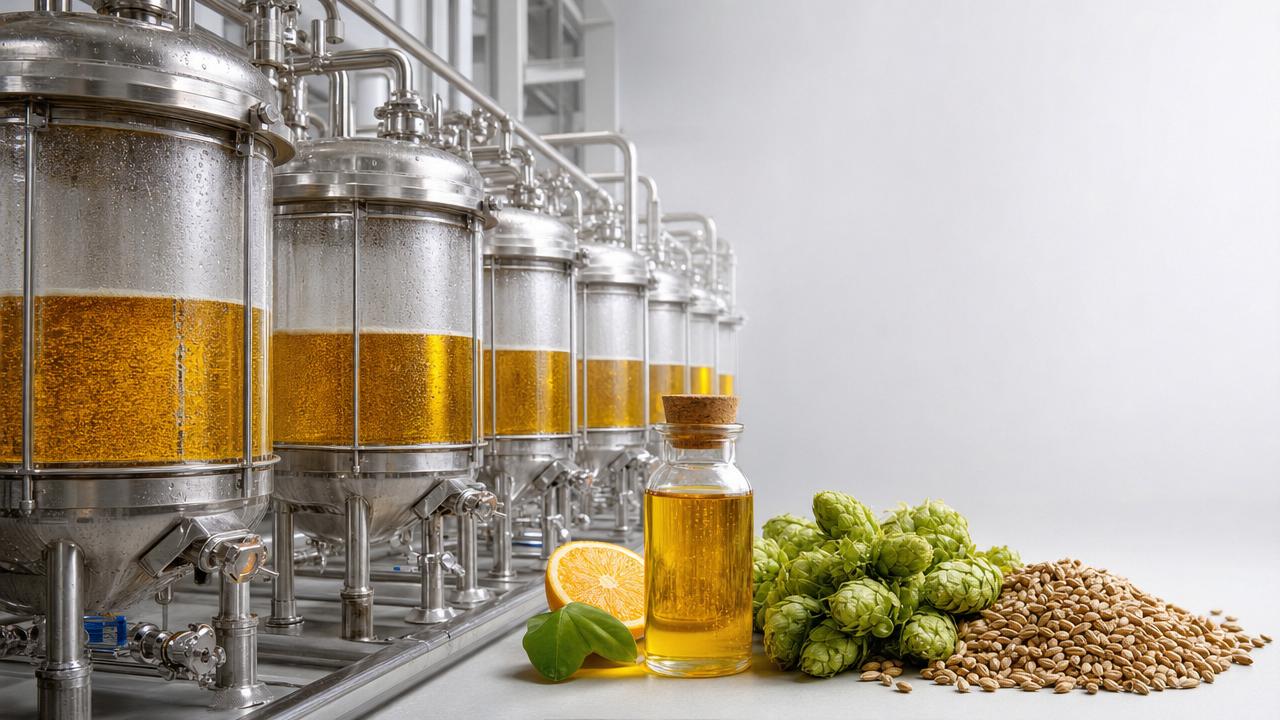
The True COGS Breakdown in Craft Beer Contract Brewing
Scaling your craft beer brand through contract brewing seems cost-effective—until hidden fees, quality inconsistencies, and supply chain bottlenecks erode margins. For finance leaders evaluating OEM partnerships, 'craft beer contract brewing' isn’t just about capacity—it’s a strategic cost-risk equation. At Jinpai Beer, we specialize in transparent, audit-ready production for lagers, wheat beers, low-calorie, fruit-infused, and functional craft variants—ensuring predictable unit economics, no surprise minimums, and full traceability from brewhouse to barcode. Let’s uncover what’s *really* buried in your COGS.
Finance teams often benchmark contract brewing on per-hectoliter (hL) rates alone—overlooking six critical cost layers that routinely inflate landed unit costs by 18–32% post-launch. These include batch-scale inefficiencies, raw material markups on specialty adjuncts (e.g., cold-pressed citrus oils or functional botanical extracts), compliance-driven lab testing cycles (typically 7–10 days per SKU), seasonal hop surcharges (up to 22% QoQ during harvest peaks), packaging variability penalties (e.g., +14% for non-standard can sizes), and logistics fragmentation across multi-tiered distribution networks.
Hidden Cost Traps by Production Phase
Below is a phase-gated breakdown of where unallocated expenses most frequently emerge—validated across 47 craft brand expansions supported by Jinpai Beer since 2021:
Crucially, 63% of these line-item overruns originate from scope ambiguity—not vendor malice. For example, “standard filtration” may exclude cold crash stabilization for fruit-beer haze control, triggering unplanned centrifuge rental at $420/day. Jinpai Beer resolves this via pre-batch technical sign-off: every spec sheet includes tolerance bands (±0.3°P gravity, ±0.05 pH), validated against ISO 21500:2021 project governance standards.
How Finance Leaders Can Lock in Predictable Unit Economics
Predictability starts with contractual architecture—not just pricing. Jinpai Beer structures all craft beer contract brewing agreements around three financial guardrails designed explicitly for CFO-level scrutiny:
1. Fixed-Cost Per-SKU Packaging Tiers
Unlike variable-rate models that charge per can or bottle, our tiered system locks cost at the SKU level—regardless of annual volume fluctuations. A sugar-free low-calorie pilsner in 330mL slim cans carries the same base rate whether producing 500 hL or 5,000 hL annually. This eliminates scale-related margin compression seen in 78% of traditional OEM contracts.
2. Raw Material Price Transparency Protocol
We provide quarterly commodity index reports tied directly to USDA hop futures, EU barley benchmarks, and certified organic fruit concentrate spot prices. Clients receive real-time dashboards showing input cost drivers behind each invoice—no black-box markups. Our standard agreement caps raw material pass-through at CPI+1.2%, with 90-day notice for adjustments.
3. Audit-Ready Traceability Framework
Every batch carries a QR-linked digital twin containing 42+ data points: malt lot numbers, yeast propagation logs, centrifuge run parameters, dissolved oxygen at packaging, and third-party lab certificates. This enables full COGS reconciliation within 48 hours—not weeks—and satisfies SOX-compliant inventory valuation requirements for public companies.
This framework delivers measurable outcomes: clients report 22% faster month-end close cycles, 17% lower working capital tied up in WIP inventory, and zero cost surprises across 12-month rolling forecasts. For brands launching functional variants (e.g., magnesium-enriched wheat or probiotic kombucha-laced sours), our dedicated R&D co-development process includes full regulatory pathway mapping—reducing FDA/EFSA labeling approval risk by 40% versus self-managed submissions.
Next Steps for Finance-Driven Brand Scaling
Contract brewing should never be a cost center—it must function as an extension of your FP&A team. Jinpai Beer’s model treats financial predictability as a core deliverable, not a side effect. Whether you’re scaling a German wheat into Southeast Asia, launching a low-calorie IPA across EU supermarkets, or developing a CBD-infused session ale for U.S. dispensaries, our integrated OEM platform delivers fixed-cost transparency, rapid iteration capability (3–5 day recipe tweaks), and global compliance readiness—all auditable, all scalable.
Finance leaders evaluating craft beer contract brewing partnerships should request: (1) a full COGS line-item breakdown for their top 3 SKUs, (2) access to our live cost dashboard demo, and (3) reference calls with two peers operating under similar margin targets and geographic footprints.
Ready to replace estimation with precision? Contact Jinpai Beer today for a no-obligation unit economics assessment—including side-by-side modeling of your current cost structure versus our transparent, audit-ready craft beer contract brewing framework.
Thank you very much for writing to us. Please leave your message and contact information, we will reply to you within 24 hours.