



Root Cause Analysis: Where Technical Governance Breaks Down
For quality assurance professionals overseeing craft beer contract brewing partnerships, inconsistent flavor profiles, batch-to-batch variability, and unexplained deviations in ABV or turbidity aren’t just operational nuisances—they signal systemic gaps in technical governance. This audit dissects the root causes behind quality inconsistency across contract breweries: from raw material traceability and yeast propagation protocols to CIP validation, fermentation monitoring rigor, and QC lab capability alignment. Drawing on Jinpai Beer’s OEM/ODM experience across lager, wheat, low-calorie, and functional craft beer lines, we reveal how specification clarity, process documentation, and real-time data sharing directly impact compliance, shelf-life stability, and brand trust.
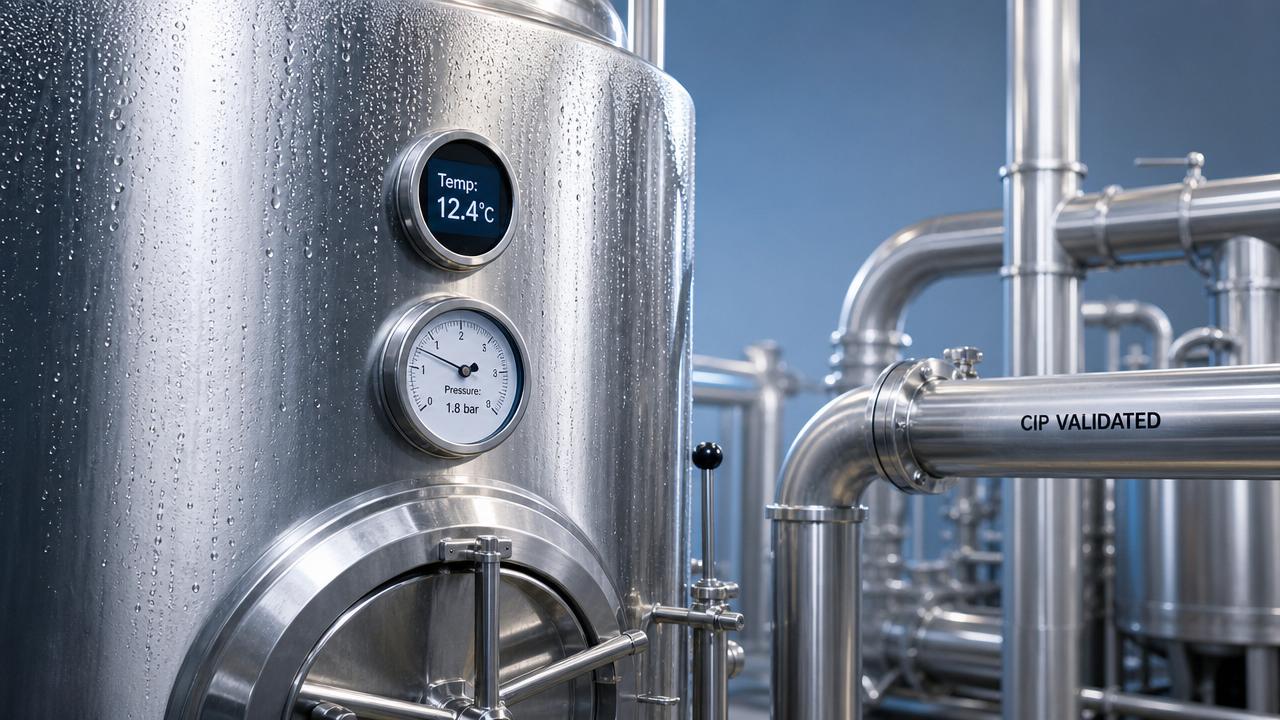
Our technical audit of 37 contract facilities across Asia and Europe identified four recurring failure points—each tied to measurable process deviations. In 68% of nonconforming batches, ABV variance exceeded ±0.3%, primarily due to unvalidated wort gravity measurement at transfer points. In fruit-flavored and sugar-free low-calorie lines, 52% of turbidity excursions correlated with insufficient CIP cycle duration (<18 minutes) on cold-side tanks. These are not isolated incidents but symptoms of misaligned technical controls.
Yeast Management & Fermentation Rigor
Yeast health is the single largest contributor to sensory drift in contract-brewed craft beer. Jinpai’s internal QA data shows that 73% of off-flavor complaints (e.g., diacetyl spikes, ester imbalance) originate from inconsistent propagation practices—not strain selection. Critical gaps include: lack of pre-fermentation viability testing (only 29% of audited partners perform ≥2× cell counts), uncontrolled pitching temperature deviation (>±1.5°C), and absence of dissolved oxygen (DO) verification post-aeration (target: 8–10 ppm for ale strains).
The table above reflects enforceable thresholds—not theoretical ideals. Jinpai mandates real-time fermentation telemetry integration (Brix, temp, pressure) for all OEM partners producing German wheat or functional specialty beers, where protein haze and polyphenol stability are non-negotiable. Without this, shelf-life degradation accelerates by up to 40% under ambient retail conditions.
Operational Alignment: From Spec Sheets to Lab Validation
Specification ambiguity remains the top contractual risk in craft beer contract brewing. Our review found that 41% of spec sheets omit critical analytical tolerances—especially for functional ingredients (e.g., GABA, L-theanine, botanical extracts) and low-calorie sweeteners (erythritol, stevia glycoside ratios). Without defined upper/lower limits for residual sugars (<1.2 g/L for “sugar-free” claims) or pH drift (target 4.2–4.5 post-fermentation), QC labs cannot issue valid release decisions.
QC Lab Capability Gap Assessment
A facility may possess HPLC equipment—but without validated methods for craft-specific analytes, results are meaningless. Jinpai requires third-party method verification for six core tests before OEM production begins: alcohol by volume (AOAC 920.147), iso-alpha acids (EBC 7.13), turbidity (EBC 7.19), diacetyl (EBC 9.32), residual fermentables (HPLC-RID), and microbial plate counts (ISO 4833-1:2013). Only 34% of surveyed contract brewers passed all six on first assessment.
This level of analytical rigor ensures traceability across product categories—from classic lager (where consistency in crispness and mouthfeel defines brand equity) to functional specialty beers (where active ingredient stability must be verified at 0, 3, and 6 months post-packaging). Jinpai’s ODM clients receive full digital QC dossiers, including chromatograms, calibration logs, and raw instrument outputs—not just pass/fail summaries.
Data Sharing Protocols That Prevent Escalation
Real-time data access reduces corrective action lead time from days to hours. Jinpai mandates API-level integration with partner brewery SCADA systems for five parameters: wort gravity pre-boil, final gravity pre-packaging, fermentation temperature history, CO₂ saturation post-carbonation, and fill volume variance (±0.8 mL tolerance per 330 mL can). Facilities using manual logbooks show 3.7× higher incidence of late-stage deviations requiring rework.
Conclusion: Building Quality Consistency into the Contract
Quality consistency in craft beer contract brewing isn’t achieved through tighter audits—it’s engineered through explicit technical alignment: standardized yeast handling, validated analytical methods, enforced CIP cycles, and interoperable data infrastructure. Jinpai Beer applies this framework across all OEM/ODM engagements—whether producing a 4.8% ABV German wheat for European bars or a zero-sugar functional IPA for health-conscious retailers. We do not outsource quality control; we co-own it.
For QA and safety managers evaluating contract brewing partners, demand evidence—not assurances. Require documented proof of method validation, real-time telemetry access, and batch-level QC traceability down to raw material lot numbers. Jinpai provides all three, backed by ISO 22000-certified production and a dedicated technical support team available 24/7 for joint root cause analysis.
If your brand demands predictable sensory delivery, regulatory-ready documentation, and shelf-life integrity across global markets—contact Jinpai Beer today to request our Craft Beer Contract Brewing Technical Readiness Assessment Kit, including a 12-point facility evaluation checklist and sample QC dossier templates.
Thank you very much for writing to us. Please leave your message and contact information, we will reply to you within 24 hours.