



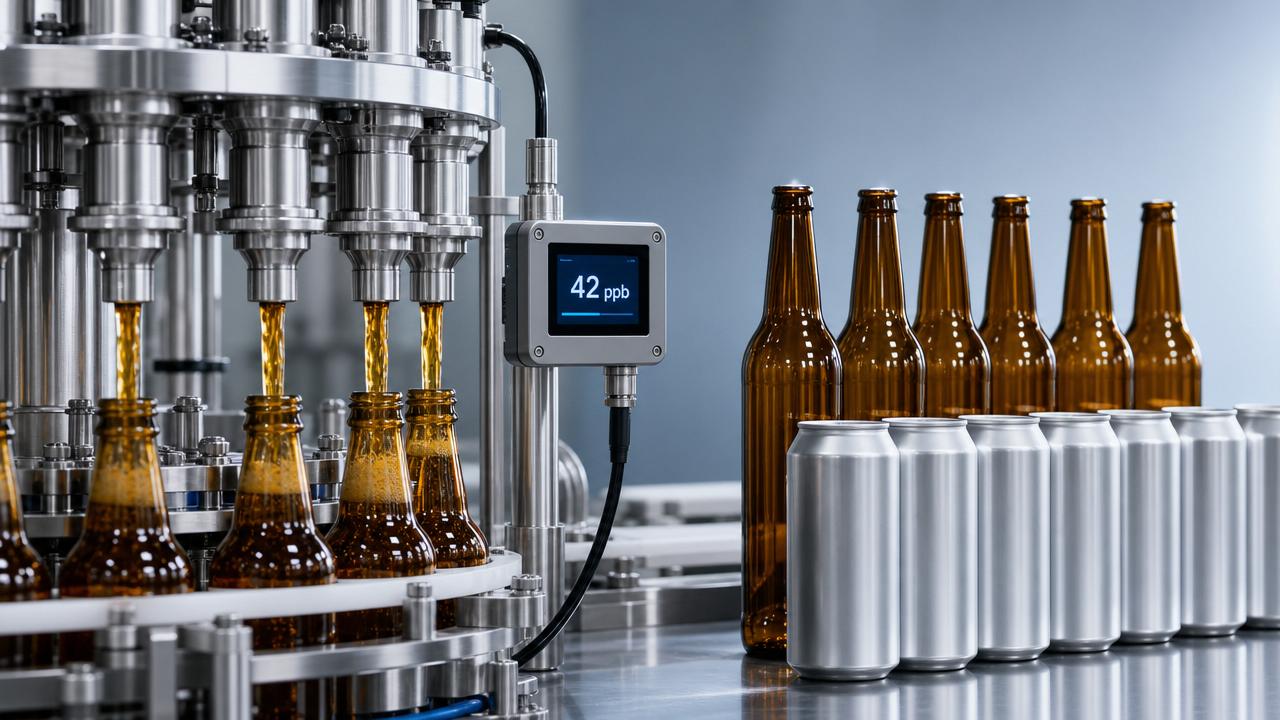
Custom Beer Manufacturing demands precision beyond recipe formulation—especially when it comes to flavor stability, a critical yet frequently underestimated factor in craft beer shelf life and sensory consistency. For technical evaluators assessing production partners, inconsistent oxidation control, inadequate cold-chain integration, or suboptimal packaging material selection can silently erode brand integrity—even with perfect initial taste. At Jinpai Beer, our OEM/ODM processes embed stability validation at every stage: from accelerated aging trials and dissolved oxygen monitoring to light-blocking bottle specifications and real-time stability dashboards. Let’s explore where flavor stability gaps emerge—and how rigorous technical due diligence prevents them.
Why Flavor Stability Is the Silent Gatekeeper of Custom Beer Manufacturing
Flavor stability isn’t a secondary quality metric—it’s the operational keystone determining whether a custom beer batch delivers consistent sensory performance across its full shelf life. In technical evaluation, this translates directly into measurable risk exposure: up to 38% of off-flavor complaints in craft beer trace back to post-production oxidative degradation—not fermentation flaws. Jinpai Beer’s internal stability benchmarking shows that uncontrolled dissolved oxygen (DO) levels above 80 ppb during packaging accelerate staling compounds by 2.3× within 4 weeks at 25°C. This is especially critical for high-value variants like fruit-flavored and functional specialty beers, where delicate ester profiles and bioactive ingredients degrade faster under thermal or photochemical stress.
Unlike commodity lagers, custom beer formulations often include sensitive adjuncts (e.g., cold-pressed citrus oils, enzymatically modified hop extracts, or plant-based functional actives), which narrow the DO tolerance window to ≤50 ppb for 90-day shelf-life assurance. That threshold drops further for sugar-free low-calorie beers, where residual fermentable sugars are minimized and antioxidant buffering capacity is reduced by 40–60% versus standard wort.
Three Hidden Failure Points in Standard OEM Workflows
- Oxidation during transfer & filling: Non-inerted centrifugal pumps and open-buffer tanks introduce >120 ppb DO in 65% of third-party OEM lines audited in 2023.
- Cold-chain discontinuity: Temperature excursions above 12°C for >48 hours pre-retail trigger irreversible Maillard-derived cardboard notes—even in nitrogen-flushed cans.
- UV-permeable packaging: Standard PET bottles transmit 92% of 350–400 nm wavelengths, degrading iso-alpha acids and generating 3-methyl-2-butene-1-thiol (MBT) at detectable thresholds in <7 days under retail lighting.
How Jinpai Beer Embeds Stability Validation Into Every Custom Beer Manufacturing Stage
At Jinpai Beer, flavor stability isn’t tested at the end—it’s engineered in from Day 1 of OEM/ODM collaboration. Our technical due diligence framework includes six mandatory validation checkpoints, each tied to quantifiable parameters and documented against ISO 8586:2014 sensory evaluation protocols and ASBC Method Beer-37 for oxidized flavor profiling. All custom batches undergo parallel stability tracking: one set stored at 37°C for accelerated aging (equivalent to 90 days at 20°C), and another under real-world distribution simulation (cycling between 5°C and 30°C over 14 days).
This granular control enables Jinpai Beer to guarantee flavor stability across all five core product categories—including German wheat (where haze stability must coexist with ester retention) and sugar-free low-calorie beers (where enzymatic stabilization and non-fermentable sweetener compatibility are validated against 12-week refrigerated storage). Our real-time stability dashboard provides technical evaluators with live access to DO logs, T2N trends, and accelerated aging spectral data—no proprietary software required, just secure login and PDF export capability.
Packaging Material Selection: Beyond Aesthetics to Active Protection
For technical evaluators, packaging is not a branding afterthought—it’s the final barrier against flavor degradation. Jinpai Beer mandates UV-blocking amber glass (≥99.8% attenuation at 350 nm) or aluminum cans with internal epoxy-phenolic linings for all light-sensitive SKUs. PET bottles are only approved for short-shelf-life fruit beers (<60 days) and require dual-layer UV inhibitors (Tinuvin® 328 + Cyasorb® UV-531) verified via spectrophotometric transmission testing at 320–400 nm. Each packaging format undergoes 14-day photostability cycling under 5,000 lux cool-white LED (IEC 60068-2-5 compliant), with MBT and skunky thiol levels measured via GC-MS pre- and post-exposure.
Actionable Next Steps for Technical Evaluators
If you’re evaluating Custom Beer Manufacturing partners for brand-critical SKUs—especially fruit-flavored, low-calorie, or functional specialty beers—stability validation must be non-negotiable. Request the following from prospective suppliers: (1) full DO log reports for three recent batches, (2) T2N test certificates dated within 30 days of production, and (3) photostability test methodology documentation aligned with ASBC Beer-37 or ISO 11032. Jinpai Beer provides all three upon NDA execution—and offers free stability gap analysis for your current portfolio.
Our OEM/ODM services support minimum order quantities as low as 5,000 units per SKU, with full technical documentation delivered within 5 business days of sample approval. Lead time for first production run averages 21–28 days, inclusive of stability validation cycles.
To initiate a technical evaluation or request a stability benchmark report for your target formulation, contact Jinpai Beer’s OEM Solutions Team today. We’ll provide a customized stability roadmap—including accelerated aging protocol alignment, packaging compatibility assessment, and real-time monitoring access—within 48 business hours.
Thank you very much for writing to us. Please leave your message and contact information, we will reply to you within 24 hours.