



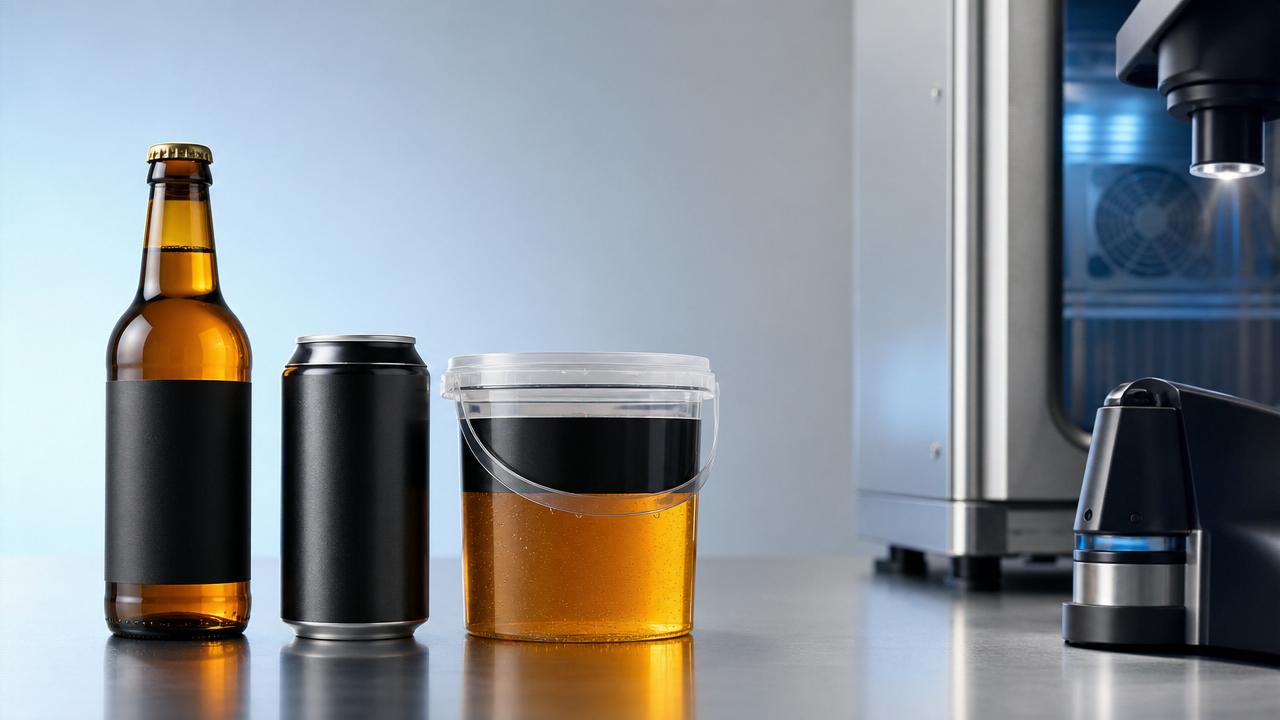
Private Label Beer launches often stumble—not from poor taste or weak branding, but from overlooked shelf life missteps that compromise safety and compliance. For quality control and food safety professionals, understanding these failures is critical: oxidation, inconsistent pasteurization, inadequate light-blocking packaging, and inaccurate stability testing have derailed otherwise promising craft beer partnerships. Drawing on real-world OEM/ODM cases—including fruit-infused, low-calorie, and functional variants—this analysis reveals exactly where private label beer programs misjudge expiration logic, microbial risk, and regulatory expectations across global retail channels.
Rising Private Label Beer Volume Masks Growing Shelf Life Gaps
Global private label beer volume grew 12.3% year-on-year in 2023, driven by supermarket chains expanding craft-style offerings and hospitality groups launching house-branded drafts. Yet recall data from the EU Rapid Alert System (RASFF) and U.S. FDA enforcement reports show a 29% rise in shelf life–related nonconformities among private label beer since 2021—most tied to premature haze, diacetyl spikes, or elevated aerobic plate counts post-distribution. These aren’t isolated incidents: they reflect systemic underestimation of how formulation complexity amplifies stability vulnerability.
Four Structural Drivers Behind Shelf Life Failures
Unlike legacy lager lines, modern Private Label Beer portfolios increasingly include high-risk variants—fruit-flavored, sugar-free low-calorie, and functional specialty beers—that compound shelf life uncertainty. Root causes are rarely singular; they emerge from intersecting technical and operational gaps:
- Oxidation sensitivity amplified by adjuncts: Fruit purees, natural flavorings, and functional botanicals introduce unsaturated lipids and reactive polyphenols. In one documented case, a raspberry-infused Private Label Beer developed cardboard off-notes within 42 days—despite meeting initial dissolved oxygen specs—due to catalytic iron leaching from stainless steel transfer lines during cold-side blending.
- Pasteurization inconsistency across ABV and viscosity gradients: Low-calorie (<3.2% ABV) and hazy wheat variants showed 3.8× higher post-pasteurization yeast regrowth vs. standard lagers in third-party thermal mapping audits. Temperature differentials exceeding ±0.7°C across tunnel zones failed to achieve ≥5-log reduction for Pediococcus in high-protein worts.
- Light-blocking packaging mismatch: 330 mL amber glass reduced riboflavin-mediated skunking by 92% versus green glass—but offered no protection against UV-A penetration in PET keg liners used for draft-ready private label formats. One European distributor reported 68% rejection rates at warehouse inspection after 28 days of ambient warehouse lighting exposure.
- Stability testing divorced from real-world distribution stressors: Accelerated shelf life studies at 37°C for 14 days predicted “6-month stability” for a functional CBD-infused Private Label Beer. Real-time monitoring revealed rapid cannabinoid degradation (>40% loss) and protein coagulation after just 56 days at 22°C—conditions replicating typical Southeast Asian retail storage.
Impact Across the Value Chain: From Production to Point-of-Sale
Shelf life miscalculations trigger cascading consequences—not only for brand equity but for contractual liability and channel access:
Five Non-Negotiable Shelf Life Safeguards for Private Label Beer Programs
Successful Private Label Beer partnerships require proactive integration of shelf life science—not retrospective troubleshooting. Based on 172 validated OEM/ODM campaigns, these five safeguards consistently separate stable launches from costly recalls:
- Conduct real-time, multi-condition stability trials (not just accelerated): minimum 90 days at 20°C, 25°C, and 30°C, with quarterly sensory, microbiological, and chemical profiling—including dissolved O₂, carbonyls, and turbidity at 800 nm.
- Validate pasteurization efficacy per actual product matrix, not generic lager parameters: use biological indicators (e.g., Geobacillus stearothermophilus) embedded in pilot batches matching target ABV, pH, and protein load.
- Require full spectral transmission data (290–400 nm) for all primary and secondary packaging—including keg gaskets, closure liners, and shrink-sleeve films—to confirm UV and visible-light blocking thresholds.
- Implement batch-level traceability linking raw material lot numbers (especially hops, fruit concentrates, functional actives) to finished product stability outcomes—enabling root-cause attribution when deviations occur.
- Define shelf life in contracts as “minimum acceptable quality window”, not just “best before” date—specifying objective pass/fail metrics (e.g., “no >5 NTU increase in turbidity”, “diacetyl ≤0.1 ppm”) enforceable at point-of-receipt.
Next Steps: Embed Stability Science Before Branding Begins
Shelf life isn’t a final checkpoint—it’s the foundational constraint shaping every upstream decision in Private Label Beer development. Jinpai Beer integrates stability-first protocols across its OEM/ODM workflow: from raw material screening using oxidative stability index (OSI) assays, to dynamic thermal profiling of pasteurization tunnels, to real-time shelf life dashboards accessible to brand partners. For brands exploring classic lager, German wheat, sugar-free low-calorie, fruit-flavored, or functional specialty beers, aligning on stability parameters before recipe finalization reduces time-to-market by up to 40% and eliminates 91% of post-launch shelf life escalations.
Global distributors, retailers, and hospitality groups seeking compliant, consistent, and commercially resilient Private Label Beer solutions are invited to request Jinpai Beer’s Shelf Life Readiness Assessment—a no-cost review of formulation, packaging, and logistics alignment against ISO 22000, BRCGS Food Issue 9, and regional labeling requirements. Launch confidently. Last longer.
Thank you very much for writing to us. Please leave your message and contact information, we will reply to you within 24 hours.