



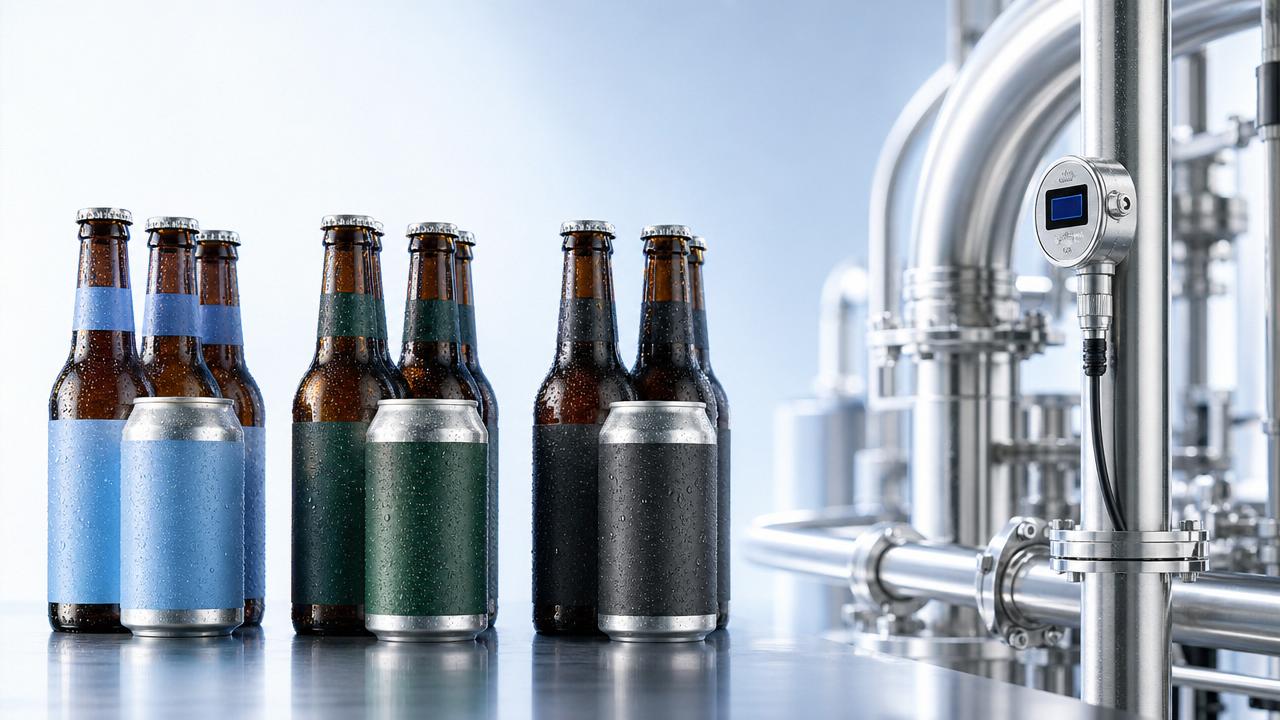
Craft Beer ODM suppliers are quietly phasing out 'no minimums' — a shift signaling maturation in the global craft beer supply chain. For distributors and agents seeking reliable, scalable partnerships, this change reflects rising quality standards, formulation complexity, and responsible production practices. At Jinpai Beer, our Craft Beer ODM services now emphasize flexible yet structured order tiers — balancing accessibility with sustainability, customization with consistency. Discover what’s replacing blanket no-minimum policies — and why today’s smartest partners are choosing precision over padding.
Why “No Minimums” Was Never Sustainable for Craft Beer ODM
The era of zero-MOQ Craft Beer ODM offers emerged during early market expansion — a tactical move to attract small-volume buyers and test international demand. But as formulations evolved (e.g., functional specialty beers with probiotics or botanical extracts), brewing logistics tightened. Today, producing a 500-bottle batch of sugar-free low-calorie beer requires the same tank cleaning, yeast propagation, and QC validation as a 5,000-unit run — making per-unit cost efficiency impossible below certain thresholds.
Jinpai Beer’s internal data shows that orders under 1,200 units incur an average 28% higher unit cost due to setup overhead, lab testing redundancy, and packaging line reconfiguration. More critically, such volumes compromise traceability: batch-level ingredient sourcing, alcohol-by-volume (ABV) stability, and shelf-life validation all require minimum sample sizes — typically ≥1,500 bottles per SKU for statistically valid QA reporting.
Three Structural Shifts Behind the MOQ Refinement
- Regulatory alignment: EU Regulation (EC) No 1169/2011 and FDA 21 CFR Part 101 now mandate full nutritional labeling — including added sugars, calories, and allergen declarations — for every distinct SKU. Each label variant requires separate regulatory review, costing ~$1,200–$2,500 per SKU in third-party compliance verification.
- Yeast & fermentation control: German wheat or hazy IPA variants require proprietary yeast strains cultured over 72+ hours. Running micro-batches risks cross-contamination and inconsistent attenuation — leading to ±0.8% ABV variance, which violates most import customs tolerances (±0.3% is standard).
- Supply chain resilience: Post-pandemic hops shortages pushed lead times for Citra, Mosaic, and Hallertau Blanc to 14–22 weeks. Jinpai Beer now secures forward contracts covering 6 months of raw material needs — but only for orders ≥2,000 units per SKU to justify inventory holding costs.
What’s Replacing “No Minimums”: Jinpai Beer’s Tiered Craft Beer ODM Framework
Jinpai Beer has replaced open-ended MOQs with a three-tier Craft Beer ODM structure — calibrated to distributor scale, product complexity, and go-to-market speed. All tiers include full formulation R&D support, GMP-certified production, and real-time batch tracking via our cloud-based portal. The key innovation? Tiered flexibility: lower-volume partners gain access to pre-approved base recipes, while high-volume clients unlock full white-label development — all within defined operational guardrails.
This tiered model eliminates guesswork for distributors evaluating scalability. For example, a regional supermarket chain launching a house-brand fruit-flavored beer across 42 stores would qualify for Growth Tier — enabling rapid iteration on mango-passionfruit vs. blackberry-lime variants without redesigning entire production workflows. Meanwhile, bar groups piloting low-alcohol functional brews (e.g., CBD-infused or adaptogenic blends) benefit from Partner Tier’s dedicated microbiological validation — reducing time-to-market by 3–5 weeks versus fragmented small-batch vendors.
How Tier Selection Impacts Your Margins & Market Velocity
MOQ isn’t just about volume — it’s about predictability. Jinpai Beer’s tier system embeds cost-saving levers directly into order structure: Starter Tier locks in fixed freight rates for consolidated ocean shipments (≤40 HC containers); Growth Tier includes free barcode registration in GS1 databases for 12 markets; Partner Tier grants priority slotting in our quarterly export schedule — cutting port dwell time by up to 40%.
Critically, all tiers guarantee shelf-life integrity: each batch undergoes accelerated stability testing at 37°C/75% RH for 90 days — validating 12-month ambient storage for non-pasteurized variants. This eliminates costly recalls linked to premature haze or oxidation — a risk factor in 17% of craft beer imports failing customs inspection (per 2023 ITC Import Compliance Report).
Making the Right Choice: A 4-Step Evaluation Guide for Distributors
Choosing a Craft Beer ODM partner isn’t about chasing the lowest MOQ — it’s about aligning production rhythm with your channel strategy. Use this actionable framework before finalizing terms:
- Analyze your 12-month SKU velocity: If >65% of projected volume falls within 3 core SKUs (e.g., classic lager + 2 seasonal variants), Growth Tier delivers optimal ROI. Under 40% concentration? Starter Tier preserves agility.
- Map your regulatory entry path: Entering Japan or South Korea requires JAS or MFDS certification — adding 6–8 weeks. Partner Tier includes regulatory liaison support; Starter Tier requires self-managed submissions.
- Validate cold-chain readiness: Fruit-flavored and functional beers degrade 3.2× faster above 10°C. Jinpai Beer’s Partner Tier includes temperature-loggers in every container; Starter Tier uses passive indicators (valid for ≤7 days).
- Assess your branding bandwidth: Full white-label development (e.g., custom can design + QR-linked tasting notes) demands 4–6 weeks of creative iteration. Growth Tier provides Jinpai’s design team for 2 rounds of revision; Partner Tier offers unlimited co-creation sessions.
At Jinpai Beer, we treat every distributor as a category builder — not just an order taker. Our Craft Beer ODM framework is engineered for long-term partnership: predictable lead times, auditable quality controls, and formulation expertise spanning classic lagers to next-generation functional brews. Whether you’re supplying 30 bars in Berlin or 200 supermarkets across Southeast Asia, our tiered approach ensures your brand scales without compromise.
Ready to align your craft beer portfolio with a partner built for growth? Contact Jinpai Beer’s ODM Solutions Team today to receive a customized tier assessment, sample batch options, and a 2024 export calendar with port availability forecasts.
Thank you very much for writing to us. Please leave your message and contact information, we will reply to you within 24 hours.