



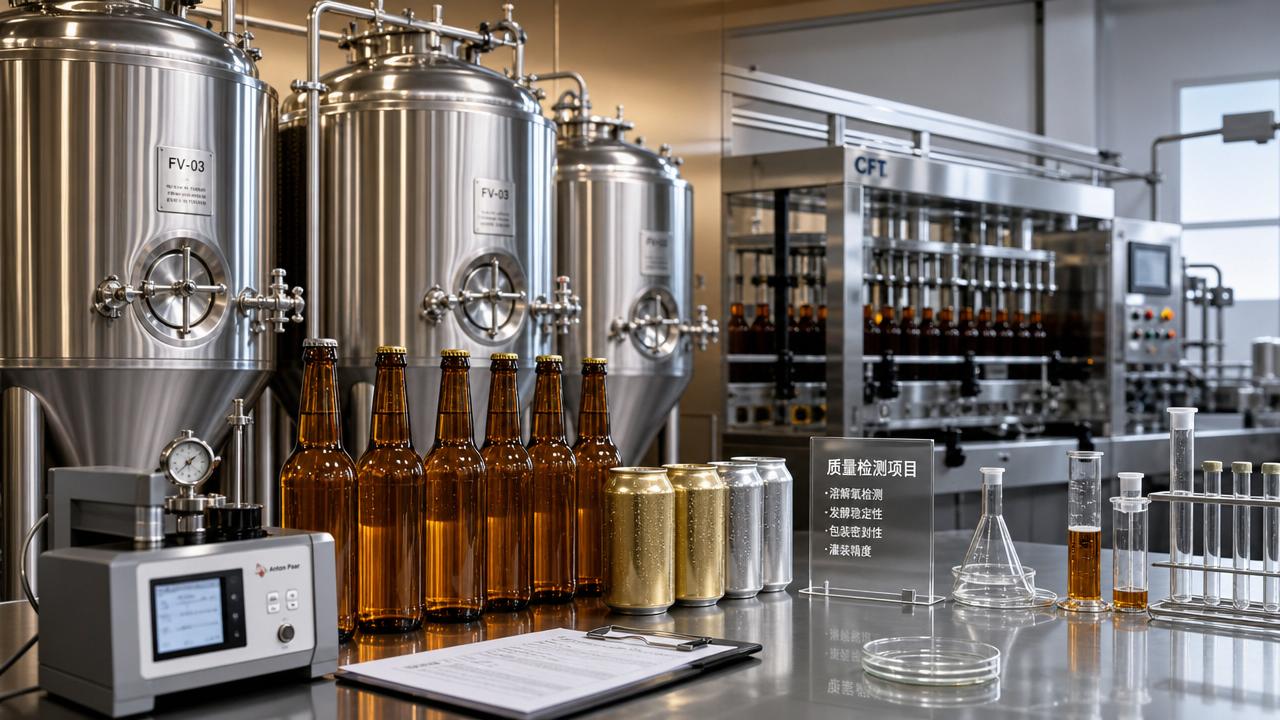
As craft beer contract brewing expands across global markets, technical evaluators need a sharper lens on the quality issues that can affect consistency, safety and brand reputation. From raw material control and fermentation stability to packaging integrity and formula execution, this year brings new checkpoints worth tracking. This article focuses on the most important quality risks in craft beer contract brewing and explains how to review them in a structured way, so every production partner decision is based on evidence rather than assumptions.
Why a structured review matters in craft beer contract brewing
Quality failures in craft beer contract brewing rarely come from one dramatic mistake. More often, they result from small gaps across recipe translation, brewing water adjustment, yeast management, filtration, filling, storage and shipment. A beer that tastes perfect in pilot scale can lose its intended aroma, mouthfeel or shelf stability when transferred to a third-party facility with different equipment, process discipline or sanitation habits.
A checklist-based review reduces blind spots. It helps compare breweries using the same criteria, identify hidden production risks early and create measurable quality expectations before the first commercial batch. In this year’s market, where consumers expect stable flavor and clean labeling across lager, wheat beer, fruit beer and functional specialty beer, craft beer contract brewing must be evaluated as both a technical process and a brand protection system.
Core quality issues to track this year
The following points provide a practical framework for reviewing craft beer contract brewing partners and identifying where quality may drift, fail or become expensive to correct later.
- Verify whether malt, hops, yeast and adjunct sourcing are locked to approved specifications, not substituted by convenience, seasonal shortage or uncontrolled local alternatives.
- Check water treatment capability, including hardness, alkalinity and mineral adjustment, because water profile differences can distort bitterness, body and fermentation performance.
- Confirm recipe transfer accuracy from pilot to commercial scale, especially hop timing, extract yield, attenuation targets and specialty ingredient dosing.
- Review brewhouse consistency data such as mash efficiency, boil-off rate and original gravity control across multiple consecutive production runs.
- Assess yeast health management through propagation records, cell counts, viability testing, contamination screening and maximum reuse cycle controls.
- Inspect fermentation temperature control and tank monitoring, since unstable temperature curves often create ester imbalance, sulfur carryover or incomplete fermentation.
- Track dissolved oxygen at transfer, bright tank and packaging stages because oxidation remains one of the biggest shelf-life threats in craft beer contract brewing.
- Evaluate microbiological controls for wild yeast, lactic acid bacteria and packaging-line contamination through routine environmental and product testing.
- Review clarification and filtration practices to ensure haze targets are intentional, not caused by poor protein control or unstable suspended material.
- Test carbonation consistency and CO2 purity, since incorrect gas quality or pressure settings can affect flavor release, foam stability and mouthfeel.
- Check package integrity for cans, bottles and kegs, including seam quality, crown seal performance, filler hygiene and pressure retention.
- Confirm label compliance, batch coding and traceability systems so every lot can be identified quickly if flavor complaints or recalls occur.
- Audit cold-chain and warehouse conditions, as heat exposure after packaging can accelerate staling and damage hop-forward beer styles.
- Request sensory evaluation protocols with retained samples to compare fresh release profile against aging performance over the intended market shelf life.
How to evaluate high-risk production areas
Raw materials and formula execution
In craft beer contract brewing, formula execution begins before mashing starts. Malt lot variation, hop storage condition and fruit or botanical ingredient stability can all shift the final profile. A strong partner should document approved suppliers, lot-by-lot acceptance criteria and storage controls for temperature, humidity and oxygen exposure. If a beer depends on expressive hop aroma or delicate fruit character, ingredient freshness and handling discipline should be treated as critical control points.
Ask for evidence that scale-up calculations have been validated on actual production equipment. Whirlpool losses, dry-hop absorption, fruit puree solids and sweetener addition can behave very differently across systems. Without this validation, a brewery may hit target ABV but still miss body, aroma intensity or finish.
Fermentation stability and biological control
Fermentation is where many craft beer contract brewing quality issues become visible. Temperature drift, low yeast vitality or weak sanitation can create inconsistent attenuation, haze instability, excessive diacetyl or contamination. Review how tanks are cleaned, how fermentation curves are recorded and how often microbiological samples are taken during and after fermentation.
It is especially important to understand whether the facility handles sour beer, non-alcoholic products or heavily fruited beer on shared equipment. These categories can increase contamination complexity if segregation and sanitation validation are not rigorous.
Packaging and shelf-life protection
For many brands, the most expensive craft beer contract brewing mistakes appear after packaging. Low fill consistency, high dissolved oxygen, weak seams or poor crown sealing may not be obvious at release but can lead to flavor decline, gushing or customer complaints in distribution. Packaging data should include regular seam teardown reports, oxygen pickup measurement, package pressure verification and sanitation checks around fillers and conveyors.
Shelf-life evaluation should match the beer style. A hop-forward IPA, a classic lager and a sugar-free low-calorie beer will not age the same way. The contract brewery should have retained-sample tasting schedules and basic accelerated-aging review methods to detect staling trends before products reach distant markets.
Additional checks by product type and market channel
Classic lager and German wheat beer
For clean styles, process precision matters more than flavor masking. In craft beer contract brewing for lager and German wheat beer, focus on yeast expression, sulfur management, clarity targets, foam retention and carbonation accuracy. Minor fermentation flaws are easier to detect in these styles, so the process window should be narrow and repeatable.
Fruit-flavored and functional specialty beers
These beers require closer review of ingredient addition timing, flavor stability, pH shift, color retention and microbial risk. Fruit purees, botanical extracts or functional ingredients can introduce solids, sugar variation and contamination pressure. Make sure the contract brewing process includes validated mixing methods and compatibility checks with filtration or filling systems.
OEM, ODM and export distribution
When craft beer contract brewing supports OEM or ODM projects, recipe confidentiality, traceability and packaging specification control become more important. For export, review transit temperature exposure, shelf-life claims, label regulation and carton strength. A beer that performs well locally may not arrive in the same condition after long-haul logistics or mixed retail storage environments.
Commonly overlooked risks
One overlooked issue is sensory calibration. A brewery may have lab numbers within target but still release beer with noticeable aroma drift if tasting standards are not aligned. Sensory review should be structured, repeated and tied to release decisions, not treated as a final informal step.
Another frequent gap is change control. In craft beer contract brewing, even a small shift in hop origin, can liner, yeast generation count or cleaning chemical can alter product performance. All process or material changes should be documented and approved before implementation.
Specification language is also often too vague. Terms like “golden color,” “moderate bitterness” or “fresh aroma” do not protect consistency. Replace them with measurable limits for color, ABV, bitterness range, carbonation, dissolved oxygen and sensory descriptors.
Finally, many teams underestimate post-packaging conditions. Even excellent craft beer contract brewing can be undermined by warm storage, delayed shipment or poor stock rotation. Quality review should continue beyond production release into warehouse and channel performance.
Practical execution steps
- Create a single approval sheet covering raw materials, process parameters, microbiology, packaging metrics and shelf-life expectations for each beer SKU.
- Request three recent production records for comparable beer styles to confirm that the brewery can repeat results, not just achieve one successful batch.
- Define mandatory release tests, including gravity, ABV, pH, carbonation, dissolved oxygen, microbiology status and sensory sign-off with retained samples.
- Set escalation rules for deviations, including acceptable tolerance bands, corrective action timing and documentation requirements for every nonconforming lot.
- Review packaging and logistics together, because craft beer contract brewing quality is only complete when the beer reaches the market in intended condition.
FAQ about craft beer contract brewing quality control
What is the first metric to compare between contract breweries?
Start with repeatability. Consistent original gravity, final gravity, ABV, dissolved oxygen and sensory profile across multiple batches tell more than one excellent sample brew.
Why is dissolved oxygen such a major issue in craft beer contract brewing?
Because oxygen quickly degrades aroma, darkens flavor perception and shortens shelf life, especially in hop-driven and delicate beer styles distributed through wide retail channels.
How often should sensory and microbiological reviews happen?
They should be built into every production lot. Sensory review supports release quality, while microbiological monitoring protects stability and helps detect contamination trends early.
Conclusion and next actions
This year, the most important craft beer contract brewing quality issues are not limited to taste alone. They include ingredient control, accurate scale-up, stable fermentation, low-oxygen packaging, microbiological discipline, reliable traceability and real shelf-life protection. A structured review system turns these risks into manageable checkpoints and makes brewery comparison far more objective.
Jinpai Beer supports craft beer development through R&D, production and global distribution, offering classic lager, German wheat, sugar-free low-calorie beer, fruit-flavored beer and functional specialty beers, along with OEM/ODM services, wholesale supply and customized solutions. For long-term brewing cooperation, the most effective next step is to define product specifications clearly, align on measurable quality standards and validate the partner’s ability to deliver stable results from batch to shelf.
Thank you very much for writing to us. Please leave your message and contact information, we will reply to you within 24 hours.