



What certifications should a Chinese craft beer factory export partner hold?
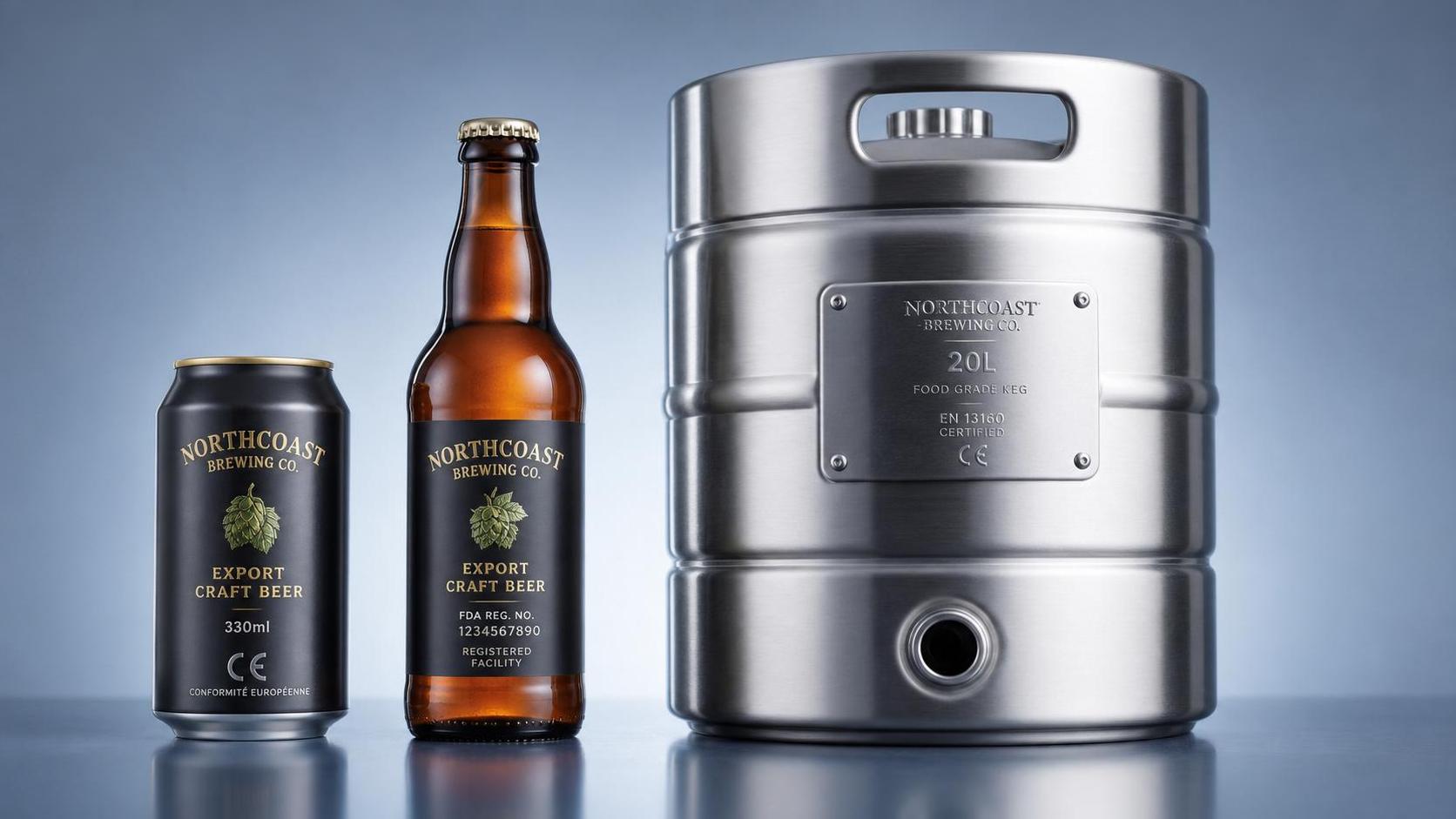
Global market access hinges on verifiable compliance—not just local approval. For a Chinese craft beer factory export capability to be credible, third-party audited certifications are non-negotiable. Jinpai Beer maintains ISO 22000 for food safety management and HACCP for hazard control—both foundational for EU, UK, and ASEAN imports. FDA registration is active for U.S.-bound shipments, while CE marking covers EU alcohol labeling and packaging requirements.
Crucially, these aren’t static documents. Annual audits, traceability logs, and batch-level documentation are maintained per order. That means when your customs agent requests proof of allergen control or ethanol content verification, the records exist—and are export-ready.
How long does it really take to ship custom craft beer from China?
Lead time isn’t just about brewing—it’s about coordination. For OEM/ODM orders, Jinpai Beer’s standard window is 4–6 weeks from confirmed artwork, specs, and deposit. This includes recipe finalization (especially for functional or fruit-infused variants), can/bottle line scheduling, label printing, and pre-shipment QC.
What shortens timelines? Pre-approved packaging templates, shared logistics partners (DHL/FedEx for samples; Maersk/COSCO for full containers), and consolidated documentation prep. What extends them? Custom keg valve specifications, multi-language label revisions, or low-calorie formulations requiring extended stability testing.
Which packaging options support both shelf life and brand differentiation?
Packaging isn’t just containment—it’s your first brand interaction and a shelf-life enabler. Jinpai Beer offers three primary formats, each with distinct trade-offs:
- Cans (330ml/500ml): Ideal for fruit-flavored and low-calorie beers. Light- and oxygen-barrier properties extend freshness by 3–4 months vs. bottles. Fully customizable sleeves and embossed finishes available.
- Glass bottles (330ml/650ml): Preferred for German wheat and classic lagers where mouthfeel matters. UV-protected amber glass + nitrogenated crown seals maintain aroma integrity. Private-label labels printed in-house or via certified vendors.
- Kegs (20L/30L): Stainless steel, EN 13160-compliant, with dual-sanitized couplers. Designed for bar/restaurant partners needing draft consistency and reduced carbon footprint.
All options integrate with custom-branded cartons (ECO-certified corrugated) and pallet-ready shrink-wrapping—no generic white boxes shipped overseas.
How do formulation types affect export readiness and regulatory pathways?
Not all craft beers clear customs at the same speed. Classic lagers and German wheat follow well-established alcohol classification paths in most markets. But sugar-free, low-calorie, and functional specialty beers—think adaptogen-infused or vitamin-enriched variants—trigger additional scrutiny.
For example, EU Novel Food regulations apply if botanicals exceed traditional usage thresholds. The U.S. FDA requires GRAS affirmation for certain functional ingredients. Jinpai Beer pre-validates these formulations with regional regulatory consultants—so you’re not reviewing compliance mid-shipment.
What should importers verify before placing their first OEM order?
A first-order checklist goes beyond MOQ and pricing. Here’s what experienced partners confirm early:
Where does “Chinese craft beer factory export” capability actually begin—and end?
Capability isn’t just about shipping boxes. It’s the alignment of R&D agility, certification rigor, packaging flexibility, and regulatory foresight. Jinpai Beer’s scope covers the full arc: from co-developing a low-calorie hazy IPA with precise ABV and residual sugar targets, through ISO-aligned production, to delivering kegs with EU-compliant tap systems and bilingual service manuals.
That means your evaluation shouldn’t start with “Can they make it?” but with “Can they sustain it across markets—and adapt as your retail partners’ requirements evolve?”
If your next step involves comparing OEM partners, prioritize those who provide documented evidence—not just claims—for each certification, lead-time guarantee, and packaging specification. Request sample COAs, label mockups for your target market, and a timeline breakdown for one representative SKU. That’s how real due diligence begins.
Thank you very much for writing to us. Please leave your message and contact information, we will reply to you within 24 hours.