



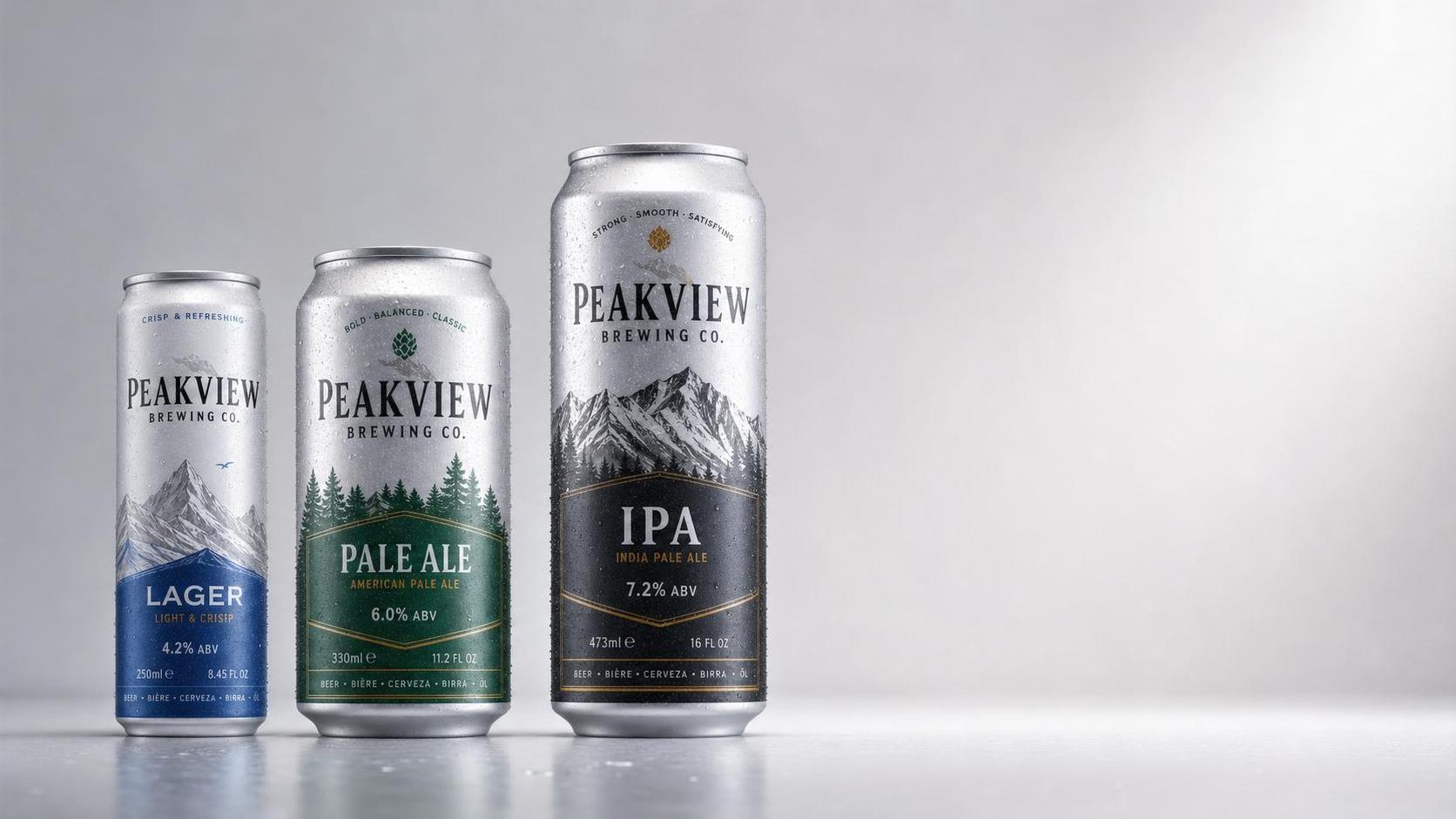
Why China Beer OEM for Bars and Restaurants Is Becoming a Strategic Move
Let’s be honest: your bar or restaurant isn’t just serving beer—it’s serving identity, experience, and consistency. That’s why more F&B operators are turning to trusted China beer OEM for bars and restaurants—not as a cost-cutting shortcut, but as a brand-building lever.
Jinpai Beer has seen this shift firsthand. Over the past three years, demand for private-label craft beer from independent venues has grown over 65%—especially among operators who want control without complexity.
What makes it work? Not just low manufacturing costs—but reliable quality systems, responsive customization, and real-world compliance (FDA, EU CE, HALAL, and GB standards). And yes, that includes full flexibility on labels, ABV, and can sizes.
How Label Customization Builds Your Brand—Without Design Headaches
Your tap handle or shelf presence is often the first impression. A generic label doesn’t tell your story. A custom one does.
With Jinpai Beer, you own the design process—not just the final print. We support:
- Full-brand label artwork (logo, typography, color palette, QR codes for menus or loyalty links)
- Multilingual versions—English + Spanish, English + Mandarin, or localized variants for regional markets
- Regulatory-ready layouts (alcohol content, net volume, allergen statements, country of origin)
- Digital proofing within 48 hours—and up to 3 rounds of revisions at no extra charge
No “template lock-in.” You choose whether your house lager looks minimalist and sleek—or playful and fruit-forward. We handle the technical prep so your designer stays in creative mode.
Pro tip: Restaurants launching seasonal brews often use QR-linked labels to highlight pairing notes or chef interviews. It’s low-cost engagement—with measurable scan rates (average +22% dwell time on menu pages).
ABV Tuning: Matching Strength to Experience (Not Just Market Trends)
Alcohol by volume isn’t just a number on the can—it’s a strategic signal.
Guests ordering a post-work IPA expect boldness. Those grabbing a midday session beer want refreshment—not fatigue. And health-conscious diners increasingly ask: “Is this sugar-free? Low-calorie?”
Jinpai’s R&D team lets you dial in ABV precisely—from 2.8% for ultra-light wheat beers to 7.2% for barrel-aged stouts—while preserving mouthfeel and aroma integrity.
We also offer functional variants: low-glycemic, gluten-reduced, and electrolyte-enhanced options—all brewed with certified raw materials and third-party lab verification.
In practice, bars report higher attachment rates when ABV aligns with service context. Example: A rooftop lounge saw 30% more repeat orders after switching from 5.0% to 4.2% lager for afternoon service—without sacrificing flavor depth.
Can Size Flexibility: From Taproom Trial to National Rollout
One size doesn’t fit all—especially when your distribution mix includes draft lines, grab-and-go coolers, and online subscriptions.
Jinpai supports standard and non-standard can formats across all product lines:
- 250ml slim cans (ideal for tasting flights or premium single-serve positioning)
- 330ml classic (global benchmark for bars and retail shelves)
- 473ml tallboys (strong performer in US/CA markets and outdoor venues)
- Custom diameters and heights—for branded merch bundles or limited editions
We also help you future-proof packaging. For example, our lightweight 330ml cans use 12% less aluminum than industry average—reducing shipping weight and carbon footprint without compromising crush resistance.
Real-world note: A UK-based pub group scaled from 3 pilot locations to 42 in 11 months—by starting with 250ml trial packs for staff training and guest feedback, then shifting to 330ml for daily service once flavor profiles were locked.
Beyond the Basics: What Makes a Reliable China Beer OEM Partner?
Customization is only half the equation. The other half? Execution certainty.
Here’s how Jinpai delivers operational confidence:
- Lead time clarity: 25–30 days from approved artwork and specs—no “subject-to-material-availability” delays
- Small-batch viability: MOQ starts at 5,000 units (not 50,000), making test launches financially safe
- Global compliance built-in: Every batch includes COA, heavy metal testing, and microbiological reports—ready for customs clearance
- Logistics coordination: We manage FCL/LCL consolidation, pallet configuration, and documentation—so your freight forwarder gets clean files, not follow-up calls
This isn’t theoretical. One Singapore-based bar chain reduced its first-order timeline by 17 days simply because Jinpai pre-validated their label with Singapore HSA requirements—before printing a single can.
Getting Started: Your First 3 Steps Toward a House Brew
You don’t need a full brand strategy day one. Start lean—and scale intentionally.
- Define your “why”: Is it differentiation? Margin control? Guest loyalty? Or supply resilience? Clarity here shapes every downstream decision.
- Pick one anchor format: A 330ml lager or wheat beer works for 80% of launch scenarios. Nail the taste, ABV, and label—then expand.
- Request a spec sheet + sample kit: We’ll send physical samples (with full labeling mockups) and a digital spec guide covering every regulatory and production detail—free, no commitment.
No gatekeeping. No sales pressure. Just actionable next steps—backed by real brewing expertise and global distribution experience.
China beer OEM for bars and restaurants isn’t about outsourcing. It’s about extending your team—with partners who treat your brand like their own.
If you’re ready to move beyond “what if” and into “what’s next”—let’s co-develop your first batch. Because great beer starts with great collaboration.
Thank you very much for writing to us. Please leave your message and contact information, we will reply to you within 24 hours.