



What does “beer manufacturing for US brands” actually require beyond brewing?
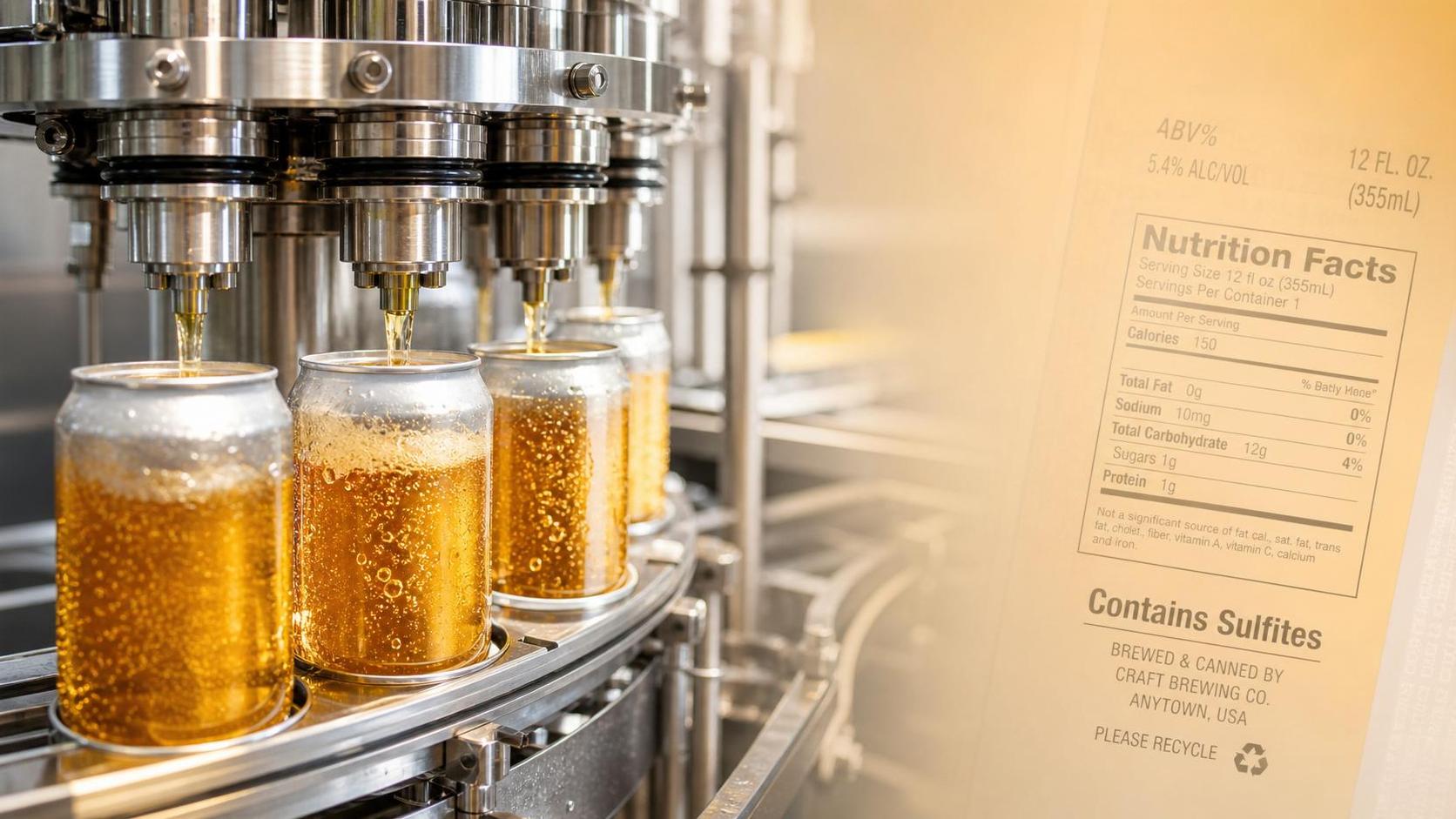
It’s more than just fermentation and packaging. For US brands—especially those expanding craft beer distribution across restaurants, bars, and retail channels—beer manufacturing for US brands means full regulatory orchestration before a single can leaves the facility. That includes FDA food facility registration, accurate alcohol-by-volume (ABV) disclosure, compliant nutrition labeling (including mandatory declaration of carbohydrates, calories, and added sugars), and adherence to TTB formula approval requirements for specialty variants like functional or fruit-infused beers. At Jinpai Beer, every OEM/ODM batch—from classic lager to sugar-free low-calorie or German wheat—is built with these benchmarks embedded in process design, not added as afterthoughts.
How do FDA labeling rules differ for craft beer versus mass-market lager?
The core requirement is consistency—not category exemption. Since 2022, all malt beverages sold in the U.S. with ABV ≥ 0.5% must comply with FDA’s Nutrition Facts label, unless exempted under specific TTB-FDA coordination agreements (e.g., certain small-batch brews under 10,000 barrels/year may qualify for simplified formatting—but only if registered and verified). Key distinctions matter:
- Functional beers with added vitamins or botanicals trigger FDA dietary supplement labeling scrutiny—even if marketed as beer.
- Fruit-flavored variants often contain juice concentrates or purees, requiring ingredient listing by common name and allergen declarations (e.g., “contains sulfites” for preserved fruit).
- Sugar-free and low-calorie formulations must validate claims via third-party lab testing—FDA permits “0g sugar” only if ≤ 0.5g per serving, not just “no added sugar.”
In practice, this means formulation, lab verification, and label copy must be aligned *before* production—not during QC review.
Why does tariff classification impact production timelines—and which HTS codes matter most?
U.S. Customs classifies beer under HTS code 2203.00, but subcategories affect duty rates, country-of-origin marking, and even FDA Prior Notice submission windows. For example:
- 2203.00.10 covers traditional malt beverages—standard 2.8% ad valorem duty, but subject to Section 301 tariffs if shipped from China (currently 25%).
- 2203.00.90 applies to “other” fermented beverages—including functional or fruit-infused variants—where misclassification risks customs delays or re-labeling penalties.
At Jinpai Beer, we pre-validate HTS alignment during formulation sign-off. This avoids last-minute rework when shipping to U.S. distributors or retail partners—especially critical for time-sensitive launches in supermarkets or seasonal bar programs.
What are the top three compliance pitfalls for US brands using overseas OEM partners?
Based on real-world audit findings, these recur most often:
How should quality and safety teams evaluate an OEM partner’s regulatory readiness?
Look beyond certifications. Ask for evidence of active FDA Food Facility Registration (with current renewal date), documented internal audit logs for labeling compliance, and recent third-party lab reports matching your SKU’s declared specs—not generic templates. More telling: request a sample label file with layered PDF metadata showing font sourcing, color space (CMYK vs. RGB), and bleed margins—these reveal whether design-to-print workflows are truly controlled.
Jinpai Beer maintains an open-label portal for US partners, where every SKU’s FDA-compliant artwork, lab certificates, and HTS validation records are updated in real time. No static PDFs. No follow-up emails. Just version-controlled, audit-ready access.
What’s the most practical first step for a US brand scaling production this year?
Start with a label-and-formula alignment workshop—not a factory tour. Bring your current label drafts, TTB approvals (if any), and target retail channel requirements (e.g., Whole Foods’ added sugar policy, Kroger’s nutrition transparency standards). We’ll map each variant—classic lager, German wheat, fruit-infused, sugar-free, functional—against FDA, TTB, and Customs checkpoints, then prioritize adjustments by launch timeline and risk exposure.
This avoids over-engineering early batches while building traceability into your supply chain from day one. Because beer manufacturing for US brands isn’t about meeting minimums—it’s about sustaining trust across every tap handle, shelf tag, and customs entry.
Thank you very much for writing to us. Please leave your message and contact information, we will reply to you within 24 hours.