



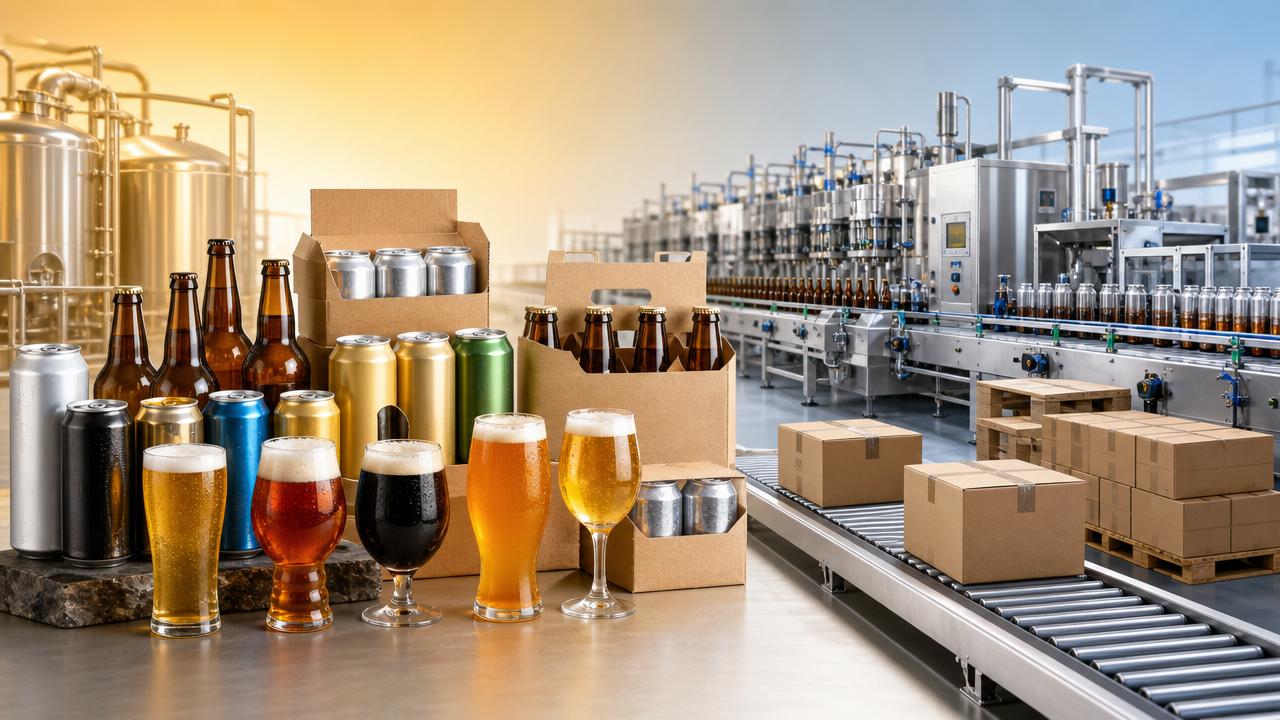
For fast beverage launches, the choice between China beer OEM and local brewing affects timelines, cost visibility, and channel readiness. It also shapes recipe flexibility, packaging coordination, and market expansion options.
In beer and beverage projects, speed is rarely just about brewing. It depends on sourcing, compliance, filling schedules, MOQ planning, and logistics alignment. That is why this decision deserves a structured comparison.
China beer OEM often supports quicker scale-up through integrated production resources. Local brewing may reduce transport distance and simplify some domestic approvals. The better model depends on launch scope, product complexity, and sales geography.
Model Definition and Core Differences
China beer OEM means outsourcing beer development, brewing, filling, and sometimes packaging design to a qualified producer in China. Services may include OEM, ODM, private label, and tailored formulation support.
Local brewing usually refers to producing beer within the target market through a nearby brewery or contract brewer. This model often emphasizes geographic proximity, shorter domestic freight, and local brand positioning.
Both models can launch quality products. The difference lies in production ecosystem depth, supply chain structure, and the number of handoffs required before products reach retail, bar, or e-commerce channels.
- China beer OEM: centralized supply chain, broader packaging choices, stronger export-oriented production capacity.
- Local brewing: shorter domestic transport, easier site visits, stronger local origin storytelling.
- Shared factors: recipe validation, labeling accuracy, shelf-life planning, and packaging availability remain critical.
Where speed is really gained
Faster launches come from coordinated execution. The winning model is usually the one that reduces revision loops, material shortages, and packaging delays rather than the one with the shortest brewing cycle alone.
Industry Context Shaping Launch Decisions
Beer buyers now expect more than classic lager. Demand is expanding into wheat beer, sugar-free low-calorie beer, fruit-flavored beer, and functional specialty beers. This raises complexity in ingredient selection and production planning.
At the same time, sales channels have multiplied. Products may need different pack sizes, barcode systems, or design styles for supermarkets, bars, restaurants, convenience stores, and online shops.
In this environment, China beer OEM has become attractive for brands seeking broad product portfolios and scalable execution. Local brewing remains relevant when domestic immediacy outweighs broader supply chain advantages.
Launch Speed, Cost Control, and Operational Flexibility
China beer OEM can shorten launch preparation when one supplier handles recipe adjustment, raw material sourcing, canning or bottling, and export packing. Fewer fragmented vendors often mean fewer approval delays.
This is especially useful for beverage lines that require multiple SKUs. A single production platform can support classic lager, German wheat, fruit flavors, or low-calorie variants with more consistent coordination.
Cost control is another major reason companies evaluate China beer OEM. Packaging procurement, batch scale, and manufacturing specialization can improve landed cost structure, especially for wider regional distribution plans.
Local brewing may still win when small domestic batches are needed quickly. It can reduce lead time for local replenishment and simplify communication during urgent product adjustments or event-driven launches.
A practical comparison
Product Development and Portfolio Fit
The right model should match the beer portfolio, not just the calendar. A simple flagship lager has different production needs than a line of functional or fruit-based specialty beers.
China beer OEM is often better suited to brands building a broader range. Experienced partners may offer formulation support, ingredient alternatives, and stable manufacturing processes for several styles at once.
That matters when brand plans include custom ABV, sweetness adjustment, calorie positioning, or differentiated aroma profiles. Faster iteration can save weeks during pre-launch refinement.
- Classic lager and wheat beer: usually straightforward and scalable.
- Sugar-free low-calorie beer: needs precise formulation consistency.
- Fruit-flavored beer: requires flavor stability and packaging coordination.
- Functional specialty beers: need clearer technical validation and labeling review.
Local brewing may fit highly localized taste adaptation. It can be useful when the product concept depends on regional identity, local ingredient narratives, or small-batch exclusivity.
Typical Use Cases by Business Scenario
Different launch conditions favor different production routes. The decision becomes clearer when viewed through practical beverage scenarios instead of abstract cost debates.
When launch speed must align with broader distribution ambitions, China beer OEM usually offers the stronger platform. When immediacy in one domestic market is everything, local brewing can be more practical.
Implementation Considerations Before Final Selection
A fast launch still fails if quality and documentation are weak. The best route is the one with clear specifications, realistic lead times, and traceable communication from sample stage to shipment.
- Confirm MOQ, pilot batch policy, and repeat order capacity.
- Review ingredient consistency, shelf-life targets, and storage conditions.
- Check can, bottle, carton, and label supply timelines early.
- Align export or domestic compliance requirements before artwork approval.
- Build a launch schedule with sampling, production, freight, and buffer time.
For China beer OEM, freight planning and customs documentation deserve early attention. For local brewing, production slot availability and packaging capability should be validated before market commitments are announced.
Supplier transparency matters in both models. A reliable partner should explain process limits, expected lead times, and quality checkpoints instead of promising unrealistic speed.
Decision Path and Next Step
If the goal is wider assortment, scalable output, and coordinated private label execution, China beer OEM is often the stronger fit. If the goal is hyper-local release speed, local brewing may be more efficient.
A practical next step is to compare both models against the same checklist: target launch date, expected volume, SKU count, compliance scope, and intended sales channels.
Jinpai Beer supports craft beer R&D, production, and distribution across classic lager, German wheat, sugar-free low-calorie beer, fruit-flavored beer, and functional specialty beers. OEM, ODM, wholesale supply, and customized solutions are available for global channels.
For brands evaluating China beer OEM, a detailed specification review can reveal the fastest path to launch with fewer revisions, stronger cost control, and better channel readiness.
Thank you very much for writing to us. Please leave your message and contact information, we will reply to you within 24 hours.