



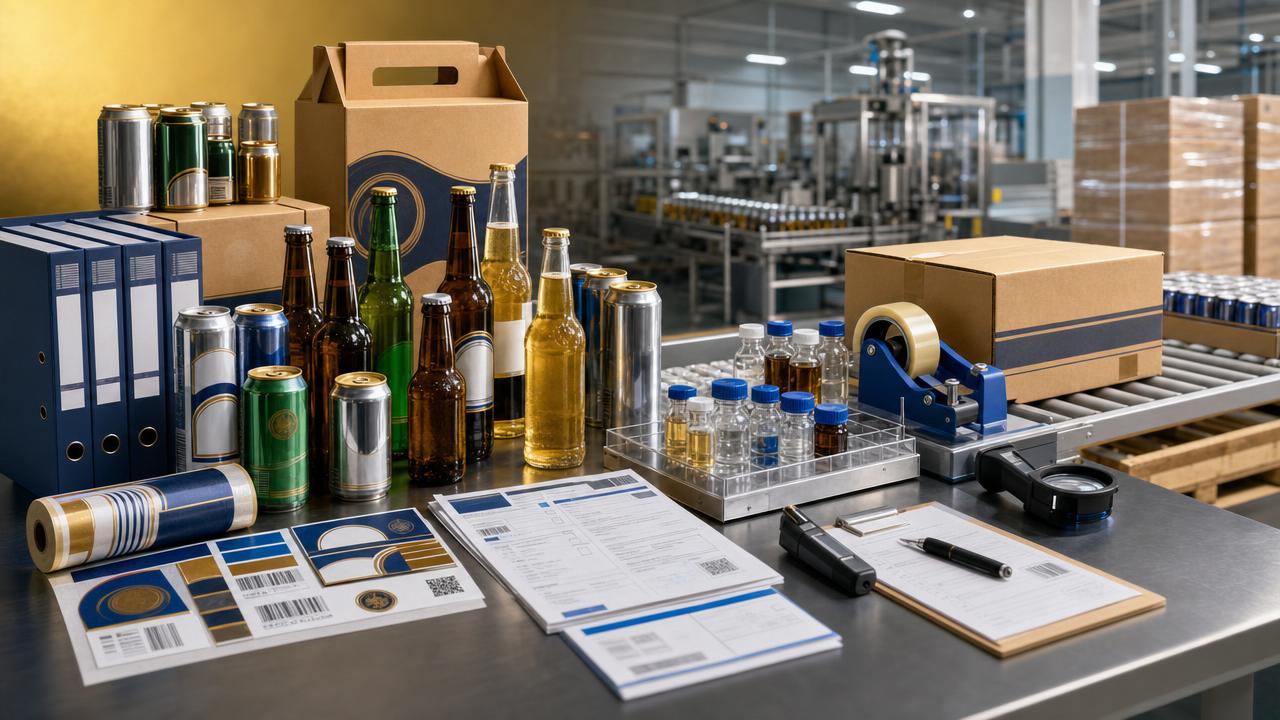
For brands evaluating sourcing partners this year, staying ahead of China beer OEM compliance changes is essential to reducing risk and protecting market access. From labeling and ingredient standards to production audits and export requirements, these updates can directly affect product launch timelines and brand reputation. Understanding what has changed will help assessment teams make smarter, more secure OEM decisions.
In the beverage sector, China beer OEM projects now face closer scrutiny across formulas, packaging, traceability, and export documentation. Compliance is no longer a final checkpoint. It shapes supplier selection, sample approval, and even how quickly a new beer line can enter retail, bar, and e-commerce channels.
Why China beer OEM compliance matters in different sourcing scenarios
Not every sourcing project faces the same risk. A private label lager for supermarkets has different compliance pressure than a functional specialty beer for cross-border online sales.
That is why China beer OEM compliance should be assessed by scenario. Product type, destination market, pack format, and sales channel all change the compliance workload.
Jinpai Beer supports craft beer R&D, production, and distribution, covering classic lager, German wheat, sugar-free low-calorie beer, fruit-flavored beer, and functional specialty beers. With OEM/ODM, wholesale supply, and customized solutions, compliance planning must connect formula development with real channel requirements.
Scenario 1: Launching standard retail beer under a private label
This is the most common China beer OEM scenario. It usually involves lager or wheat beer sold through supermarkets, convenience stores, and general retail chains.
The core compliance focus is labeling accuracy, ingredient declaration, shelf life validation, and batch traceability. Small mistakes here can delay listing approvals or trigger relabeling costs.
Key judgment points for this scenario
- Does the label match the actual brewing formula and alcohol content?
- Are packaging claims supported by internal records and testing?
- Can the China beer OEM supplier provide batch-level traceability?
- Is shelf life evidence available for the specific can or bottle format?
For standard retail beer, speed often matters. Yet fast launch without documentation discipline can create expensive revisions after first production.
Scenario 2: Developing fruit-flavored or low-calorie beer for trend-driven channels
This China beer OEM scenario carries higher formulation and claim risk. Fruit additions, sweetener systems, and calorie-related messaging increase the need for precise technical review.
A product may perform well in taste tests but still face launch delays if ingredients, additives, or nutrition claims are poorly aligned with destination rules.
Core checks before approving samples
- Confirm whether flavor components require extra documentation.
- Review claim wording for “sugar-free,” “low-calorie,” or similar statements.
- Check stability of color, haze, and taste over shelf life.
- Verify compatibility between formula and filling process.
In this scenario, China beer OEM compliance is tied closely to product development. Regulatory review should happen before commercial artwork and market rollout planning.
Scenario 3: Export-focused beer projects with multi-market requirements
Export beer brings another layer of complexity. A China beer OEM partner may meet domestic production standards, yet still fall short on destination-specific packaging, testing, or certificate expectations.
This matters especially for projects shipping to several markets at once. One formula may need market-specific labels, language blocks, or documentary variations.
What deserves extra attention
- Export certificates and production records must be complete.
- Outer cartons should support customs and warehouse identification.
- Label layouts must fit each target market’s rules.
- Sampling and retention practices should support dispute resolution.
A capable China beer OEM supplier should coordinate production, documentation, and shipping readiness together, not treat export paperwork as an afterthought.
Scenario 4: Functional specialty beer with stronger audit sensitivity
Functional specialty beer can create differentiation, but it also invites deeper review. Formula logic, ingredient sourcing, and product positioning need extra discipline.
In a China beer OEM project, this category should be evaluated not only for taste and packaging appeal, but also for whether supporting technical files are consistent.
Important signals of readiness
- Raw material specifications are current and traceable.
- Positioning language avoids overstated or unsupported effects.
- Process controls are documented for each critical step.
- Supplier audits can demonstrate consistency across batches.
How scenario needs differ in a China beer OEM project
Practical fit recommendations for choosing a compliant partner
The best China beer OEM choice depends on how well the supplier fits the real application scenario, not just price or sample taste.
- Match supplier capability to beer category complexity.
- Request recent documents for similar export or claim-heavy projects.
- Check whether quality records link to every production batch.
- Confirm artwork review and compliance review happen in sequence.
- Ask how formula changes are controlled after pilot approval.
For a China beer OEM program covering lager, wheat, low-calorie, fruit-flavored, or specialty products, structured communication between R&D, production, and export support is a strong indicator of reliability.
Common misjudgments that create avoidable compliance problems
Many beer projects fail not because standards are impossible, but because teams misread the scenario. Several mistakes appear repeatedly in China beer OEM cooperation.
- Assuming a compliant domestic product is automatically export-ready.
- Approving packaging before ingredient and claim review finishes.
- Focusing on sample taste while ignoring process consistency.
- Treating low-calorie or fruit beer like standard lager.
- Overlooking document response speed during supplier evaluation.
These gaps often surface late, when cans are printed, production is booked, or shipment windows are fixed. At that stage, correction costs rise quickly.
What to do next if China beer OEM compliance is now under review
Start by defining the actual market scenario for the beer project. Clarify channel, destination, claim strategy, and packaging format before final sample sign-off.
Then build a simple review path covering formula records, label content, test support, production traceability, and export documents. This keeps China beer OEM decisions grounded in operational facts.
If the project includes craft beer, German wheat, sugar-free low-calorie beer, fruit-flavored beer, or functional specialty beer, scenario-based review becomes even more valuable. It helps reduce launch delays, protect brand trust, and improve long-term sourcing stability.
A strong China beer OEM partner should support not only brewing and packaging, but also the compliance rhythm behind successful product launches. That is the update worth watching this year.
Thank you very much for writing to us. Please leave your message and contact information, we will reply to you within 24 hours.