



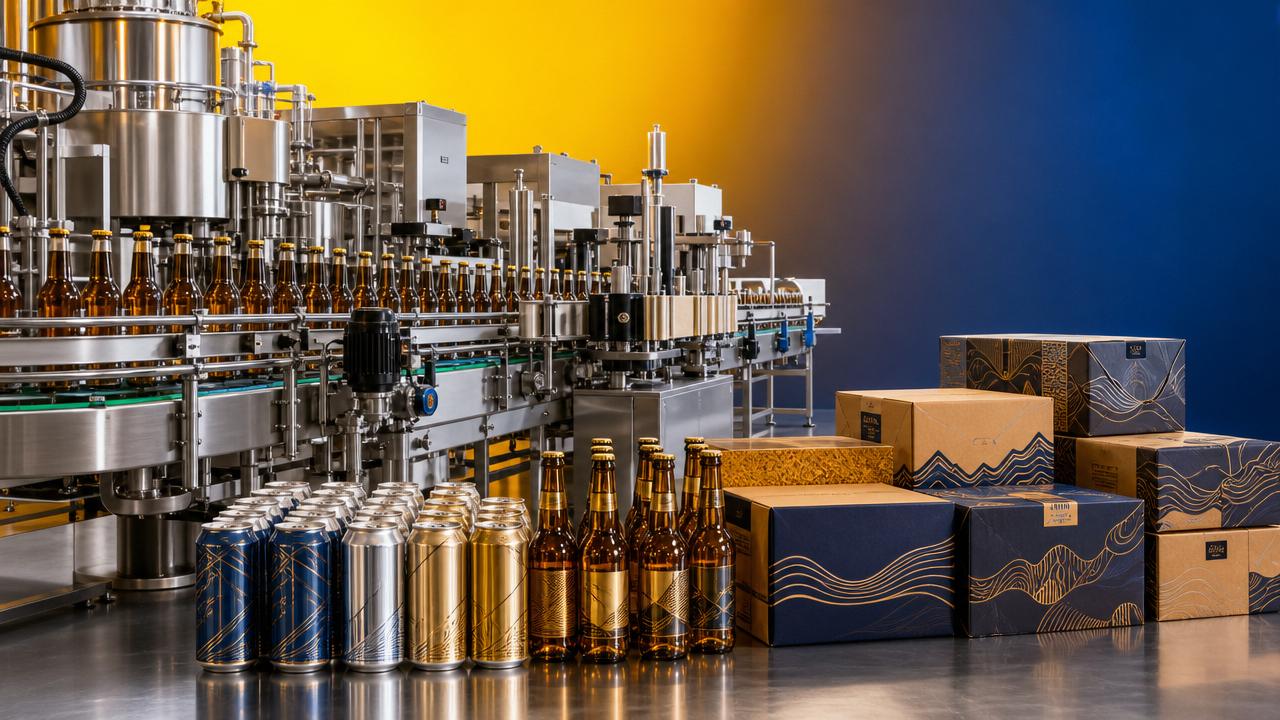
China beer OEM lead times are becoming less predictable, and that shift can directly impact launch schedules, inventory planning and partner coordination. For project managers overseeing beverage sourcing, understanding what is driving longer or uneven timelines is now essential. From capacity allocation to customization complexity, brands need a clearer view of the risks—and the practical steps that can help keep beer projects on track.
Why are China beer OEM lead times changing now?
For many buyers, China beer OEM once meant a relatively stable production calendar. That assumption is weaker today. Lead time is no longer shaped by one factor such as brewing capacity alone. It is increasingly influenced by packaging supply, flavor development, seasonal order peaks, labeling compliance, and the speed of approval between brand owners and factories.
In the beverage industry, beer projects are especially sensitive because production is a chain, not a single action. Recipe confirmation, raw material preparation, brewing, fermentation, filtration, packaging, outer carton preparation, inspection, and export coordination all affect delivery timing. A delay in one node can shift the full project plan.
For project managers and engineering-style coordinators, the real challenge is not only “how long will it take,” but “which stage is most likely to move, and what can be locked in early?” That is the right way to assess a China beer OEM supplier today.
- Peak demand periods can absorb line capacity quickly, especially before holiday sales windows and distributor launch cycles.
- Customized packaging such as printed cans, specialty bottles, gift cartons, or mixed flavor assortments often extends preparation time.
- Formula complexity matters. Fruit beer, functional specialty beer, or sugar-free low-calorie beer may require more technical review than standard lager.
- Export document alignment, label review, and market-specific claims can add hidden days if not managed early.
Where the timeline usually starts to slip
Most beer OEM projects do not fail because brewing takes too long. They slip because approvals are fragmented. A brand may confirm the liquid profile, then revise can artwork, then adjust carton quantity, then ask for a different alcohol content statement. Each revision restarts internal checks and can affect packaging bookings or filling plans.
This is why mature suppliers in China beer OEM projects increasingly prefer milestone-based planning. Instead of offering a single broad lead time, they divide the project into confirmed decision gates. That approach gives brand teams better control over deadlines and procurement dependencies.
What does a realistic China beer OEM timeline look like?
A realistic schedule depends on whether the order uses an existing product specification or requires customized development. In beverage sourcing, the difference between a stock-style OEM model and a tailored ODM process can be significant. Project managers should evaluate timing by stage, not by a single promised number.
The table below provides a practical framework for discussing China beer OEM lead times with suppliers. It is not a fixed guarantee, but it helps identify which project type matches your launch pressure and internal approval speed.
The key takeaway is simple: a fast quote is not the same as a reliable schedule. In China beer OEM, the safest timeline is the one linked to confirmed specifications, not the one based on assumptions.
Why project managers should break the timeline into gates
- Specification gate: confirm beer style, ABV target, packaging format, carton configuration, and market destination.
- Sample gate: review taste, appearance, carbonation feel, and packaging mockup against launch expectations.
- Artwork and compliance gate: freeze label content, translations, legal statements, and barcode information.
- Production gate: lock order quantity, material readiness, brewing slot, and filling schedule.
- Dispatch gate: align inspection, pallet plan, shipping mode, and required export documents.
Which factors most often extend beer OEM delivery?
In beverage manufacturing, timing risks often look small at the beginning and become serious near dispatch. That is why project owners should ask not only for the total lead time, but also for the supplier’s view on bottlenecks. A capable China beer OEM partner should be able to explain where schedule pressure is likely to come from.
Below is a comparison of common delay drivers and how they affect beer sourcing projects.
This table shows why a beer launch can slow down even when the brewery itself is ready. For project managers, the goal is not to remove every risk. It is to identify which variables are controllable and freeze them before they reach the factory floor.
High-risk situations that deserve extra buffer
- Launching a new fruit-flavored beer line with several SKUs for supermarkets and bars at the same time.
- Combining product development with private-label packaging for the first order.
- Requesting custom shipping marks, multilingual labels, and market-specific carton statements after sample approval.
- Trying to hit a promotional season with no backup packaging format or no tolerance for staggered delivery.
How should buyers evaluate a China beer OEM supplier beyond price?
Price still matters, but for project management teams, schedule reliability often has a larger commercial effect than a small unit cost difference. A delayed beer launch can trigger missed shelf windows, distributor frustration, storage imbalances, and rework across marketing and logistics.
A stronger supplier evaluation model looks at technical capability, communication discipline, packaging coordination, and product range flexibility. This is especially important if your portfolio includes classic lager, German wheat, low-calorie styles, fruit beer, or functional specialty beer under one sourcing plan.
Supplier selection checklist for project-led beer sourcing
- Can the supplier explain a stage-by-stage timeline instead of giving a vague total estimate?
- Do they support OEM and ODM, or only standard private-label production?
- Are they able to support multiple beer styles without pushing every project into a long R&D cycle?
- Can they coordinate product supply for supermarkets, restaurants, bars, and broader retail channels with different packaging expectations?
- Do they discuss sample support, quantity planning, delivery windows, and document needs early enough for execution?
Jinpai Beer’s profile is relevant here because broad product capability can reduce sourcing friction. When one manufacturer is already engaged in R&D, production and distribution across classic lager, German wheat, sugar-free low-calorie beer, fruit-flavored beer and functional specialty beers, buyers gain a more practical base for range planning. That matters when lead times are shifting and procurement teams need flexible but coordinated execution.
Why product breadth can support schedule stability
A narrow supplier may be efficient on one format but slow on extensions. A broader China beer OEM partner can often help brands balance standard and customized items within one project map. For example, a launch may use a proven lager format for speed while a fruit beer or functional line moves through a longer validation path. That split reduces launch risk without freezing innovation.
What procurement strategy helps keep launch dates realistic?
The best response to unstable lead times is not panic buying. It is structured planning. Project managers in beverage sourcing should build a procurement model that separates fixed decisions from flexible ones. When every item remains open too long, the factory cannot prioritize efficiently and the buyer cannot forecast accurately.
A practical action plan for beer OEM projects
- Start with a core specification sheet covering style, alcohol range, package type, destination market, and target launch date.
- Classify project elements into “must lock now” and “can finalize later.” Artwork themes may be flexible, but container type and flavor count often should not wait.
- Use sample review as a formal milestone, not an informal tasting step. Record changes clearly and avoid multiple parallel instructions from different departments.
- Build buffer around packaging and export preparation, especially for private label or cross-border retail projects.
- Ask the supplier to flag critical path items weekly once production is booked.
This procurement logic is useful for both wholesale supply and more customized OEM/ODM cooperation. It also helps when online and offline channel plans differ. Retail packs for supermarkets, bar-focused SKUs, and e-commerce bundles may all require distinct packaging decisions, which should be sequenced rather than improvised.
What compliance and documentation points should not be left to the end?
Beer projects often slow down because commercial teams finalize the visual concept before they align the label content. In export business, that can create avoidable rework. While requirements vary by destination, project managers should treat compliance review as an early coordination task, not a finishing touch.
Common review points include ingredient declarations, alcohol statements, net content expression, storage guidance, barcode allocation, and any market-relevant packaging text. If the project involves specialty positioning, such as sugar-free low-calorie beer or functional beer, claims should be handled with particular care and matched to the target market’s expectations.
- Confirm destination-market label requirements before artwork proofing starts.
- Use a final approved text file to avoid version confusion between design and production teams.
- Review outer carton statements separately from consumer-facing labels.
- Coordinate export documentation timelines with the shipment booking plan, not after packaging is finished.
FAQ: what do buyers ask most about China beer OEM lead times?
How early should a brand start a China beer OEM project before launch?
If the product is close to an existing specification and uses straightforward packaging, buyers still benefit from starting earlier than they think necessary. If the project includes custom flavor work, multiple SKUs, or market-specific labeling, the planning window should be wider. The most important point is to start before commercial deadlines become fixed internally.
Is standard OEM always faster than ODM or custom development?
Usually yes, but not always. A standard liquid with highly customized packaging can still move slowly. Meanwhile, a carefully managed custom beer with disciplined approvals may stay on schedule. Buyers should compare whole-project complexity, not just recipe complexity.
What is the most common mistake in beer OEM scheduling?
The most common mistake is treating all decisions as if they can wait. In reality, some items sit on the critical path. Packaging format, flavor count, label text, and final quantities often influence procurement and line booking much earlier than many buyers expect.
Should buyers split orders to reduce risk?
In some cases, yes. A phased launch can be smarter than holding every SKU until the most complex one is ready. For example, a brand may release a classic lager first, then follow with fruit beer or a functional extension. This approach is often more practical for supermarket rollouts or distributor-based channel testing.
Why work with a supplier that can support both stable supply and customization?
When China beer OEM lead times shift, flexibility matters as much as capacity. Buyers need a partner that can support standard production for speed, customized development for differentiation, and coordinated communication for execution. That combination is valuable for project managers who must balance launch pressure, budget discipline, product variety and channel fit.
Jinpai Beer supports R&D, production and distribution across a full range of craft beer categories, including classic lager, German wheat, sugar-free low-calorie beer, fruit-flavored beer and functional specialty beers. For brands seeking OEM/ODM cooperation, wholesale supply or tailored solutions, this breadth can help align product choice with timeline reality rather than forcing a one-size-fits-all plan.
If you are evaluating China beer OEM options, you can discuss practical topics such as product selection, packaging format, project lead time, sample support, quantity planning, export coordination, and custom development scope before locking your launch calendar. That kind of early alignment is often the difference between a delayed beer project and a controlled one.
Contact us for project-specific planning
If your team needs support on beer style selection, OEM versus ODM route planning, expected delivery windows, packaging confirmation, label review, sample arrangement or quotation discussion, Jinpai Beer can help you structure the project from the start. Early communication around specifications, customization level and target market requirements makes China beer OEM sourcing more predictable and easier to manage.
Thank you very much for writing to us. Please leave your message and contact information, we will reply to you within 24 hours.