



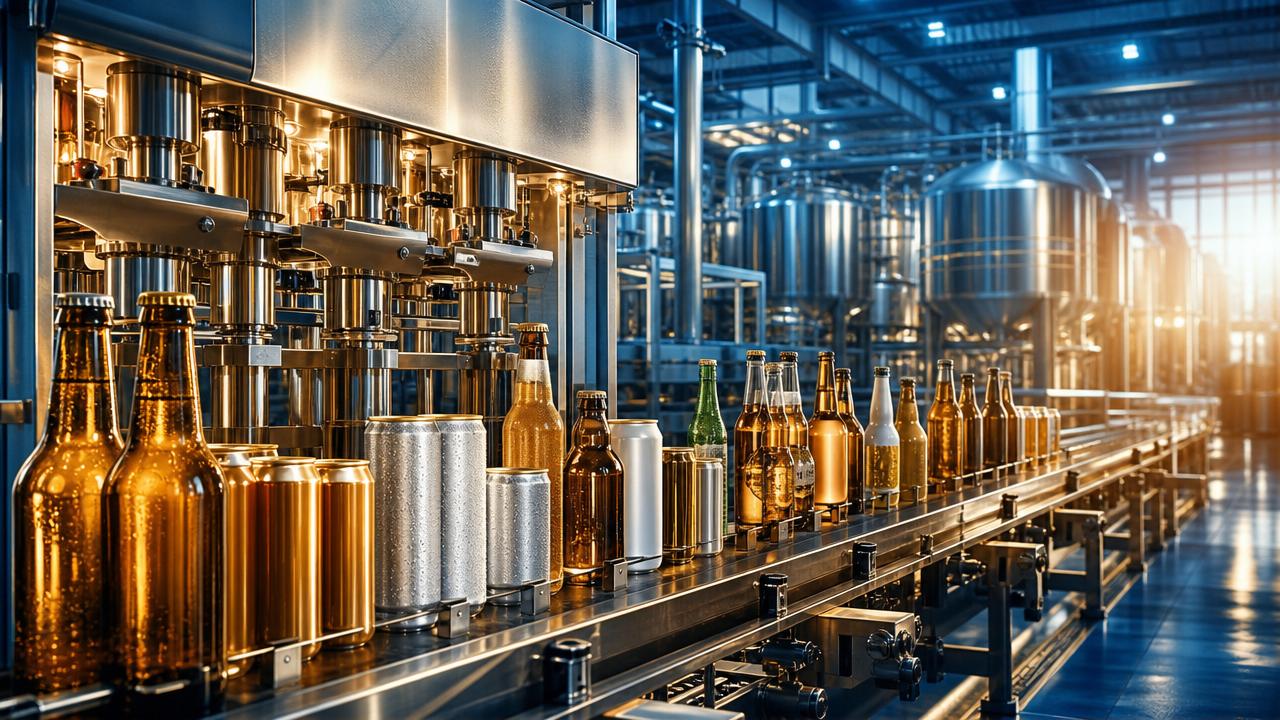
As the Fábrica de cerveza en China landscape evolves in 2026, business buyers are paying closer attention to production capacity, quality consistency and product innovation. Jinpai Beer responds with advanced craft beer R&D, flexible OEM/ODM services and a diversified portfolio tailored for supermarkets, bars, restaurants and distributors seeking reliable long-term supply.
For decision-makers, the core question is no longer whether China can produce beer at scale. It is which factory can combine stable output, dependable quality systems and market-ready customization without creating supply risk.
This is the practical lens through which buyers should assess any beer manufacturer in 2026. Capacity matters, but usable capacity, repeatable quality and commercial flexibility matter far more than headline production figures alone.
What Business Buyers Really Need from a Fábrica de cerveza en China in 2026
Most searchers using the keyword Fábrica de cerveza en China are not looking for basic industry definitions. They want a shortlist framework for choosing a production partner that can support growth, margin and brand credibility.
For importers, distributors and retail procurement teams, the biggest concern is supply continuity. A beer factory may offer attractive pricing, but if lead times slip or batches vary, the downstream commercial cost quickly exceeds the initial savings.
That is why the most relevant evaluation criteria in 2026 are straightforward: actual production capacity, batch consistency, product breadth, compliance readiness, packaging flexibility and responsiveness to changing channel demand.
Jinpai Beer is positioned around these buyer priorities. Its business model combines craft beer R&D, production and distribution with OEM/ODM support and tailored solutions for multiple sales environments.
For a business buyer, that means one supplier can potentially support several needs at once. These may include private label launches, seasonal SKU expansion, wholesale replenishment and differentiated products for bars, supermarkets and foodservice accounts.
Capacity Is Important, but Smart Capacity Planning Matters More
When evaluating a beer supplier in China, many buyers ask first about annual production capacity. This is reasonable, but the more useful question is whether the factory can allocate capacity reliably across standard lines, custom projects and peak-season demand.
In practice, a strong manufacturing partner should be able to manage both volume and variability. It should produce core products consistently while still reserving room for custom formulations, packaging adjustments and urgent replenishment orders.
For distributors and chain buyers, capacity should be viewed through operational outcomes. Can the factory support repeated purchase cycles? Can it scale with market expansion? Can it handle promotional spikes without compromising quality or timing?
Jinpai Beer’s positioning reflects this more practical understanding of capacity. Its portfolio spans classic lager, German wheat, sugar-free low-calorie beer, fruit-flavored beer and functional specialty beer, indicating both line diversity and production flexibility.
That flexibility is commercially valuable because 2026 demand is less concentrated than before. Buyers are no longer managing only one mainstream SKU. They are balancing mainstream volume with trend-sensitive products targeting health, flavor or lifestyle niches.
A capable Fábrica de cerveza en China should therefore function not only as a manufacturer, but as a production platform. The goal is to help partners reduce sourcing fragmentation and improve replenishment efficiency across multiple product categories.
How Quality Consistency Influences Profit, Not Just Product Reputation
Quality consistency is often discussed in technical terms, but business buyers experience it in financial terms. Inconsistent flavor, carbonation, color or shelf performance can lead to complaints, write-offs, returns and damaged account relationships.
For decision-makers, this means quality should be assessed as a business control issue. A reliable supplier reduces uncertainty across inventory planning, distributor confidence, market rollout and repeat purchase behavior.
In the beer category, consistency is especially important because even small variations are noticeable to consumers and trade customers. A bar owner, retailer or importer may accept innovation, but they rarely accept instability in a core product.
Jinpai Beer’s emphasis on R&D is relevant here. Strong research and development capabilities do more than generate new flavors. They help standardize recipes, improve process control and maintain product performance across repeated production runs.
For OEM and ODM customers, this is even more critical. A private label product succeeds only when the factory can reproduce the same sensory profile and quality level over time, regardless of batch size or market destination.
Buyers should also look beyond product taste alone. Quality includes packaging integrity, fill consistency, labeling accuracy and transport resilience. These are operational details, but they shape the end customer experience and the buyer’s commercial risk.
Why Product Diversification Matters for 2026 Channel Strategy
The beer market in 2026 is no longer defined by a single demand pattern. Traditional lagers remain important, but growth opportunities increasingly come from differentiated products that fit specific channel needs and consumer lifestyles.
That is why a diversified portfolio is a strategic advantage for business buyers. It allows importers and distributors to serve several market segments without rebuilding their supplier network for each emerging trend.
Jinpai Beer’s product range illustrates this logic. Classic lager supports broad retail circulation, German wheat appeals to craft-oriented and premium audiences, while fruit-flavored and functional specialty beers create room for market differentiation.
Sugar-free low-calorie beer is especially relevant in 2026. Health-conscious consumption is influencing beverage purchasing across many regions, and buyers increasingly want SKUs that connect beer drinking with moderation, wellness positioning and reduced sugar intake.
For supermarkets, this wider assortment can improve shelf strategy. For restaurants and bars, it enables menu variation and seasonal promotion. For distributors, it supports category expansion with a single supplier relationship.
In SEO terms, many users searching Fábrica de cerveza en China are indirectly searching for this exact business value. They want to know whether a Chinese brewery can supply not just beer, but a portfolio aligned with evolving demand.
OEM/ODM Services Reduce Time to Market for Private Label and Regional Growth
One of the strongest reasons buyers work with a Chinese beer manufacturer is the ability to launch custom products efficiently. In 2026, OEM/ODM capability is not a side service; it is often a central factor in supplier selection.
Private label programs can improve margins, strengthen channel differentiation and reduce direct price competition. However, these benefits depend on the supplier’s ability to translate a concept into a stable and commercially viable finished product.
Jinpai Beer offers OEM/ODM services and customized solutions, which is highly relevant for decision-makers entering new markets or refining portfolio structure. Customization can involve recipe style, flavor profile, alcohol level, packaging format and brand presentation.
For a regional distributor, that may mean building an exclusive product line tailored to local preferences. For a retail chain, it may mean introducing a house-brand beer that competes on both value and brand identity.
The real advantage is speed combined with coordination. A competent OEM/ODM partner should help simplify development cycles, reduce communication gaps and align production with practical channel requirements rather than abstract product ideas.
Business buyers should therefore ask detailed questions about sampling, recipe confirmation, minimum order structures, packaging options and lead time management. These details reveal whether customization is truly operational or merely promotional.
How to Assess Whether a Supplier Can Support Your Sales Channels
Not every beer factory is equally suited to every route to market. A supplier may perform well in bulk wholesale but struggle with the packaging standards, product mix or service expectations required by modern retail and branded foodservice.
That is why buyers should evaluate a factory in relation to their actual channel model. The right supplier for a supermarket program may not be the same as the right supplier for bar networks, restaurant groups or multi-country distributors.
Jinpai Beer’s stated focus on restaurants, supermarkets, bars and various retail channels is commercially meaningful. It suggests an understanding that each channel values a different combination of pack format, style range, branding and replenishment rhythm.
For supermarkets, consistency, shelf appeal and reliable restocking are key. For bars, flavor identity, product freshness and differentiation matter more. For restaurants, pairing versatility and stable supply are often the priority.
Distributors, meanwhile, need a factory that can balance all of these requirements while also supporting margin planning and long-term account development. This makes operational flexibility one of the most important supplier traits in 2026.
When considering a Fábrica de cerveza en China, buyers should ask not only what the factory makes, but also how it supports channel-specific success after production leaves the facility.
Risk Control: What Decision-Makers Should Verify Before Signing
Choosing a beer manufacturing partner is a strategic decision, and the biggest mistakes usually come from incomplete verification. Attractive pricing or a broad catalog should never replace disciplined due diligence.
First, verify production reliability. Ask how lead times are managed, how peak periods are handled and how order scheduling works for recurring customers versus custom projects. Reliable output planning protects both inventory and customer relationships.
Second, review quality management in practical terms. Understand how recipes are standardized, how batches are checked and how packaging consistency is controlled. A credible supplier should be able to explain its process clearly and confidently.
Third, assess communication efficiency. Slow or unclear communication increases project risk, especially in OEM/ODM development. Buyers need responsive teams that can coordinate technical, commercial and logistical details without repeated confusion.
Fourth, evaluate product-market fit. A large catalog is useful only if the products align with your region, price point and channel strategy. The best supplier is not always the one with the most options, but the one with the most relevant options.
Finally, examine partnership potential. In global sourcing, long-term value often comes from suppliers that can grow with your business, support portfolio evolution and maintain stable service as order complexity increases.
Why Jinpai Beer Fits the 2026 Buyer Mindset
Jinpai Beer’s market relevance comes from the combination of three factors that matter most in 2026: broad product capability, flexible cooperation models and alignment with real sales channels.
Its involvement in R&D, production and distribution indicates an integrated approach rather than a narrow manufacturing role. For buyers, integration can support faster product development, clearer communication and more dependable execution.
The portfolio itself is also well matched to current market direction. It covers foundational volume products and newer trend-led styles, allowing partners to address mainstream demand while testing higher-value or more differentiated segments.
Its OEM/ODM offering adds another layer of strategic value. Instead of forcing buyers into standard products only, Jinpai Beer can support custom routes that strengthen market positioning and channel exclusivity.
For decision-makers comparing suppliers, this combination helps answer the main commercial question behind the search term Fábrica de cerveza en China: which partner can deliver reliable supply today while enabling smarter category growth tomorrow?
In that context, Jinpai Beer presents itself not simply as a producer, but as a practical manufacturing and product development partner for international buyers seeking long-term cooperation.
Conclusion: What to Prioritize When Choosing a Fábrica de cerveza en China
In 2026, selecting a beer factory in China should not be based on scale claims alone. The most valuable partner is the one that combines production capacity, quality consistency, channel understanding and customization capability in a commercially usable way.
For enterprise decision-makers, the right choice is the supplier that reduces risk while improving growth options. That means dependable output, stable product performance, relevant category coverage and the ability to support private label or tailored market strategies.
Jinpai Beer aligns with these priorities through its craft beer R&D focus, diversified product line, OEM/ODM services and service model for supermarkets, bars, restaurants and distributors worldwide.
If your business is evaluating a Fábrica de cerveza en China, the most effective next step is to compare suppliers against actual operating needs rather than general marketing claims. Capacity, consistency and customization should be tested together.
When those factors are aligned, a sourcing decision becomes more than a procurement exercise. It becomes a growth lever that strengthens supply reliability, portfolio competitiveness and long-term market opportunity.
Thank you very much for writing to us. Please leave your message and contact information, we will reply to you within 24 hours.