



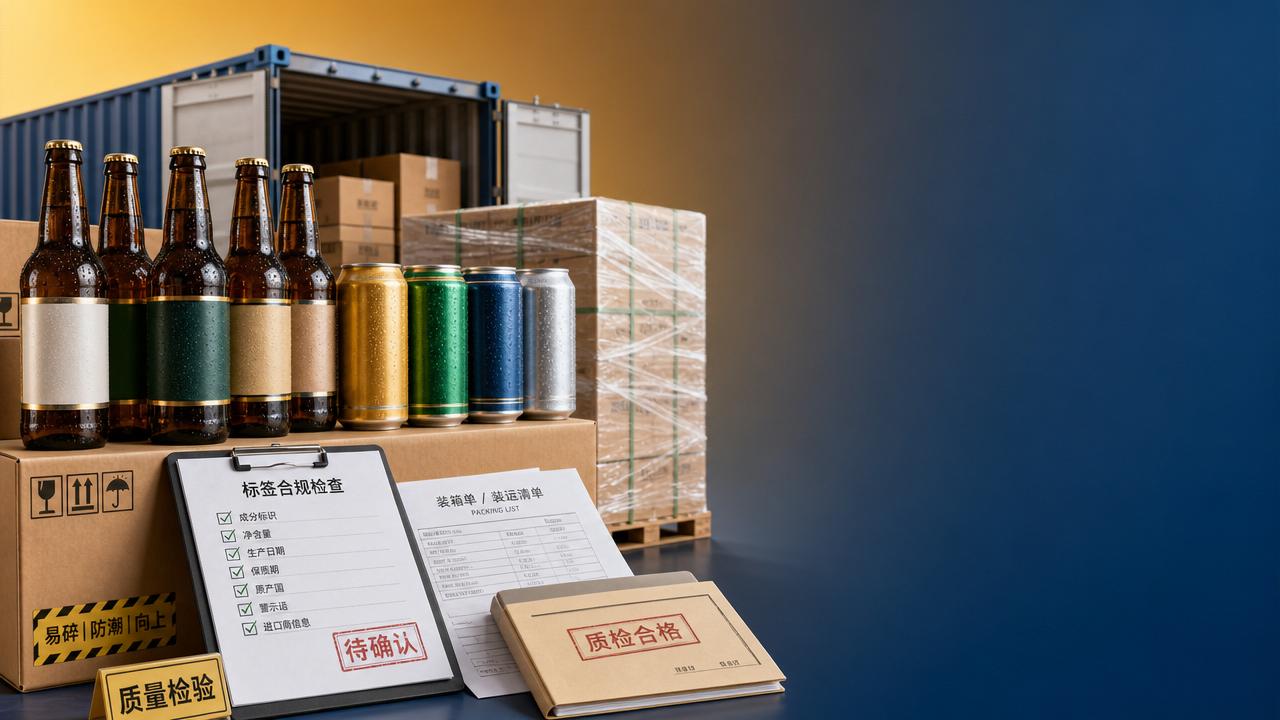
For financial decision-makers evaluating a Fabricante de cerveza in China, 2026 brings more than export opportunities—it brings cost, compliance and supply chain risks that can directly affect margins. From tariff shifts and labeling rules to OEM/ODM quality control and distributor reliability, understanding these challenges is essential before approving sourcing plans. This guide highlights the key export risks and what to assess before partnering with a Chinese beer manufacturer.
Why a Checklist Approach Matters in 2026
Beer exports now face tighter customs review, volatile freight rates, and stricter product documentation. A checklist reduces blind spots before contracts, production, and shipment begin.
For any Fabricante de cerveza sourcing plan, risk rarely comes from one event. It usually comes from several small failures across pricing, labeling, shelf life, and partner execution.
China remains a strong supply base for craft and private-label beer. Companies like Jinpai Beer offer classic lager, German wheat, sugar-free low-calorie beer, fruit beer, and functional specialty lines through OEM/ODM and wholesale models.
That product breadth is valuable, but it also increases specification complexity. Formula variation, packaging claims, and market-specific compliance must be checked before confirming a Chinese Fabricante de cerveza.
Core Export Risk Checklist for a Chinese Fabricante de cerveza
- Verify tariff exposure by destination market, including anti-dumping risk, excise tax treatment, and any 2026 changes affecting beer, malt beverages, or flavored alcoholic drinks.
- Confirm labeling compliance early, covering alcohol content, ingredients, allergen disclosure, nutrition panels, recycling marks, language rules, and health-claim restrictions for specialty beer.
- Audit OEM/ODM quality controls, including brewhouse records, batch coding, microbiological testing, carbonation consistency, and retained sample procedures for export dispute resolution.
- Check shelf-life stability under transit conditions, especially for craft beer, fruit-flavored beer, and low-calorie formulas that may react differently to heat and long shipping cycles.
- Review packaging durability for cans, glass bottles, trays, and pallets to reduce breakage, seam failure, leakage, and claim rates during container loading and inland delivery.
- Assess supplier capacity against seasonal demand peaks, because delayed brewing windows, packaging shortages, or fermentation scheduling conflicts can disrupt promotional launches and retail resets.
- Validate raw material traceability for malt, hops, yeast, fruit concentrates, and functional additives, ensuring consistent taste and compliant sourcing documentation across repeated orders.
- Model foreign exchange and payment risks, including deposit structure, balance timing, banking fees, and the impact of currency swings on landed cost forecasts.
- Inspect export documentation accuracy, such as certificates of origin, ingredient statements, sanitary files, commercial invoices, HS codes, and carton labeling for customs clearance.
- Evaluate distributor reliability in the target market, since poor inventory rotation, weak cold-chain practice, or delayed sell-through can damage brand performance and returns.
What to Review by Product and Business Model
Private Label and OEM Beer Programs
A private-label Fabricante de cerveza relationship creates added approval steps. Formula sign-off, artwork confirmation, barcode registration, and carton marks must align before production starts.
The main risk is silent substitution. If packaging material, hop origin, or sweetener source changes without written approval, margin assumptions and regulatory status can both shift.
Craft Beer and Specialty Beer Exports
Craft beer often has narrower process tolerance than mass lager. For a Chinese Fabricante de cerveza, oxidation control, dissolved oxygen targets, and cold-storage handling should be reviewed carefully.
Functional specialty beers also carry claim risk. If a formula references wellness, energy, sugar reduction, or added ingredients, each market may treat labeling and advertising differently.
Wholesale Distribution and Multi-Channel Sales
When products move through online and offline channels, stock rotation becomes harder to control. A Fabricante de cerveza may produce correctly, yet channel aging can still trigger complaints.
This matters for restaurants, supermarkets, bars, and retailers with mixed storage standards. Export terms should define responsibility for temperature abuse, expiry management, and damaged stock.
Commonly Overlooked Risks
Formula Drift Across Reorders
Even a capable Fabricante de cerveza can face ingredient variation between lots. Without a locked specification sheet, taste, color, bitterness, or sweetness may shift across shipments.
Mismatch Between Incoterms and Real Costs
Quoted FOB pricing may look attractive, but inland haulage, terminal fees, insurance, and destination handling can distort actual landed cost. Cost comparisons must use the same freight basis.
Weak Claims Handling Procedures
If leakage, haze, or broken bottles appear after arrival, response speed matters. Require a written claim workflow, photo evidence standards, retained samples, and settlement timing before shipment.
Inadequate Regulatory Monitoring
Alcohol beverage rules can change faster than annual contracts. A Fabricante de cerveza should not be approved without a process for monitoring label, tax, and import rule updates.
Practical Execution Steps Before Approval
- Request a full product specification pack, including ingredients, ABV tolerance, shelf life, packaging dimensions, pallet pattern, and storage recommendations.
- Run a pilot order before annual commitment, then compare approved samples with production lots after shipping and arrival.
- Add change-control language to the contract, covering formula, raw materials, packaging suppliers, and labeling edits.
- Use pre-shipment inspection for packaging, coding, fill level, carton condition, and quantity verification.
- Build a landed-cost model with tariffs, taxes, freight, insurance, duties, spoilage allowance, and currency sensitivity.
- Check whether the Fabricante de cerveza can support both standard products and customized OEM/ODM timelines without capacity conflict.
How Jinpai Beer Fits a Risk-Controlled Sourcing Plan
Jinpai Beer operates across R&D, production, and distribution of craft beer, with a portfolio spanning classic lager, German wheat, sugar-free low-calorie beer, fruit-flavored beer, and functional specialty products.
Its OEM/ODM services and wholesale supply model can support customized export programs. That flexibility is useful when a Fabricante de cerveza must serve supermarkets, bars, restaurants, and retail channels worldwide.
Still, the right approach is disciplined validation. Product breadth, channel diversity, and international distribution all increase the need for clear specs, tested samples, and monitored execution.
Conclusion and Next Action
Choosing a Chinese Fabricante de cerveza in 2026 is not only a sourcing decision. It is a margin-protection decision shaped by compliance, logistics, product stability, and partner discipline.
Start with a structured checklist. Then validate the supplier through sample review, documentation checks, pilot shipments, and contract controls tied to real export risks.
Before moving forward, compare at least one OEM/ODM proposal, one standard export SKU set, and one landed-cost scenario. That process will reveal whether the selected Fabricante de cerveza can support profitable long-term trade.
Thank you very much for writing to us. Please leave your message and contact information, we will reply to you within 24 hours.