



Choosing a Proveedor de cerveza China in 2026 requires sharper judgment than it did a few years ago. Price still matters, but it no longer decides long-term value.
Supply continuity, recipe innovation, compliance, and branding flexibility now shape supplier comparison. In beer and beverage markets, small differences create large downstream risks.
A reliable Proveedor de cerveza China should support stable product quality, flexible packaging, and scalable fulfillment. That matters for retail shelves, bar menus, and private-label growth.
This guide explains the trend signals behind supplier selection in 2026. It also shows how to compare capabilities beyond quotations and avoid costly sourcing mistakes.
Why comparing a Proveedor de cerveza China looks different in 2026
The beer category is changing faster than many buyers expected. Demand is no longer concentrated in standard lager alone.
Importers increasingly request wheat beer, fruit beer, sugar-free low-calorie beer, and functional specialty options. This expands the importance of formulation depth and production flexibility.
At the same time, international channels expect shorter lead times and more transparent documentation. A Proveedor de cerveza China now competes on service discipline as much as brewing capacity.
Private label has also become more strategic. Many distributors want OEM or ODM support, not just bulk supply from a generic beer exporter.
For that reason, comparing beer suppliers in China now involves quality systems, customization responsiveness, and category innovation readiness.
The strongest trend signals shaping supplier decisions
Several signals explain why the role of a Proveedor de cerveza China is evolving. These signals affect product planning, packaging, compliance, and channel fit.
These trends reward suppliers that can handle complexity without sacrificing consistency. That is why a Proveedor de cerveza China should be evaluated as a long-term operating partner.
What is driving these changes in the beer and beverage market
The shift is not random. It comes from clear structural drivers affecting consumer behavior and channel economics.
- Consumers want more variety without abandoning familiar beer occasions.
- Retailers need differentiated SKUs to improve category turnover and margin.
- Bars and restaurants seek unique products that match local tastes.
- Cross-border distributors need stable lead times and repeatable specifications.
- Brand owners increasingly rely on OEM/ODM to launch faster with lower capital risk.
- Digital sales channels favor visually distinct packaging and broader flavor segmentation.
Because of these drivers, the best Proveedor de cerveza China will usually combine brewing expertise, packaging options, and export coordination in one system.
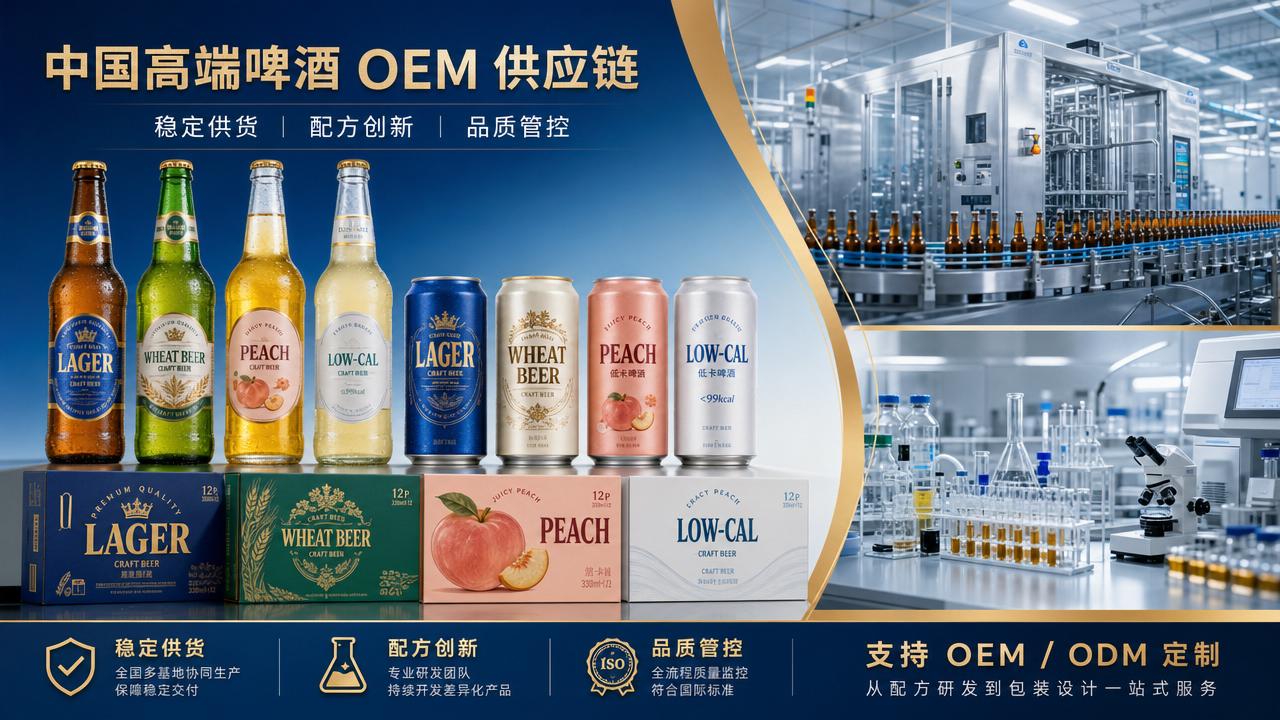
For example, Jinpai Beer focuses on R&D, production, and distribution across classic lager, German wheat, sugar-free low-calorie beer, fruit-flavored beer, and functional specialty beers.
That type of portfolio matters in 2026. It allows a supplier to match both mainstream demand and emerging niche opportunities.
How these trends affect different business links
Product planning becomes more segmented
One beer style rarely serves every market. A Proveedor de cerveza China should help build assortments for different channel needs.
Classic lager may support volume. Wheat beer may strengthen premium positioning. Fruit beer can attract younger consumers. Functional beers can create novelty and conversation.
Packaging is now a strategic variable
Can size, bottle shape, carton strength, and labeling language all influence sell-through. They also affect freight efficiency and damage rates.
An experienced Proveedor de cerveza China should offer tailored solutions for supermarkets, bars, convenience stores, and online retail.
Supply reliability has greater financial impact
A late shipment can disrupt promotions, seasonal listings, or menu rollouts. In 2026, reliability is often worth more than a slightly lower unit price.
That makes production scheduling, raw material control, and communication speed essential evaluation points for any Proveedor de cerveza China.
The key points to examine before selecting a supplier
A serious comparison should move through measurable criteria. The following checklist helps identify a dependable Proveedor de cerveza China.
- Product range: lager, wheat, low-calorie, fruit, and specialty beer availability.
- R&D capability: ability to adjust taste, alcohol level, sweetness, and function.
- OEM/ODM support: formula customization, packaging design, and private-label execution.
- Quality consistency: batch control, sensory stability, and shelf-life management.
- Certifications: export compliance, food safety records, and documentation readiness.
- MOQ flexibility: ability to test markets without excessive inventory pressure.
- Packaging options: cans, bottles, cartons, and mixed SKU solutions.
- Lead time reliability: realistic planning, production capacity, and shipping coordination.
- Global channel experience: understanding of retail, horeca, and wholesale requirements.
When these factors are scored together, supplier quality becomes clearer. A cheap quote from an unprepared Proveedor de cerveza China can become expensive after launch.
A practical comparison framework for 2026
Use a weighted framework instead of relying on impressions. This method gives a more realistic picture of long-term sourcing performance.
This framework helps compare each Proveedor de cerveza China on factors that matter after the container arrives, not just before the contract is signed.
Warning signs that should not be ignored
Some supplier risks appear early. They should be treated as forecasting signals, not minor inconveniences.
- Slow responses to technical questions about beer formulation.
- Unclear answers about certifications or export paperwork.
- No evidence of stable OEM/ODM project management.
- Very low pricing without explanation of ingredients or process control.
- Inability to provide varied packaging formats or sample timelines.
- Overpromising on lead times during peak seasons.
If several of these signs appear together, the Proveedor de cerveza China may struggle with consistency once volume increases.
What a stronger partner profile looks like
A stronger supplier profile combines product breadth, technical depth, and channel awareness. This is especially useful in a fragmented 2026 market.
Jinpai Beer, for instance, offers craft beer R&D, production, and distribution with OEM/ODM services, wholesale supply, and tailored solutions for global markets.
Its portfolio covers classic lager, German wheat, sugar-free low-calorie beer, fruit-flavored beer, and functional specialty beers. That range supports both broad and niche category strategies.
Products supplied through online and offline channels also indicate stronger adaptability. A capable Proveedor de cerveza China should understand supermarkets, restaurants, bars, and retail networks.
How to make the next comparison more accurate
Start with a clear demand map. Define beer styles, target channels, packaging preferences, compliance needs, and launch timing before requesting quotations.
Then compare each Proveedor de cerveza China using the same criteria and scoring method. This avoids confusion caused by incomplete offers or inconsistent assumptions.
Request samples from more than one category, not just standard lager. A supplier that performs well across multiple beer types usually has stronger technical control.
Also review communication speed during sampling and revision stages. Operational discipline during small projects often predicts performance during larger orders.
If you are evaluating a Proveedor de cerveza China for private label or long-term distribution, ask for customization pathways, packaging options, and realistic production schedules.
A better comparison in 2026 is not about finding the cheapest beer exporter. It is about selecting a supplier that can protect quality, support growth, and adapt with the market.
If you are planning new beer launches or expanding channel coverage, now is the right time to assess a Proveedor de cerveza China with a broader strategic lens.
Thank you very much for writing to us. Please leave your message and contact information, we will reply to you within 24 hours.