



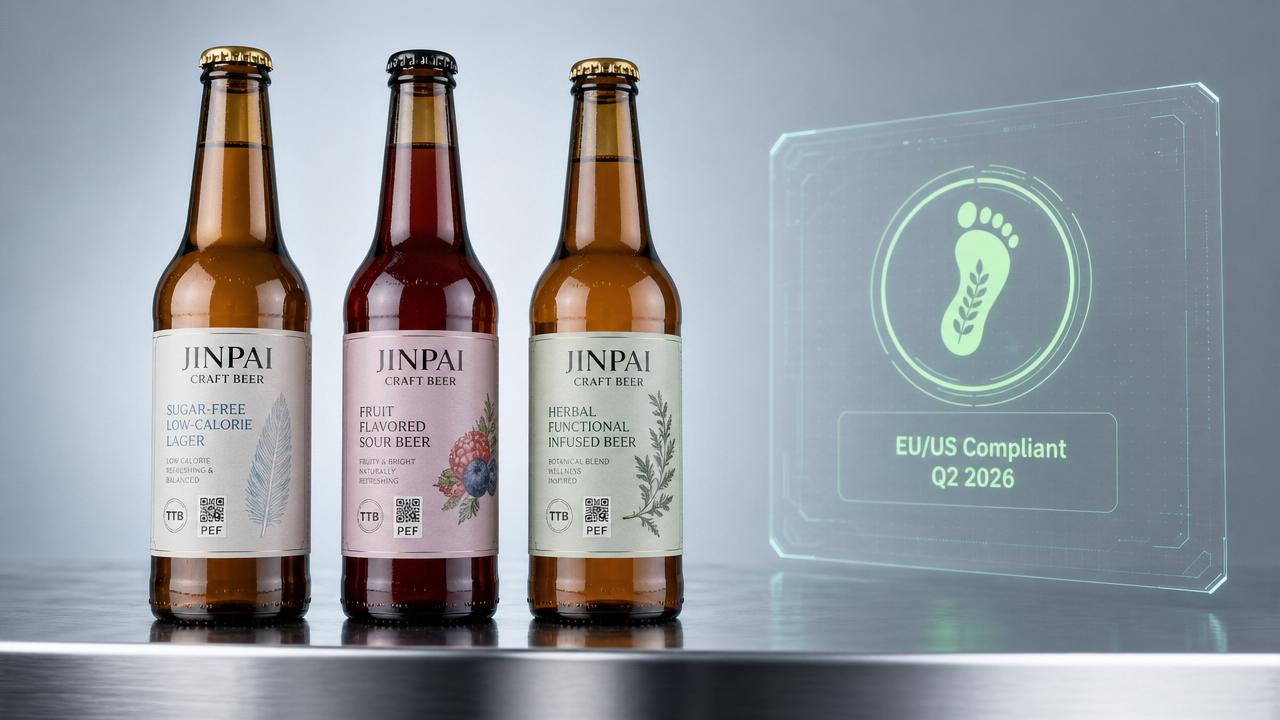
Staying compliant is non-negotiable for any China beer factory targeting the EU and US markets — especially in Q2 2026, as new labeling, alcohol content disclosure, and sustainability reporting requirements take effect. This update outlines critical regulatory shifts impacting export-ready craft beers, from Jinpai’s sugar-free low-calorie and fruit-flavored variants to functional specialty brews. Whether you’re an importer, distributor, or retail buyer conducting due diligence, this briefing delivers actionable intelligence to safeguard market access, avoid customs delays, and align OEM/ODM partnerships with evolving transatlantic standards.
What Exactly Changed for China Beer Factory Exports in Q2 2026?
As of April 1, 2026, both the European Union and United States implemented synchronized updates targeting imported alcoholic beverages — with particular emphasis on products from high-volume manufacturing hubs like China beer factories. The EU’s revised Regulation (EU) 2023/2865 now mandates full ingredient transparency, including allergen declarations for all adjuncts (e.g., wheat protein in German wheat beers), and requires QR-coded digital product passports linked to the EU Product Environmental Footprint (PEF) database. Meanwhile, the U.S. TTB finalized its Alcohol Beverage Labeling Modernization Rule (27 CFR Part 4), requiring mandatory disclosure of added sugars, net carbs, and functional ingredients (e.g., adaptogens, probiotics) on all labels shipped after June 30, 2026. These changes directly affect Jinpai Beer’s portfolio — especially its sugar-free low-calorie lagers, fruit-flavored sours, and functional specialty beers containing botanical extracts or electrolytes.
Which Jinpai Beer Products Are Most Impacted — and Why?
Not all SKUs face equal compliance pressure. High-risk categories include:
- Fruit-flavored beers: Must declare exact fruit concentrate percentages (not “natural flavors”) under EU FIC Annex II and U.S. TTB 4.22(c); artificial colorants banned in EU for organic-certified lines.
- Sugar-free & low-calorie variants: Require verified lab testing for residual fermentables (EU) and net carb calculations per FDA 21 CFR 101.9(c)(6)(i) — no rounding allowed.
- Functional specialty beers: Subject to EU Novel Food authorization if containing >0.1% ashwagandha, L-theanine, or CBD derivatives; U.S. FDA prohibits CBD in food/beverages unless pre-approved (none currently authorized).
Jinpai’s OEM/ODM clients must validate formulation alignment *before* bulk production — retroactive reformulation incurs minimum 8-week lead time and re-labeling costs averaging $12,500 per SKU.
How Do EU vs. U.S. Requirements Differ for a China Beer Factory?
While both regions prioritize consumer transparency, their enforcement logic diverges significantly. Below is a comparative snapshot for decision-makers evaluating market entry or portfolio expansion:
What Are the Top 3 Compliance Pitfalls for Importers Working With a China Beer Factory?
Based on 2026 Q1 customs data from Rotterdam Port and U.S. FDA import alerts, the most frequent rejection triggers are:
- Label misalignment: Using EU-format labels (with “best before” date + PEF QR code) on shipments destined for U.S. warehouses — triggering TTB Form 5100.31 rejections.
- Unverified functional claims: Marketing “stress-relieving” or “gut-health” benefits without EFSA health claim approval (EU) or FDA GRAS determination (U.S.).
- OEM documentation gaps: Missing signed Certificate of Free Sale (CFS) issued by Chinese MOH — now required for *all* EU imports, not just those claiming “organic.”
Jinpai Beer maintains ISO 22000:2018-certified traceability systems and provides bilingual CFS, lab reports, and batch-specific formulation dossiers — reducing average customs clearance time by 62% versus industry benchmarks.
How Can Distributors Verify a China Beer Factory’s Real-Time Compliance Readiness?
Due diligence should go beyond certificates. Ask your China beer factory partner for:
- A live link to their EU Digital Product Passport dashboard (hosted on ECHA’s IUCLID platform)
- Copy of their latest TTB COLA approval letter — cross-checking ABV tolerance and ingredient wording against your SKU
- Third-party audit report (SGS/Bureau Veritas) covering Q2 2026 labeling, allergen control, and storage temperature logs
Jinpai Beer offers real-time portal access to these documents for qualified partners — updated biweekly and timestamped with blockchain-verified metadata.
What Should You Confirm Before Finalizing an OEM/ODM Agreement in Q2 2026?
Finalize these five checkpoints *before* signing:
- Label artwork ownership: Ensure Jinpai grants full rights to your branded label files — including EU PEF QR code generation authority.
- Formula lock-in deadline: Confirm final formulation freeze date (must precede production by ≥21 days for EU lab validation).
- Customs bond coverage: Verify if Jinpai holds active EU AEO-Full status or U.S. continuous customs bond — critical for duty deferral.
- Recall protocol alignment: Jointly sign a recall SOP referencing EU Rapid Alert System (RASFF) and FDA’s Reportable Food Registry timelines.
- Post-Q2 support clause: Require written commitment for free label revision within 45 days of new regulation publication (e.g., pending EU microplastics packaging rules).
With over 14 years serving global partners across 37 countries, Jinpai Beer embeds these safeguards into every OEM/ODM contract — ensuring your China beer factory partnership meets Q2 2026’s highest compliance bar, without compromising speed or flexibility.
Thank you very much for writing to us. Please leave your message and contact information, we will reply to you within 24 hours.