



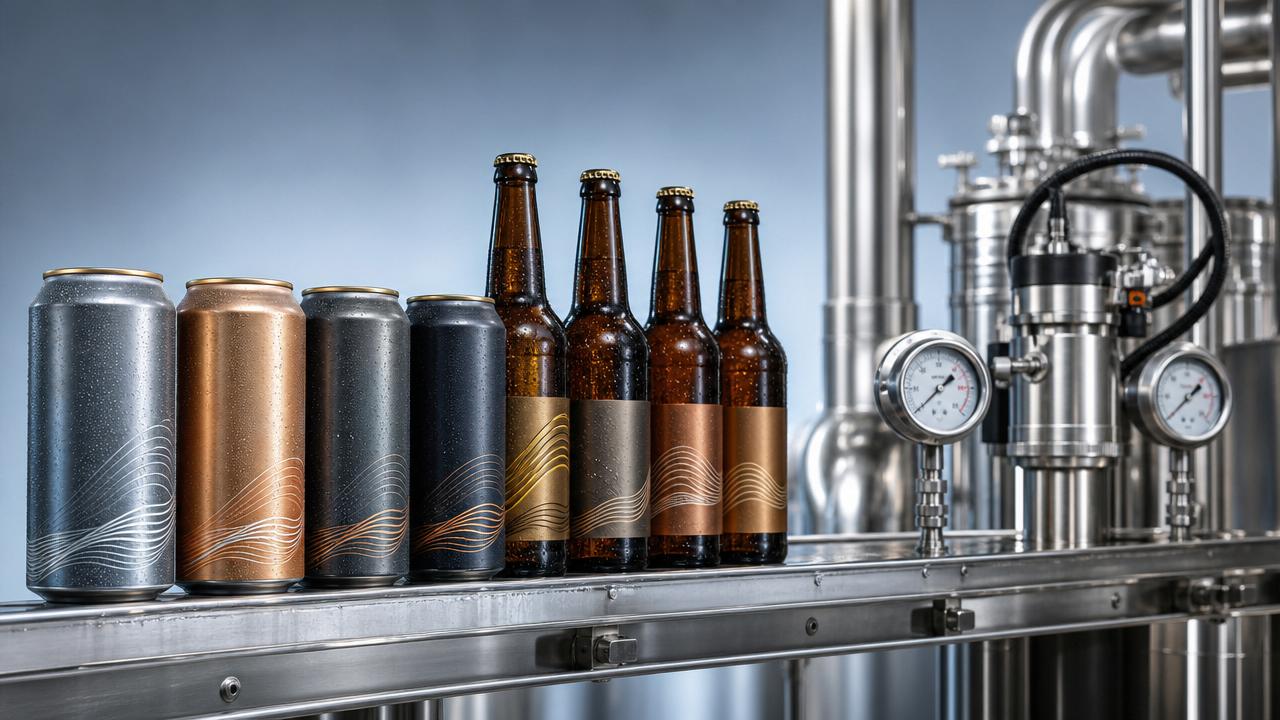
Beer OEM custom goes far beyond flavor formulation—it’s where packaging integrity, light/oxygen barrier performance, and shelf-life stability are engineered from day one. At Jinpai Beer, our end-to-end OEM/ODM services integrate brewing science with regulatory-compliant packaging design and accelerated stability testing—ensuring your private-label beer meets global retail standards for freshness, safety, and on-shelf appeal. For distributors and procurement professionals evaluating a scalable, quality-assured partner, this is where strategic differentiation begins.
Why a Checklist Approach Is Non-Negotiable for Beer OEM Custom
When assessing a Beer OEM custom partner, flavor profiles often dominate early discussions—but they represent only ~15% of the total risk surface. Shelf life failure, package-induced off-flavors, label compliance gaps, or inconsistent carbonation across batches rarely stem from recipe errors. They arise from upstream decisions made during packaging specification, thermal history planning, and stability protocol alignment. A checklist-driven evaluation shifts focus from “what it tastes like” to “how reliably it performs across 12+ months, 3 continents, and 5 distribution channels.” This is especially critical for business evaluators responsible for margin protection, brand equity, and supply chain resilience.
Core Beer OEM Custom Evaluation Checklist (Prioritized by Impact)
Use this validated 7-point checklist to rapidly triage OEM capability—not just capacity:
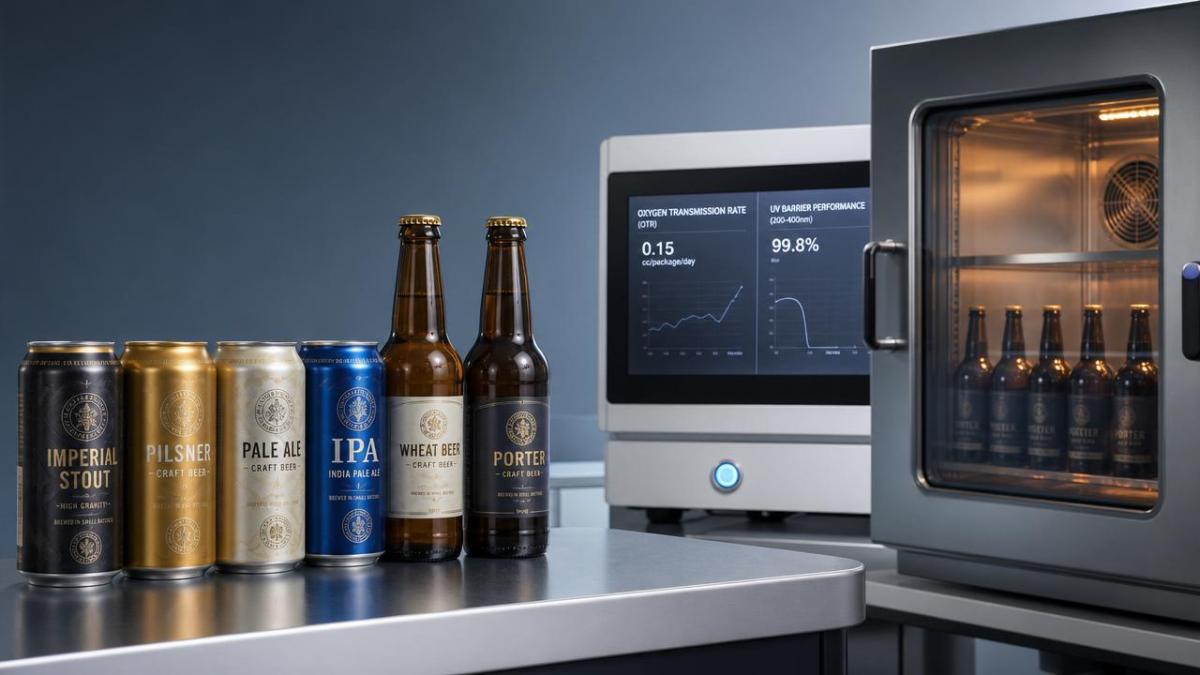
- Oxygen Transmission Rate (OTR) Certification: Does the supplier provide third-party lab reports verifying OTR ≤ 0.05 cc/m²·day·atm for cans/bottles used in your target market? (Critical for hop-forward, low-ABV, or functional beers.)
- Accelerated Shelf-Life Protocol Alignment: Are real-time (25°C/60% RH) and accelerated (38°C/75% RH × 4 weeks = 6-month equivalence) tests conducted per ISO 21872-1—and documented with sensory panel validation?
- Light-Barrier Packaging Validation: Is UV-VIS transmission data available for all proposed containers (e.g., amber glass ≥99% UV blocking; aluminum cans with internal lacquer certified against riboflavin degradation)?
- Fill-Temperature & Carbonation Consistency Range: Can the facility maintain ±0.3°C fill temp and ±0.05 vol CO₂ tolerance across 10,000-unit batches—verified via inline sensors and post-fill QC logs?
- Regulatory Packaging Readiness: Are label templates pre-cleared for FDA (US), EFSA (EU), CFIA (Canada), and ANVISA (Brazil), including allergen declarations, nutrition facts formatting, and country-specific alcohol unit labeling?
- Batch Traceability Depth: Does the system track raw material lot numbers, yeast passage count, filtration dates, and cold-chain timestamps down to individual pallet level—with exportable audit trails?
- Functional Ingredient Compatibility Testing: For sugar-free, probiotic, or adaptogenic beers: has co-stability been tested (e.g., stevia + hops; Lactobacillus + dry-hopping) under real storage conditions?
Scenario-Based Add-On Checks
Tailor your review based on channel and product type:
- Supermarket Distribution (EU/US): Verify EN 13820:2022-compliant tamper-evident seals and QR-code-enabled batch recall functionality embedded in label design.
- On-Premise (Bars/Restaurants): Confirm keg cleaning validation (CIP cycle logs), pressure-drop testing at 30 PSI, and stainless-steel contact certification (ASTM A240).
- Functional/Sugar-Free Beers: Require HACCP-certified sweetener handling zones and separate yeast propagation lines to prevent cross-contamination.
- Emerging Markets (SEA/LATAM): Validate tropical stability testing (40°C/85% RH) and ethanol-proof ink adhesion for high-humidity labeling.
Top 3 Frequently Overlooked Risks in Beer OEM Custom
These items rarely appear in RFPs—but cause >68% of post-launch quality escalations (Jinpai internal 2023–2024 incident log):
- Label Adhesion Failure Under Condensation: Unvalidated label stock delaminates in refrigerated cases—leading to non-compliance fines and consumer distrust. Always request 72-hour cold-condensation stress test reports.
- Inconsistent Bottle Crown Liner Composition: Switching liner suppliers without retesting oxygen ingress can cut shelf life by 40% in lagers. Demand liner material certificates for every production run.
- Yeast Viability Drift in Repeated Propagation: For ODM recipes requiring multi-generation yeast reuse, ask for glycerol-stock viability logs and maximum passage limits—never assume “standard house strain” equals consistency.
Actionable Next Steps for Procurement Teams
Before signing an MOU or requesting samples, initiate these three high-leverage actions:
- Request a Stability Dossier Snapshot: Ask for the most recent 6-month real-time stability report on a comparable SKU—including turbidity, IBU retention, diacetyl reversion, and sensory deviation scores. No redaction.
- Conduct a Virtual Packaging Line Audit: Schedule a live walkthrough of filling, capping, labeling, and case-packing stations—focusing on environmental controls (dew point, particulate counts) and calibration logs.
- Submit Your Exact Label Artwork for Pre-Press Compliance Review: Not just layout—submit print-ready PDFs with embedded fonts, color profiles (CMYK + Pantone), and bleed specs. Flag any regional regulatory nuances upfront.
Why Jinpai Beer Embeds These Checks Into Every Beer OEM Custom Engagement
At Jinpai Beer, we treat Beer OEM custom as a co-engineering process—not a contract manufacturing transaction. Our dedicated OEM Technical Account Managers hold dual certifications in brewing science (MBAA) and packaging engineering (IoPP). Every project begins with a joint stability roadmap, aligned to your target markets’ longest required shelf life. We invest in proprietary accelerated aging chambers calibrated to ISO 11337, conduct quarterly third-party OTR audits on all container suppliers, and maintain a global label compliance database updated daily via regulatory AI crawlers. Whether you’re launching a zero-sugar German wheat in Tokyo or a CBD-infused IPA in Berlin, your success hinges not on flavor alone—but on the invisible architecture built into every can, cap, and carton. That’s where true partnership begins.
Ready to validate your next Beer OEM custom initiative against these benchmarks? Contact Jinpai Beer’s OEM Solutions Team with your target SKU profile, volume forecast, top 3 priority markets, and current packaging specifications—we’ll deliver a tailored technical readiness assessment within 3 business days.
Thank you very much for writing to us. Please leave your message and contact information, we will reply to you within 24 hours.