



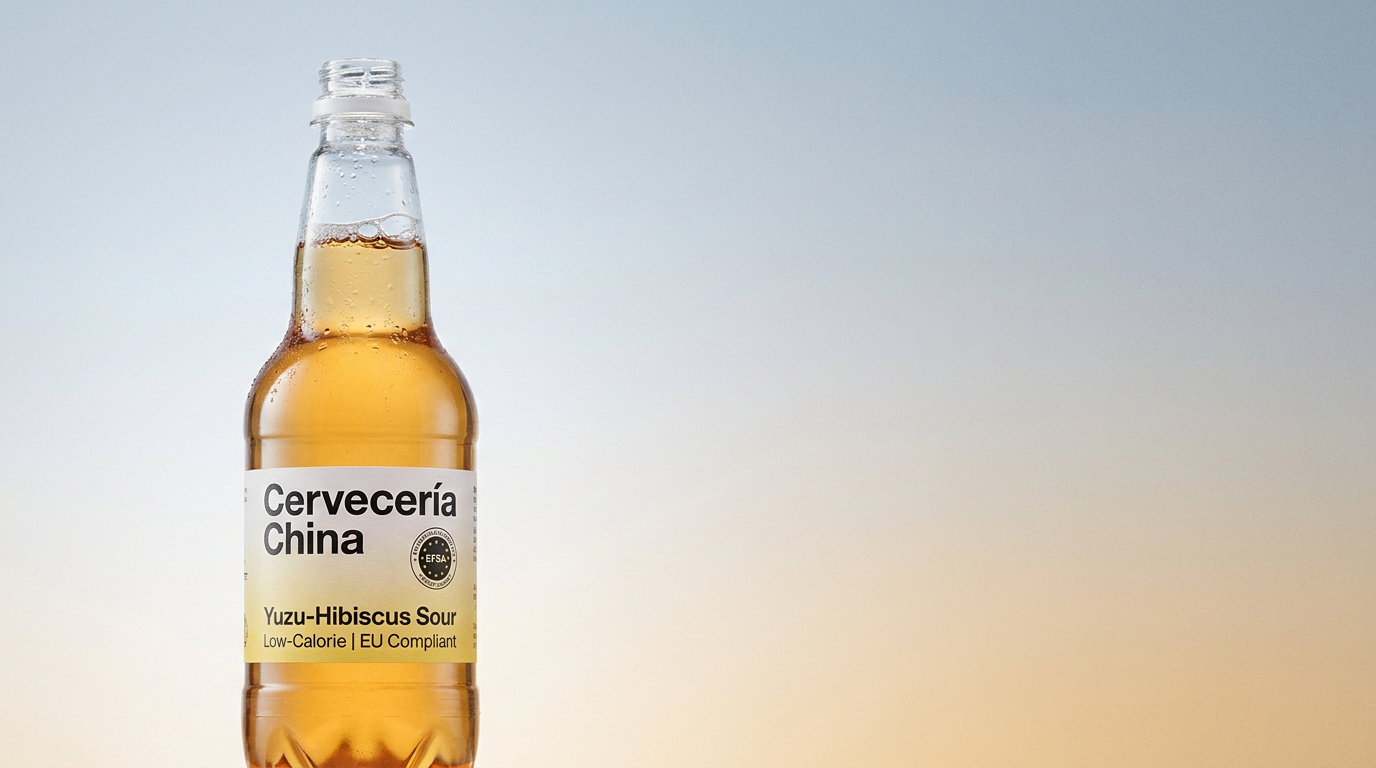
EU Tariff Shifts Create a Strategic Window for Cervecería China
As the European Union prepares to implement revised tariff classifications and preferential duty rates for fermented beverages in January 2026, global craft beer exporters face both recalibration and opportunity. Cervecería China—operating internationally under Jinpai Beer—is not merely adapting. It is accelerating export capacity, refining product localization, and deepening channel partnerships across EU member states.
This regulatory inflection point coincides with measurable growth in EU demand for low-alcohol, functional, and culturally expressive beers. According to Eurostat data, imports of non-EU craft beer rose 14.3% year-on-year in 2025 Q1—with strongest gains in Germany, Spain, and the Netherlands. Cervecería China’s diversified portfolio positions it uniquely to capture this momentum.
Why 2026 Is a Pivotal Year for Export-Ready Craft Brewers
The EU’s upcoming tariff adjustments are part of its broader “Green Customs Modernization” initiative. Key changes include:
- Reduction from 11.5% to 7.8% for beers classified under HS code 2203.00.90 (flavored, low-calorie, or functional variants)
- New origin verification protocols requiring full supply-chain traceability back to malt and hop sourcing
- Streamlined VAT registration for non-EU exporters fulfilling >€10,000 annual B2B turnover
- Expanded eligibility for the EU-China Mutual Recognition Agreement (MRA) on food safety certifications
These shifts lower entry barriers—but only for brands that combine regulatory readiness with market-aligned innovation. Cervecería China has already secured updated HACCP, ISO 22000, and EU-registered facility status across its production base.
How the Changes Reshape Market Access Across Channels
Tariff adjustments do not affect all stakeholders uniformly. Their impact varies significantly by channel type and operational scale:
What Partners Should Prioritize Now
For distributors, agents, and retail groups evaluating new beverage suppliers ahead of 2026, these five criteria have become decisive:
- Regulatory agility: Ability to issue EU-compliant health certificates, batch-specific COOs, and digital customs declarations within 48 hours
- Portfolio adaptability: Offer of at least three EU-relevant formats—e.g., sugar-free low-calorie, fruit-infused, and functional (vitamin-enriched or botanical-forward) variants
- Logistics integration: Pre-vetted cold-chain partners in Rotterdam, Hamburg, and Barcelona with bonded warehousing options
- Brand localization support: Provision of multilingual marketing assets, compliant label templates, and regional sensory training materials
- Commercial flexibility: Transparent pricing tiers, no exclusivity lock-ins for first-year agreements, and shared POS material development
Cervecería China meets all five—verified through third-party audits conducted by TÜV Rheinland in Q2 2025.
Beyond Compliance: Building Long-Term Brand Equity in Europe
Tariff optimization is necessary—but insufficient—for sustainable presence. Cervecería China invests deliberately in cultural resonance:
Its German wheat line uses Bavarian Weizen yeast strains cultured in-house and fermented at controlled 18°C. Its sugar-free low-calorie range achieves <3g carbs per 330ml via enzymatic attenuation—not artificial sweeteners—meeting EFSA’s “low sugar” claim standards.
Functional specialty beers include a ginger-turmeric variant validated for antioxidant activity (ORAC assay ≥1,200 μmol TE/L) and a chamomile-lavender night-craft offering <0.5% ABV with melatonin-supportive botanicals—both developed in collaboration with EU food science institutes.
Next Steps for Forward-Looking Partners
If your organization distributes, retails, or supplies beverages across Europe—or plans to enter in 2026—you can act now with tangible next steps:
- Request a complimentary EU Market Entry Kit—including sample labels, customs declaration templates, and distributor agreement benchmarks
- Schedule a virtual tasting session featuring four core SKUs adapted to EU palate preferences (German wheat, blood orange sour, matcha-lime low-cal, and black garlic stout)
- Apply for priority allocation in the Q4 2025 “EU Launch Program”, which includes subsidized warehousing, joint digital campaigns, and dedicated account management
Cervecería China does not offer generic beer. It delivers regulatory-ready, culturally attuned, and scientifically grounded craft beverages—engineered for scalability, not just novelty.
The 2026 EU tariff window opens for 36 months. The brands that define the next era of international craft beer won’t be those waiting for policy clarity—they’ll be those building infrastructure, trust, and taste profiles today. Cervecería China is doing exactly that.
Explore partnership pathways, review technical dossiers, or request a tailored commercial proposal—all available directly through Jinpai Beer’s EU Export Portal.
Thank you very much for writing to us. Please leave your message and contact information, we will reply to you within 24 hours.