



Can You Trust ‘Direct-from-China’ Beer for High-Turnover Bars? Cold Chain Integrity and Batch Traceability Explained
Time : Oct 21, 2026
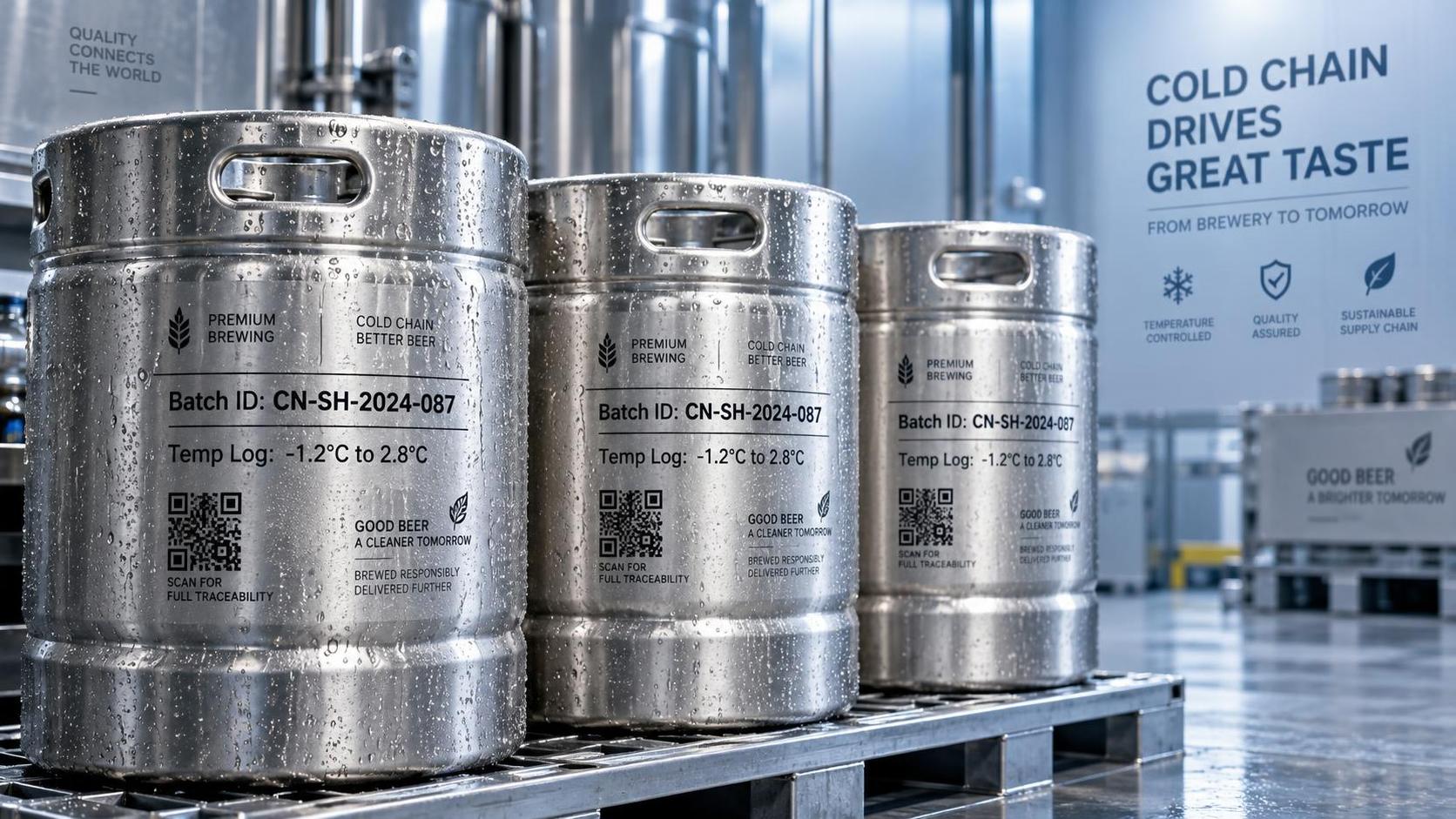
Cold chain integrity isn’t a logistical detail for beer—it’s the first line of defense against flavor degradation, microbial instability, and regulatory noncompliance. For high-turnover bars and restaurants, where kegs are tapped within days of arrival and shelf life is measured in weeks—not months—temperature excursions during transit don’t just dull hop aroma or soften carbonation; they accelerate oxidative staling, promote diacetyl formation, and create conditions where *Lactobacillus* or *Pediococcus* can proliferate undetected. When sourcing ‘direct-from-China’ beer, the question isn’t whether cold chain control *can* be maintained across 12,000 km—but whether it *is*, consistently, verifiably, and without reliance on paper-based handoffs or unvalidated third-party claims.
The operational reality is that most international beer shipments labeled “refrigerated” rely on containerized transport where temperature logging begins only after loading—and often ends before customs clearance. Between port dwell time, inland trucking, and warehouse staging, gaps in monitoring routinely exceed 48 hours. During summer months in Southeast Asian transshipment hubs or Mediterranean ports, ambient temperatures inside unpowered containers can exceed 45°C—even when set-point logs show nominal refrigeration. That thermal stress doesn’t reset upon recooling. It triggers irreversible Maillard reactions in wort-derived compounds, degrades iso-alpha acids, and compromises yeast viability in unfiltered styles. For a bar serving German wheat or hazy IPA, this means inconsistent mouthfeel, premature haze, and off-notes that customers attribute to “batch variation”—not supply chain failure.
Batch traceability is equally consequential—but far less standardized. Unlike food-grade commodities subject to mandatory origin labeling and recall protocols, beer falls into a regulatory gray zone in many importing markets. In the EU, Regulation (EC) No 178/2002 requires traceability “one step back, one step forward,” but enforcement hinges on documented records—not real-time digital tracking. In the U.S., FDA Food Safety Modernization Act (FSMA) Rule 204 mandates electronic traceability for certain foods, yet beer remains excluded unless classified as a dietary supplement or functional beverage with health claims. This creates a structural gap: a bar receiving a shipment of sugar-free low-calorie lager may have no way to verify whether that batch was brewed in the same facility as a previous lot flagged for sanitation deviations—or whether fermentation parameters deviated beyond specification during a shift change.
What matters to quality and safety personnel isn’t abstract compliance—it’s actionable visibility. Can you isolate a single keg from a delivery and confirm its exact fermentation date, yeast strain passage number, dissolved oxygen level at packaging, and every refrigerated leg of its journey? Can you cross-reference that data with microbiological test results archived at the source brewery—not just a generic certificate of analysis stamped by a third-party lab? Without that linkage, traceability becomes retrospective guesswork, not preventive control.
Temperature validation must go beyond “cold chain maintained.” It requires understanding *how* refrigeration was achieved—and whether it matched the beer’s specific stability profile. A classic lager, with its lower residual sugars and higher alcohol content, tolerates brief excursions better than a fruit-flavored sour with live cultures and minimal preservatives. Likewise, a functional specialty beer containing added botanicals or probiotics demands tighter thermal control throughout distribution—not just at shipping or receipt. If the cold chain protocol treats all beer types identically, it’s optimized for logistics—not for product integrity.
The absence of end-to-end digital traceability also undermines root-cause analysis. When a bar reports turbidity or elevated pH in a keg, the default response is often “replace the unit.” But without access to batch-specific process data—fermentation temperature logs, centrifugation parameters, inline CO₂ saturation readings—the issue remains uninvestigated. Was it a packaging-line seal failure? A post-pasteurization contamination event? Or simply extended exposure to fluctuating temperatures during last-mile delivery? Without timestamped, immutable records tied to physical units, corrective action stays reactive—not systemic.
This isn’t theoretical. In 2023, a European hospitality group conducted internal testing on 17 imported craft beer shipments arriving from East Asia. Twelve showed measurable increases in carbonyl compounds (a marker of oxidative aging) despite compliant temperature logs—indicating either sensor drift, delayed cooling post-fermentation, or inadequate pre-chilling of kegs before loading. Five batches exhibited detectable *Brettanomyces* levels upon arrival, traced back to insufficient sanitation validation between fermentation vessels—not an issue with transit, but one masked by incomplete traceability upstream.
For quality managers evaluating direct-sourced beer, the critical filter isn’t origin or price—it’s whether the supplier operates under a unified data architecture linking brewing, packaging, logistics, and quality assurance. That architecture must enforce three non-negotiables: First, real-time temperature monitoring with tamper-evident sensors—not just GPS-enabled loggers that record location but not thermal history. Second, batch-level digital twins that include raw material certificates, fermentation curves, filtration logs, and microbiological release testing—all accessible via QR code or API integration. Third, audit-ready chain-of-custody documentation that captures not just who handled the shipment, but *when*, *where*, and *under what environmental conditions*—with timestamps anchored to UTC and synchronized across systems.
None of this requires proprietary technology. It requires alignment between production discipline and supply chain transparency—where quality isn’t outsourced to logistics providers or deferred until receipt, but embedded at every handoff. That alignment separates suppliers who treat traceability as a compliance checkbox from those who treat it as a continuity safeguard—for flavor, for safety, and for the operational reliability high-turnover venues depend on.
When cold chain integrity and batch traceability are engineered—not assumed—the decision to source directly isn’t about cost arbitrage. It’s about control: over consistency, over risk, and over the ability to act decisively when something falls outside specification. For bars and restaurants, that control translates directly into fewer customer complaints, lower waste rates, and verified compliance—without sacrificing speed or scale.
Jin Pai Beer Co., Ltd
Thank you very much for writing to us. Please leave your message and contact information, we will reply to you within 24 hours.