



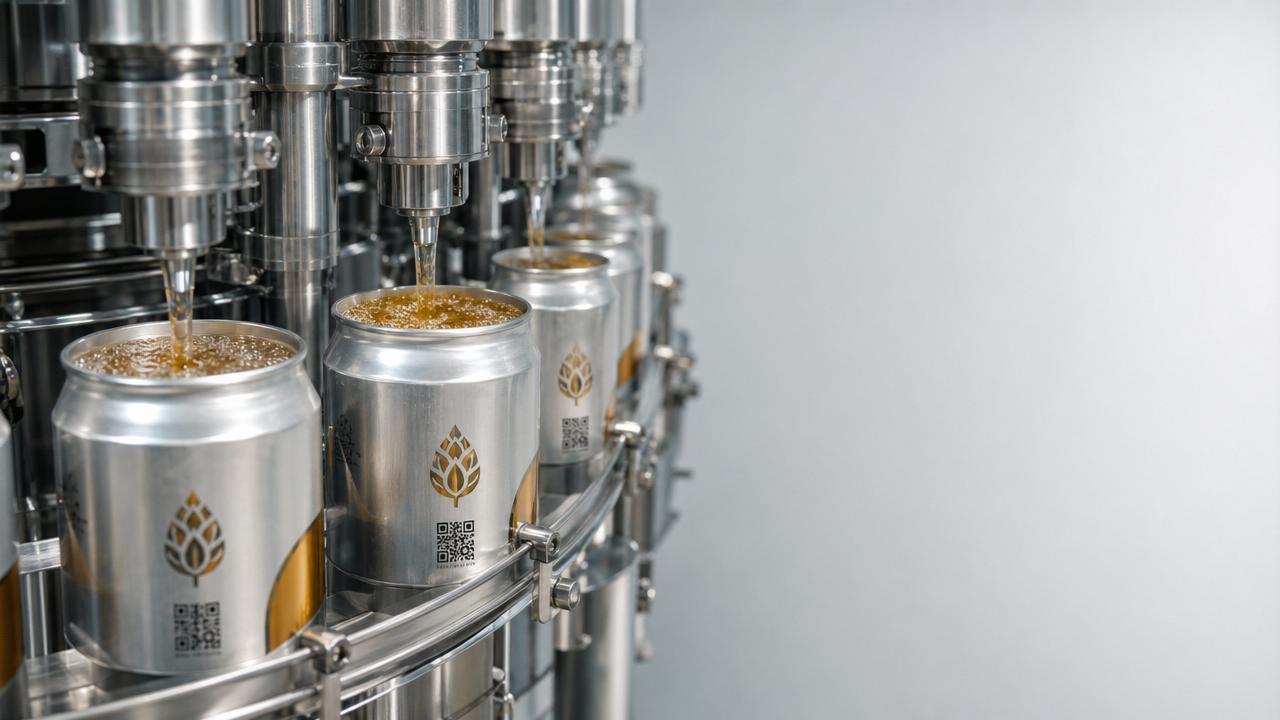
Launching a new craft beer brand via Beer OEM in China offers speed and scalability—but only if MOQ adjustments align with your project timeline. For project managers overseeing global product rollouts, unexpected minimum order quantity shifts can delay production, bottleneck logistics, and push launch dates by weeks. At Jinpai Beer, our flexible OEM/ODM framework lets you balance cost efficiency with time-to-market agility—whether you're scaling from pilot batches to full distribution across restaurants, bars, or e-commerce channels. Discover how strategic MOQ planning streamlines your new product launch.
When Does MOQ Flexibility Determine Your Launch Window?
MOQ is not a static threshold—it’s a dynamic lever tied directly to production readiness, raw material lead times, and packaging integration. In Beer OEM, even minor MOQ changes trigger cascading effects: fermentation scheduling, label printing deadlines, carton procurement, and customs documentation all shift in response.
At Jinpai Beer, we categorize launch scenarios by three temporal anchors: pre-launch validation (≤8 weeks), regional rollout (8–16 weeks), and multi-market scale-up (16+ weeks). Each demands distinct MOQ logic—not just volume, but timing-aligned batch structuring.
How Pilot Batch MOQs Shape First-Market Validation
Pilot batches (300–1,500 units) serve as functional market tests—not cost-optimized runs. Here, MOQ flexibility enables rapid iteration on ABV, bitterness units (IBU), carbonation level, and can design before committing to full-line tooling.
Jinpai Beer supports pilot-scale Beer OEM with adjustable MOQs starting at 300 units for standard 330ml cans. This includes full labeling, QR-coded traceability, and refrigerated storage for up to 60 days—eliminating rush fees or warehousing delays during sensory feedback cycles.
- Lead time: 18–22 business days from artwork sign-off
- No mold/tooling deposits required
- Label revisions included (up to 2 rounds)
- Batch-specific lab reports provided digitally
Why Regional Rollout MOQs Must Match Channel-Specific Velocity
A 5,000-unit MOQ may suit supermarket shelf placement—but it’s inefficient for bar tap trials or boutique retail consignment. Channel velocity dictates optimal batch size: high-turnover venues absorb volume faster; experiential outlets prioritize freshness over stock depth.
Jinpai Beer applies channel-aware MOQ tiers:
This segmentation avoids overstocking low-velocity SKUs while ensuring shelf-ready consistency for fast-moving formats like fruit-flavored beer or sugar-free low-calorie variants.
What Multi-Market Scale-Up MOQs Reveal About Supply Chain Maturity
Scaling across 3+ markets within 90 days requires synchronized MOQ logic—not uniform volume, but coordinated phasing. A 15,000-unit order split unevenly across EU, SEA, and LATAM avoids container consolidation delays and customs bottlenecks.
Jinpai Beer’s multi-market Beer OEM model uses staggered MOQ triggers: initial 5,000 units ship in Week 1; next 5,000 follow in Week 4; final 5,000 deploy in Week 8—aligned with local regulatory clearances and in-country warehousing activation.
- Includes bilingual labeling (EN + target language)
- Integrates with 3PL partners in Germany, Singapore, and Mexico
- Supports functional specialty beer compliance (e.g., adaptogen-infused, vitamin-enriched)
Three Common MOQ Missteps That Extend Launch Timelines
First: Assuming “lowest MOQ = fastest start.” Ultra-low batches often require manual line setup, adding 5–7 days versus semi-automated runs at 1,200+ units.
Second: Locking MOQ before finalizing SKU architecture. Launching five variants at identical MOQs creates imbalance—e.g., German wheat outsells classic lager 3:1, leaving excess inventory of the latter.
Third: Overlooking seasonal ingredient constraints. Fruit-flavored beer MOQs scheduled for Q2 must account for mango or lychee harvest windows—delaying raw material sourcing if uncoordinated.
Actionable Next Steps for Launch-Agile Beer OEM Planning
Start with your go-to-market calendar—not your budget. Map each milestone (label approval, first shipment, in-store debut) backward to identify MOQ-sensitive windows.
Then, request Jinpai Beer’s MOQ Timeline Alignment Worksheet—a free resource that cross-references your launch cadence with optimal batch sizing, packaging lead times, and certification pathways (e.g., FDA, EU CE, SGS).
Finally, schedule a technical alignment call. Our OEM team will review your target channels, flavor profiles (including functional specialty beer formulations), and logistics partners—then propose a phased MOQ structure with built-in buffer days for unforeseen adjustments.
Beer OEM success isn’t measured in units shipped—but in weeks saved between concept and consumer. With Jinpai Beer, MOQ becomes a precision instrument—not a barrier.
Related Posts
- ▶ What Makes a Chinese Beer Factory Competitive in Global Contract Brewing? Quality Consistency, Scalability, and IP Protection Frameworks
- ▶ How Chinese Beer Factory Export Performance Differs by Destination: EU Tariff Quotas vs. Southeast Asia Local Content Rules
- ▶ Why Malt Drink Factories Often Underestimate Water Treatment Needs for Beer Production — Hardness, Chlorine, and Silica Implications
Online Message
Thank you very much for writing to us. Please leave your message and contact information, we will reply to you within 24 hours.