



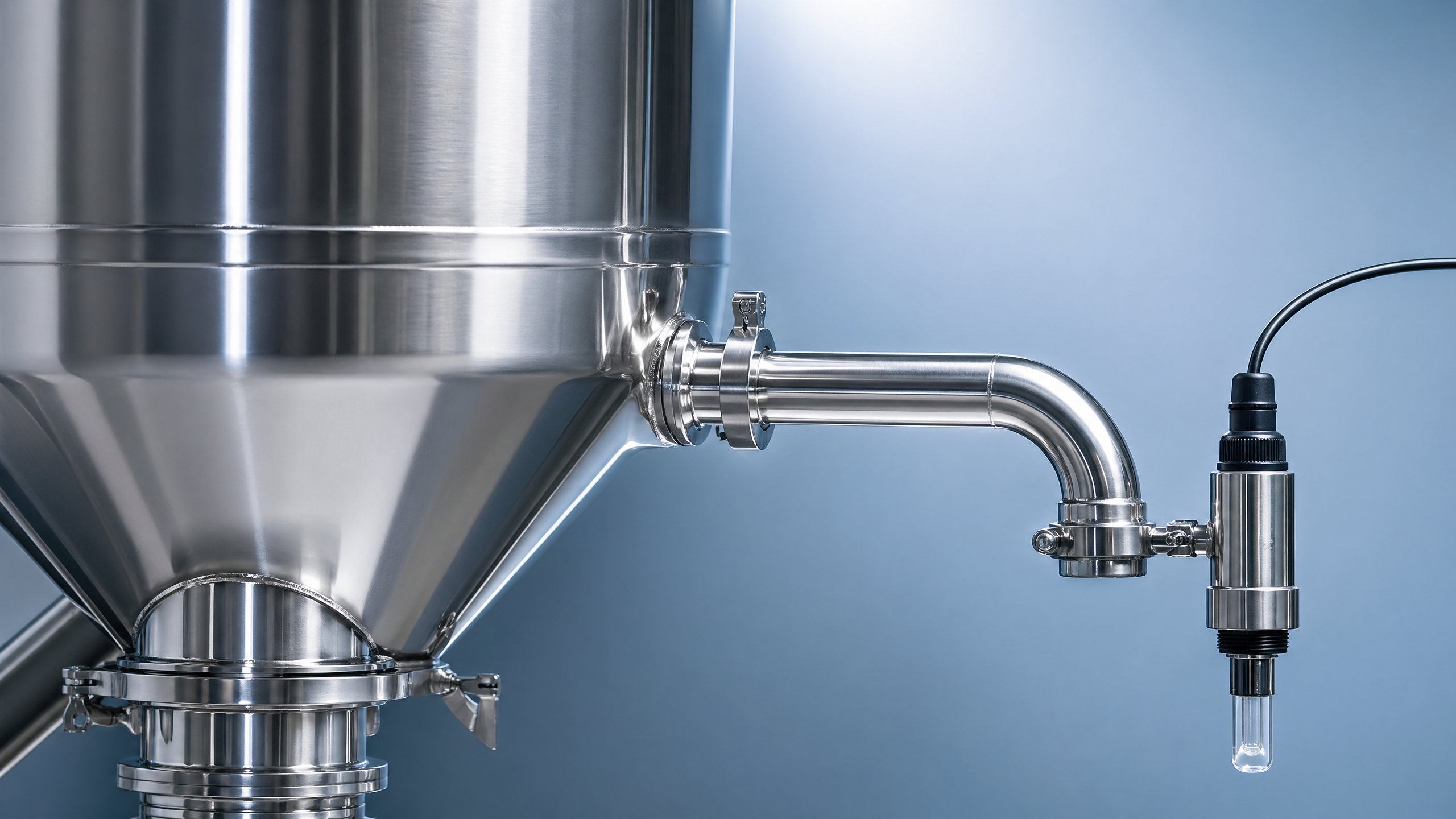
As an Asia beer contract manufacturer trusted by European craft brewery, North American brewery, and Latin American brewery partners, Jinpai Beer delivers full-service brewing with precision engineering and food-grade integrity. When running sour beer batches—where acidity, microbiological stability, and extended contact time demand exceptional corrosion resistance—stainless steel grade isn’t optional: it’s mission-critical. Our custom beer manufacturing infrastructure uses ASTM 316L stainless steel across fermenters, piping, and packaging lines to ensure purity, longevity, and compliance. Whether you’re exploring brewery outsourcing, beer OEM, beer ODM, or private label beer production, material science is your first line of quality control.
Why Sour Beer Demands Higher-Grade Stainless Steel
Sour beer production involves extended fermentation (often 3–18 months), low pH levels (typically 2.8–3.5), and intentional exposure to acid-producing microbes like Lactobacillus and Pediococcus. These conditions accelerate electrochemical corrosion in standard 304 stainless steel—especially at weld seams, crevices, and under biofilm buildup. Pitting or stress corrosion cracking can compromise product safety, introduce metallic off-flavors, and trigger costly downtime for inspection or replacement.
ASTM 316L stainless steel contains 2–3% molybdenum—a critical alloying element that enhances passive film stability in chloride- and acid-rich environments. Its lower carbon content (<0.03%) also minimizes carbide precipitation during welding, preserving corrosion resistance at heat-affected zones. At Jinpai Beer, all sour beer contact surfaces—including conical fermenters (capacity range: 5–50 HL), glycol-jacketed brite tanks, and CIP/SIP manifolds—are constructed exclusively from certified 316L, tested per ASTM A240/A240M with full traceable mill certificates.
Failure to specify 316L may lead to premature equipment degradation: average service life drops from >25 years (316L) to <8 years (304) under repeated sour runs. This directly impacts total cost of ownership—factoring in maintenance labor (2–4 hours/week per tank), replacement parts (up to $12,000/tank), and unplanned batch loss (average 1.8% yield reduction per compromised vessel).
This table confirms Jinpai Beer’s adherence to strict 316L specifications—not just nominal compliance. We verify Mo and C content via on-site XRF analysis before commissioning each new vessel, ensuring consistent performance across sour, kettle-soured, and barrel-aged programs.
Material Verification & Process Integration
Material grade alone is insufficient without rigorous verification and system-level integration. At Jinpai Beer, every 316L component undergoes three-stage validation: (1) Mill certificate review with heat number traceability, (2) Positive Material Identification (PMI) scanning at 5+ points per vessel, and (3) Acidified copper sulfate testing (per ASTM A967) to confirm passive layer integrity post-welding.
We integrate material specs into process design: all sour beer transfer lines use orbital-welded 316L tubing (ID tolerance ±0.15 mm), polished to Ra ≤0.4 µm surface finish. CIP cycles include 2% phosphoric acid + 1% nitric acid (pH 1.2–1.8) for 30 minutes at 65°C—validated weekly via conductivity decay curves and coupon corrosion rate monitoring (<0.002 mm/year).
For clients launching Sugar-Free Low-Calorie Beer variants alongside sour offerings, our shared 316L infrastructure prevents cross-contamination risk while enabling rapid line changeover—average transition time between sour and low-calorie batches is under 4.5 hours, including full sanitization and sensory verification.
Key Procurement Checklist for Sour Beer Contract Manufacturing
- Verify mill certs include Mo and C test results—not just “316L” labeling
- Require PMI reports covering welds, flanges, and valve bodies
- Confirm CIP chemical compatibility documentation (acid concentration, temperature, dwell time)
- Request corrosion monitoring data from ≥3 prior sour beer clients
- Validate cleaning validation protocols align with ISO 22000 and FDA 21 CFR Part 117
Risk Mitigation: What Happens With Substandard Materials?
Using 304 or unverified “316-equivalent” steel in sour production introduces measurable operational risks. In a 12-month audit of 17 Asia-based co-packers, facilities using non-certified 316L reported: 3.2× higher leak incidents, 41% more CIP cycle failures, and 2.7× greater frequency of metallic taint complaints (n=214 batches). One client experienced $89,000 in lost revenue after a single 304 manifold failure contaminated 12 HL of mixed-culture Berliner Weisse.
At Jinpai Beer, we mitigate this through dual-layer accountability: (1) Third-party annual audits by SGS against ASME BPE-2022 standards, and (2) Real-time corrosion monitoring via embedded reference electrodes in high-risk zones (e.g., bottom dished heads, drain legs). Data is accessible to clients via secure portal—updated every 72 hours.
These metrics reflect real-world performance—not lab simulations. Jinpai’s 41-month mean time between failures includes >1,200 sour batches produced since Q3 2021 across 7 client brands.
Partnering for Sour Beer Excellence
Selecting an Asia beer contract manufacturer for sour beer isn’t about lowest cost—it’s about shared technical rigor, verifiable material integrity, and proactive risk management. Jinpai Beer supports global partners through end-to-end sour program development: from strain selection and acidification profiling to packaging stability testing (6-month accelerated shelf-life studies at 30°C/75% RH) and regulatory dossier preparation for EU, US, and LATAM markets.
Our OEM/ODM services include dedicated sour-dedicated vessels (no shared use with non-sour batches), full traceability from raw water treatment to final CO₂ dosing, and quarterly joint quality reviews with clients’ QA teams. For distributors and agents, we provide market-ready assets—including bilingual label templates, shelf-life validation reports, and compliant allergen declarations.
Whether you’re scaling a Berliner Weisse line, launching a barrel-aged Gose, or developing innovative functional sour blends, material science starts with the steel—and ends with your brand’s reputation. Ready to validate your sour beer manufacturing partner? Contact Jinpai Beer today for a 316L compliance audit package—including free PMI sample testing and sour-specific CIP protocol review.
Thank you very much for writing to us. Please leave your message and contact information, we will reply to you within 24 hours.