



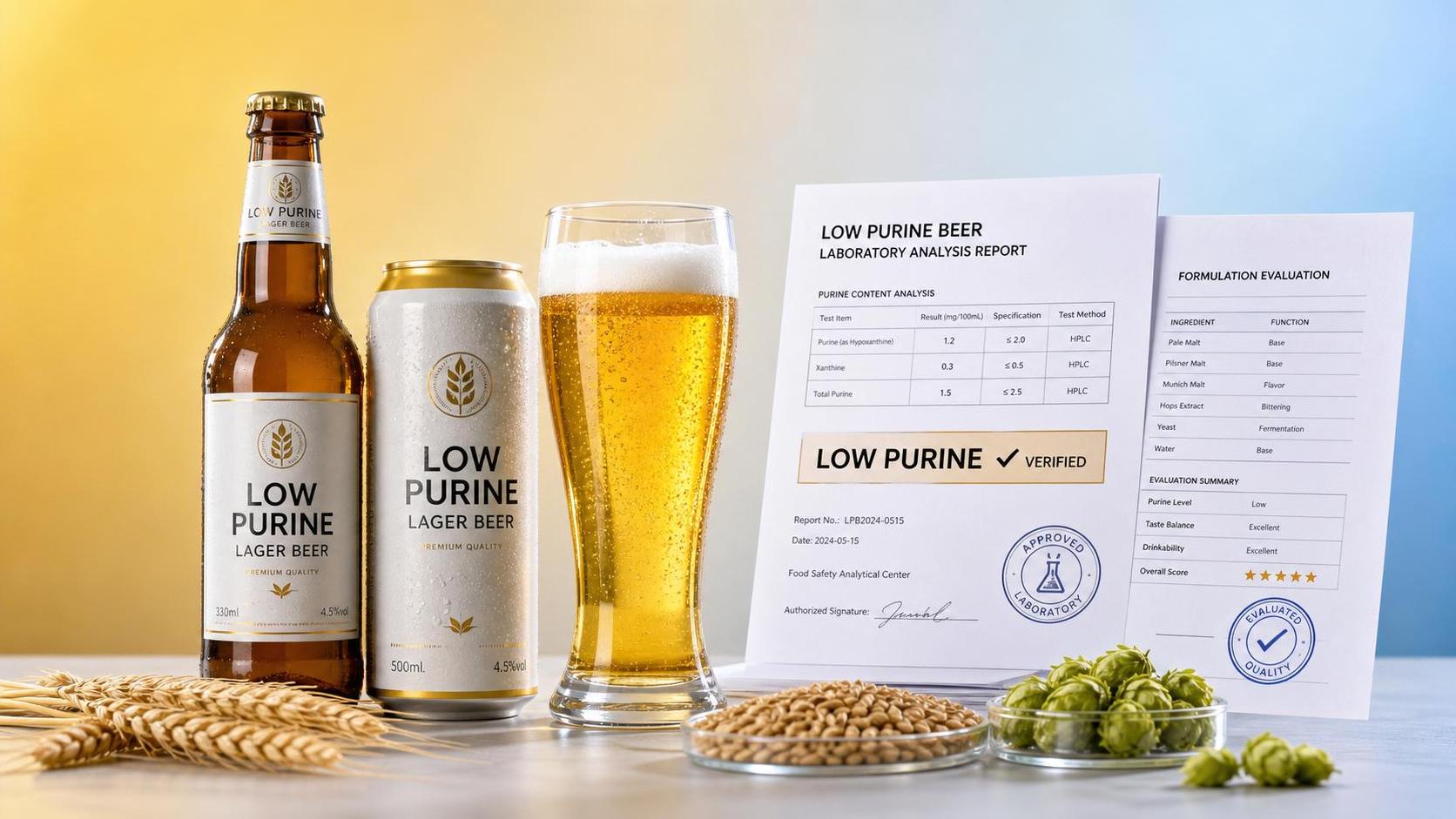
Common Mistakes When Evaluating Low Purine Beer Claims
Evaluating low purine beer claims sounds simple at first.
In practice, it often becomes a mix of technical, commercial and compliance questions.
Many teams compare labels, pricing and packaging first.
That approach can miss the real value behind a low purine beer offer.
A product may look attractive on paper, yet still create risk after launch.
The most common issues involve testing, formulation, market fit and supplier support.
When these areas are checked properly, low purine beer decisions become much clearer.
That also helps reduce sourcing mistakes, weak positioning and avoidable channel conflicts.
Why Low Purine Beer Needs Deeper Evaluation
Low purine beer is not just a flavor trend.
It sits at the intersection of health-conscious demand and functional product positioning.
That makes evaluation more sensitive than standard beer sourcing.
Buyers must assess not only taste and cost, but also claim credibility.
A weak claim can damage brand trust or trigger channel disputes later.
A strong claim, by contrast, can support premium pricing and clearer differentiation.
Mistake 1: Treating “Low Purine” as a Marketing Phrase
One of the biggest mistakes is accepting low purine beer wording at face value.
Some offers use broad wellness language without explaining the actual purine level.
That creates room for confusion during procurement and downstream sales.
In actual business review, the first question should be simple.
What exactly does the supplier mean by low purine beer?
Ask for a measurable definition, not just promotional language.
If the answer stays vague, the commercial risk is already visible.
Useful checks include:
- Whether the low purine beer claim is based on lab data.
- Whether the testing unit and method are disclosed.
- Whether batch variation is explained.
- Whether claim wording matches target market rules.
Mistake 2: Ignoring Testing Standards and Verification Methods
A low purine beer claim is only as strong as the testing behind it.
This is where many evaluations become too shallow.
Teams may ask for a report, but never review how the result was produced.
That gap matters because testing methods can differ across suppliers and markets.
A single test report does not always prove long-term consistency.
More importantly, it may not match the regulatory expectation of your destination market.
Check these points before moving forward:
- Confirm the laboratory source and whether it is independent.
- Review the sampling method and batch date.
- Ask if the low purine beer result is typical or exceptional.
- Verify whether repeat testing is part of quality control.
If a supplier cannot explain the testing path clearly, the claim may be hard to defend later.
Mistake 3: Overlooking Formulation and Brewing Process
Another common mistake is focusing only on the final number.
The result matters, but the brewing logic matters too.
Low purine beer development depends on recipe design, raw material selection and process control.
Without understanding that foundation, buyers may misjudge product stability.
This also affects flavor, shelf life and manufacturing scalability.
From a sourcing perspective, low purine beer should not feel like a one-off experiment.
It should come from a brewery with real R&D and process discipline.
That is especially important for private label, OEM and ODM cooperation.
When a formula changes slightly, the low purine beer claim may change with it.
Mistake 4: Assuming Health Positioning Alone Will Drive Sales
A low purine beer story can attract attention, but attention is not the same as repeat purchase.
Some evaluations rely too heavily on functional positioning.
They ignore taste, drinking occasion and price acceptance.
That often leads to products that gain listing but lose momentum quickly.
In the market, low purine beer still competes as beer.
Consumers may appreciate the concept, yet still reject the product if the taste feels compromised.
This means evaluation should include both claim value and sensory value.
A practical review should cover:
- Flavor balance and drinkability.
- Price ladder against standard beer and specialty beer.
- Consumer education cost in each channel.
- Fit for restaurants, bars, retail and online sales.
Mistake 5: Failing to Match the Claim with the Right Consumer Segment
Not every customer understands low purine beer in the same way.
That sounds obvious, yet it is often ignored during product selection.
A claim that works in one retail setting may underperform in another.
The commercial question is not only whether the low purine beer claim is true.
It is whether the claim is meaningful to the intended buyer.
For example, health-aware urban consumers may respond to a lighter lifestyle message.
Restaurant buyers may care more about menu differentiation and premium upsell potential.
Distributors may focus on turnover speed and claim clarity.
Matching low purine beer with the wrong segment weakens the entire launch plan.
Mistake 6: Underestimating Regulatory and Labeling Risk
This is where many promising projects slow down.
A low purine beer claim may be commercially attractive, but wording matters greatly.
Different markets treat nutritional and functional expressions differently.
What is acceptable in one country may require revision in another.
That means low purine beer evaluation should include packaging review early.
Do not wait until artwork is finalized or shipments are booked.
Late changes increase cost and may delay market entry.
Review the following before approval:
- Claim wording on labels and cartons.
- Supporting documents for customs or local registration.
- Translation accuracy for market-facing materials.
- Consistency across e-commerce and offline content.
Mistake 7: Evaluating the Product but Not the Supplier
Even a good low purine beer can become a poor business decision if supplier capability is weak.
This point becomes more important in multi-channel or export business.
Reliable supply, customization support and product consistency all affect long-term results.
A capable craft beer partner should offer more than one interesting sample.
It should also provide scalable production, responsive communication and clear documentation.
This is especially relevant when low purine beer is part of a broader product portfolio.
Suppliers with wider brewing capabilities can support lineup strategy more effectively.
A stronger supplier review usually includes:
- R&D ability for low purine beer and related specialty products.
- OEM and ODM flexibility.
- Stable production and export experience.
- Support for wholesale, retail and customized projects.
A Smarter Checklist for Low Purine Beer Evaluation
After removing the common mistakes, the process becomes much more practical.
A strong low purine beer review should connect technical proof with sales reality.
It should also compare near-term launch needs with long-term brand potential.
Final Takeaway
Low purine beer can be a strong category opportunity when reviewed carefully.
The biggest mistakes usually come from oversimplifying the claim.
Good evaluation connects claim evidence, flavor quality, channel strategy and supplier reliability.
That is the difference between a short-lived listing and a sustainable product line.
For businesses comparing low purine beer options, careful review now saves cost later.
It also makes supplier conversations more efficient and more strategic.
Jinpai Beer supports this process through craft beer R&D, stable production and customized cooperation models.
Its portfolio covers classic lager, German wheat, sugar-free low-calorie beer, fruit beer and functional specialty beer.
For partners exploring low purine beer, OEM, ODM, wholesale and tailored product solutions can create better market alignment.
A better question is not whether low purine beer is interesting, but whether the offer is truly ready for business.
Thank you very much for writing to us. Please leave your message and contact information, we will reply to you within 24 hours.