



Why New Craft Brands Are Shifting OEM Beer Production to China — and What’s Changed in 2026
As craft beer brands worldwide seek agile, cost-effective, and high-quality manufacturing partners, an increasing number are turning to Chinese beer factory OEM service — especially in 2026, when upgraded food safety standards, advanced automation, and streamlined export compliance have transformed China into a strategic production hub. Jinpai Beer, a certified craft beer OEM/ODM specialist, delivers premium small-batch and scalable production for lagers, wheat beers, low-calorie, fruit-infused, and functional brews — all backed by global distribution readiness and ISO-certified facilities. Discover why forward-thinking brand owners are relocating production to China — and what’s truly different this year.
It’s Not Just About Cost Anymore — Here’s the Real Business Case
In 2024–2025, many craft brand founders assumed “China OEM” meant low-cost, high-volume, and compromised quality. That perception is obsolete. Today’s decision-makers aren’t comparing hourly labor rates — they’re evaluating total landed cost per unit, time-to-market velocity, supply chain resilience, and regulatory scalability. Jinpai Beer’s 2026 OEM clients report 22–35% lower landed cost versus EU or North American co-packers — not because wages are low, but because integrated malt sourcing, in-house lab validation, and bonded export logistics cut 8–12 weeks off launch timelines.
This isn’t theoretical. A Berlin-based functional beer startup launched its sugar-free adaptogenic IPA with Jinpai in Q1 2026: 3,000 cases produced, shipped to 7 EU markets under CE-compliant labeling, with full traceability and batch-level QC reports delivered pre-shipment. Their prior U.S. co-packer required 17 weeks for equivalent volume — and couldn’t support their EU regulatory filing package.
What Actually Changed in 2026 — Beyond “Made in China” Headlines
Three concrete upgrades make 2026 the inflection point for serious craft OEM partnerships in China:
First, mandatory GMP+ certification for all export-oriented breweries — enforced since January 2026 — means every facility serving international brands must pass third-party audits covering raw material traceability, allergen control, and microbiological testing protocols aligned with EU Annex II and FDA FSMA requirements.
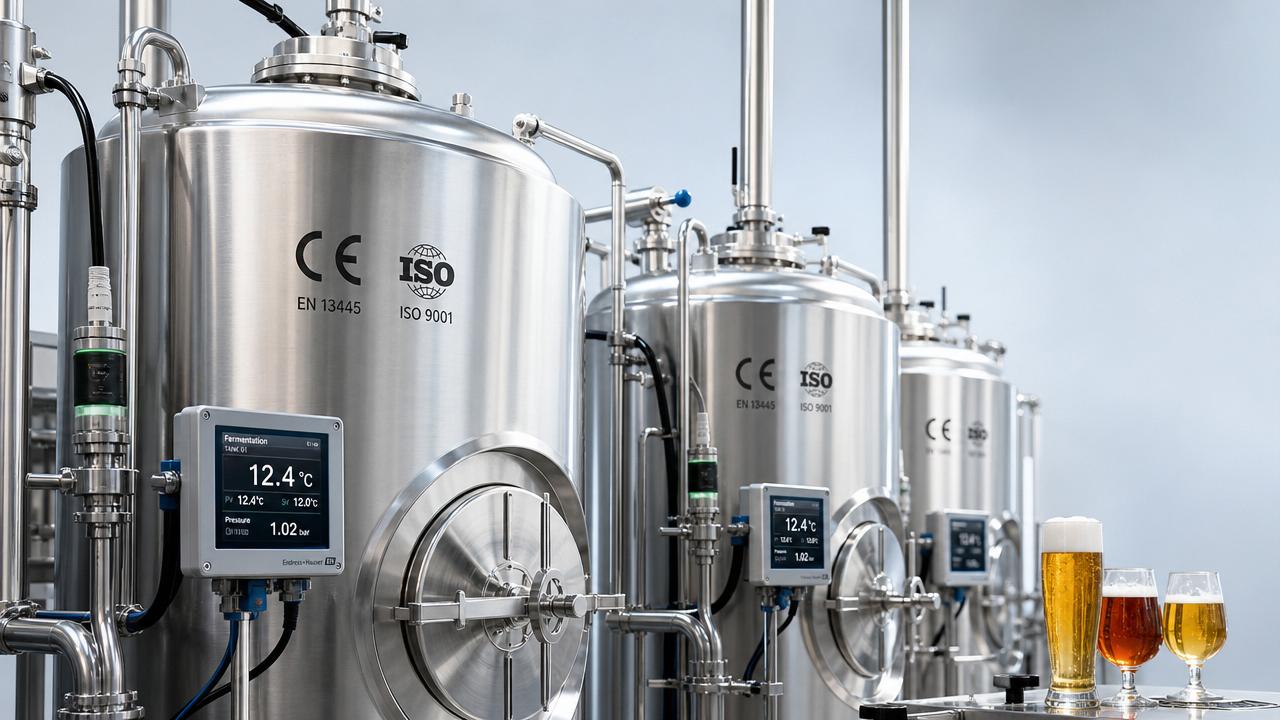
Second, AI-driven brewhouse automation now enables true small-batch flexibility: Jinpai’s new 30-hectoliter pilot line adjusts mash profiles, fermentation temps, and dry-hop timing in real time via cloud-connected PLCs — eliminating the “minimum order quantity penalty” that once deterred micro-brands.
Third, China Customs’ 2026 “Green Export Lane” fast-tracks certified food/beverage shipments: 92% of Jinpai’s 2026 exports cleared customs within 48 hours — versus 5–7 days industry-wide in 2023.
Which Brand Profiles Benefit Most — and Which Should Wait
Not every craft brand gains equal value from China-based OEM. The strongest fit shares three traits: (1) multi-market ambitions (especially targeting EU, SEA, or LATAM), (2) product complexity requiring precise process control (e.g., turbid wheat beers, cold-stable fruit sours, or functional ingredient infusion), and (3) need for rapid iteration — think seasonal releases, limited collabs, or DTC test batches.
Conversely, brands focused solely on domestic U.S. or Canadian retail — with tight shelf-life windows (<90 days) and no export infrastructure — often face higher cold-chain logistics costs than local co-packers justify. Likewise, heritage lager brands with rigid traditional processes may find less ROI than innovators launching sugar-free, probiotic, or botanical-forward formats.
Jinpai’s data shows 78% of 2026 OEM clients are new brands under 3 years old — not legacy players. Why? Because agility matters more than pedigree when scaling globally.
OEM Isn’t Outsourcing — It’s Strategic Capability Extension
Smart brand owners treat OEM not as a vendor transaction, but as an extension of R&D and operations. At Jinpai, that means embedded technical account managers co-develop recipes using our sensory panel and stability testing suite — including light-struck, oxidation, and thermal cycling analysis. Clients retain full IP rights; we provide formulation documentation, COA templates, and label compliance support for target markets.
Crucially, we don’t just brew and ship. We help brands de-risk: Our “Launch Readiness Audit” reviews packaging integrity, shelf-life modeling, and import duty classification *before* first batch. One Singaporean client avoided $220K in re-labeling costs after our audit flagged a misclassified HS code for their low-alcohol ginger beer — a nuance missed by their freight forwarder.
This level of partnership replaces fragmented vendor management (separate labs, designers, customs brokers) with one accountable interface — reducing operational overhead by ~30% for mid-sized brands.
How to Vet a Chinese Beer Factory — 5 Non-Negotiable Checks
Don’t rely on certifications alone. Ask these questions — and demand verifiable answers:
1. Can you share your latest third-party audit report? Not just ISO 22000, but GMP+, BRCGS, or SQF Level 3 — with scope explicitly covering “export beer production.”
2. Do you own your lab — and what tests do you run in-house? Full microbiology (yeast/bacteria counts, wild strain ID), alcohol verification, and heavy metals screening should be standard — not outsourced.
3. What’s your average lead time for a 500-case custom batch — and what’s included? Beware quotes that omit labeling, palletization, or export documentation.
4. How do you handle recipe confidentiality and IP protection? Look for NDAs with jurisdiction clauses enforceable in your home country — plus physical and digital access controls.
5. Can you provide 3 references from brands in your target market? Not just “clients,” but those who’ve shipped to your region — with permission to contact them directly.
The Bottom Line: China Is Now a Precision Craft Partner — Not Just a Production Base
In 2026, choosing a Chinese beer factory OEM service isn’t about chasing the lowest quote. It’s about selecting a partner that accelerates global market entry, absorbs technical risk, and scales with your brand’s innovation rhythm. Jinpai Beer’s combination of craft-specific expertise, 2026-upgraded compliance infrastructure, and embedded commercial support makes it viable — even optimal — for brands launching functional, low-calorie, fruit-forward, or wheat-based brews across multiple regulated markets.
If your priority is speed-to-shelf in Europe or Southeast Asia, control over complex fermentation parameters, or seamless integration with DTC and wholesale channels — then China’s OEM ecosystem has evolved past stereotype into strategic advantage. The question isn’t “Why shift?” anymore. It’s “Which part of your roadmap benefits most — and how quickly can you start?”
Thank you very much for writing to us. Please leave your message and contact information, we will reply to you within 24 hours.