



The Rise of Vertical Integration in China’s Craft Beer Manufacturing
Global beverage importers are reevaluating traditional sourcing models. Rising logistics volatility, shifting consumer expectations, and tighter margin pressures have accelerated a strategic pivot — toward vertically integrated Chinese beer factory partners.
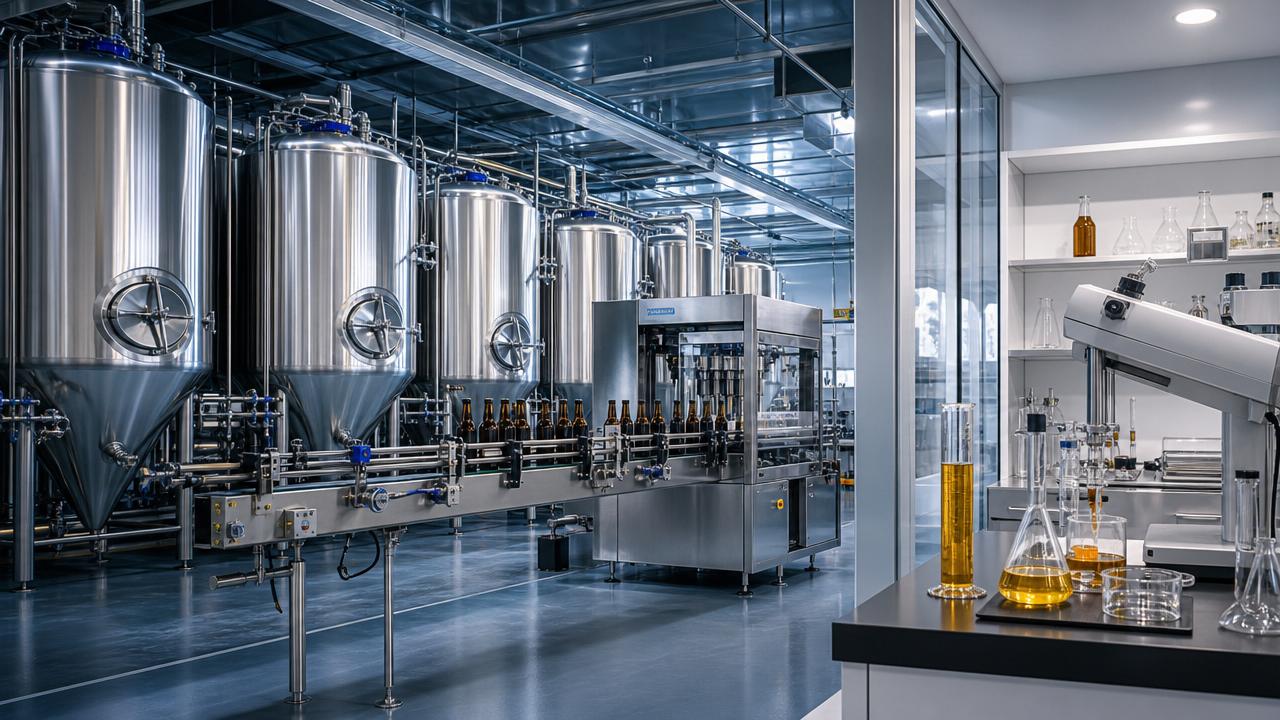
Unlike fragmented suppliers handling only brewing or packaging, vertically integrated Chinese beer factory operations consolidate R&D, raw material procurement, fermentation, quality control, labeling, warehousing, and export compliance under one certified system. This end-to-end ownership eliminates handoffs, reduces lead time by up to 40%, and ensures batch-to-batch consistency across international markets.
Jinpai Beer exemplifies this model. As an ISO 22000- and HACCP-certified craft brewery, it manages full-cycle production — from yeast strain selection and malt sourcing to carbonation profiling and multi-channel distribution readiness.
Why Importers Are Prioritizing Integration Over Fragmentation
Three structural shifts explain the accelerating adoption:
- Consumer demand for functional, low-calorie, and fruit-infused variants now outpaces growth of standard lagers by 2.3× (Statista, 2024).
- Importers face compressed reorder windows — average shelf-life expectations dropped from 9 to 6 months for premium SKUs.
- Customization requests rose 68% YoY, with 73% specifying formulation tweaks (e.g., ABV reduction, gluten-free malt substitution, or botanical infusion).
A vertically integrated Chinese beer factory meets these demands natively. There is no need to coordinate between separate labs, contract brewers, and co-packers. All iterations — from sugar-free low-calorie beer prototypes to German wheat variants with authentic Weihenstephan yeast — are developed, tested, and scaled within the same facility.
Tangible Value Delivered by Integrated Production
Integration translates directly into operational and commercial advantages:
Jinpai Beer’s portfolio reflects this agility: classic lager, German wheat, sugar-free low-calorie beer, fruit-flavored beer, and functional specialty beers — all brewed on dedicated lines with allergen controls and traceable lot coding.
Who Benefits Most From This Model?
Not all importers gain equal advantage. The highest ROI occurs when aligning with specific business profiles:
- Distributors managing 5+ private-label SKUs across supermarkets and convenience chains.
- Regional agents launching localized flavors (e.g., lychee-hopped IPA for Southeast Asia, ginger-kumquat sour for North America).
- Bar groups scaling house-brand draft programs with consistent keg supply and seasonal rotation support.
- E-commerce platforms requiring small-batch limited editions with rapid fulfillment SLAs.
These use cases thrive where speed, repeatability, and regulatory precision outweigh pure cost-per-unit considerations.
Key Considerations Before Partnering
Integration delivers value — but only when matched to realistic expectations:
- Verify certifications beyond “ISO-compliant”: request valid audit reports (not just certificates) for food safety and export readiness.
- Confirm tank availability for your target ABV range — high-gravity or sour fermentations require specialized vessels.
- Clarify IP ownership for custom recipes and label designs before first sample approval.
- Assess cold-chain readiness if shipping unpasteurized or hazy styles — not all Chinese beer factory partners offer temperature-controlled ocean freight coordination.
Jinpai Beer maintains active partnerships with global freight forwarders, offers real-time production dashboards, and provides bilingual technical support — reducing onboarding friction for new distributors.
Next Steps for Beverage Importers
If you distribute craft beer across retail, HoReCa, or e-commerce channels, begin with three concrete actions:
- Request a portfolio review meeting — covering current SKUs, upcoming launches, and regional compliance needs.
- Submit one existing SKU for a no-cost feasibility assessment: MOQ, lead time, and labeling alignment.
- Arrange a virtual facility tour — including lab, brewhouse, canning line, and QA/QC workflow walkthrough.
Jinpai Beer supports OEM/ODM services, wholesale supply, and customized solutions — with products available through online and offline channels worldwide. We welcome long-term cooperation with global distributors, agents, and partners serving restaurants, supermarkets, bars, and specialty retail outlets.
Switching to a vertically integrated Chinese beer factory isn’t about cutting costs. It’s about gaining control — over quality, timelines, innovation velocity, and market responsiveness. That control is now measurable, scalable, and globally deployable.
Thank you very much for writing to us. Please leave your message and contact information, we will reply to you within 24 hours.