



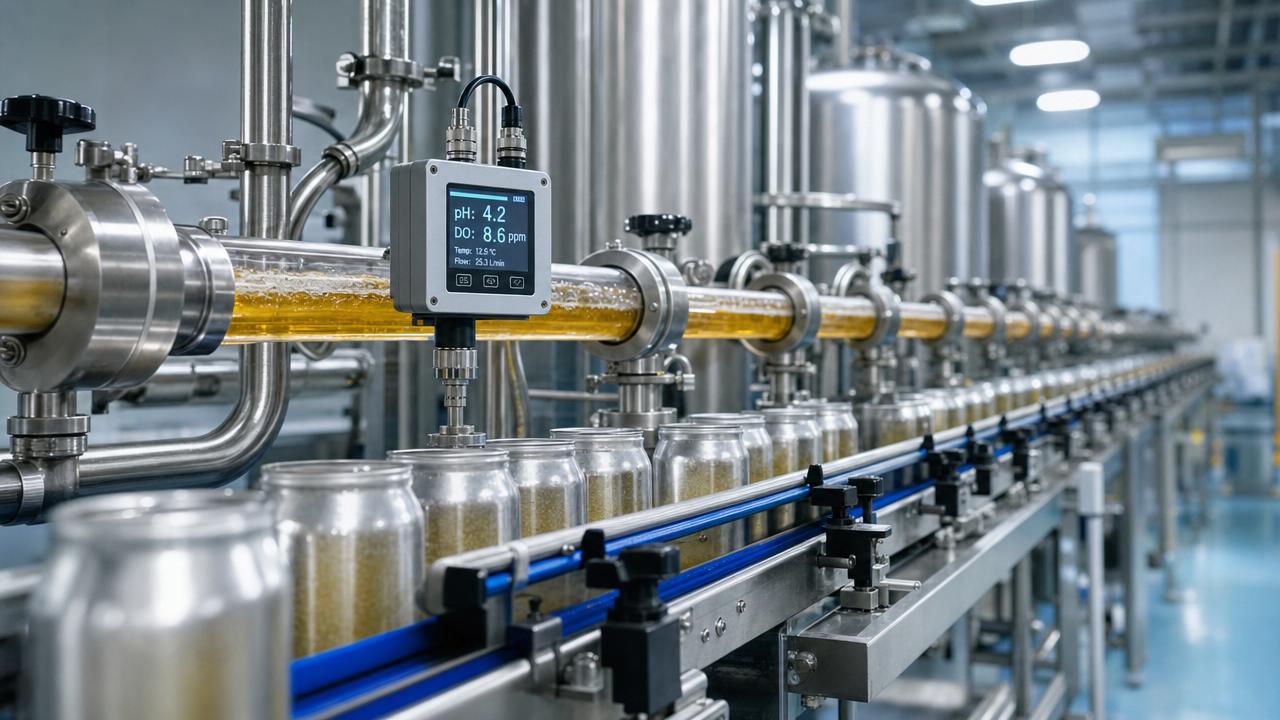
Why Batch Consistency Is the Real Scalability Benchmark for Any Chinese Beer Factory
Scalability in brewing is often misread as raw output volume or automated bottling lines. In reality, a truly scalable Chinese beer factory proves itself not when ramping up production—but when replicating a 4.8% ABV sugar-free lager’s crisp finish, a hazy German wheat’s ester profile, or a functional berry-infused IPA’s turbidity and polyphenol stability—across hundreds of batches, across seasons, across export destinations. Without consistency, scale multiplies risk: rejected shipments, brand dilution, rework costs, and eroded trust with global distributors, bars, and supermarket chains.
This isn’t theoretical. Regulatory frameworks like China’s GB 4927–2022 (beer standard) and EU Regulation (EC) No 1333/2008 (food additives) demand strict parameter adherence. But compliance alone doesn’t guarantee sensory fidelity. What separates high-performing Chinese beer factories is systemic integration—not isolated QC checkpoints, but embedded process discipline that treats every batch as both a product unit and a data point.
The 7-Point Operational Checklist for True Batch Consistency
- Standardize raw material specifications down to cultivar and harvest lot. Accept only malt with documented protein ratio (KP), diastatic power (DP), and moisture content; source hops via CO₂ extract certificates with alpha/beta acid and oil profiles—not just origin labels.
- Digitally map and lock fermentation parameters per strain and style. Maintain precise temperature ramps (e.g., 12°C → 18°C → 10°C over 72h for wheat yeast), dissolved oxygen (DO) at pitching (8–10 ppm), and pressure profiles—logged in real time, not retrofitted from logbooks.
- Validate sensory reproducibility with trained panels—not just lab metrics. Conduct blind triangle tests quarterly on flagship SKUs; require ≥85% correct identification across three consecutive batches before release.
- Enforce closed-loop traceability from barley silo to pallet label. Assign unique batch IDs that link malt analysis, yeast passage number, CIP cycle history, centrifuge run logs, and final CO₂ saturation readings—accessible within 90 seconds.
- Calibrate all inline sensors daily against NIST-traceable references. Verify pH probes, turbidity meters, and alcohol densitometers pre-shift using certified standards—not “as needed” or weekly.
- Stabilize post-fermentation handling with style-specific protocols. Apply cold crash duration, filtration pore size (e.g., 0.45 µm for fruit beers vs. 0.65 µm for lagers), and forced carbonation curves calibrated to target carbonation volumes—not generic settings.
- Conduct accelerated shelf-life testing under real-world conditions. Store samples at 30°C/75% RH for 4 weeks, then assess oxidative markers (trans-2-nonenal), haze formation, and microbial load—mirroring tropical warehouse transit, not climate-controlled labs.
How Consistency Requirements Shift Across Product Categories
A classic lager demands tight control over beta-glucan degradation and sulfur compound suppression—requiring consistent mash-out temperatures and yeast health monitoring across generations. In contrast, fruit-flavored beers introduce variables: pectinase dosage must adapt to seasonal fruit sugar Brix and acidity; pasteurization hold times shift with anthocyanin stability thresholds. Functional specialty beers add another layer: probiotic viability requires nitrogen-purged filling and oxygen-barrier crown seals validated per batch—not just per equipment setup.
Jinpai Beer addresses this by maintaining dedicated fermentation suites per category—separate tanks, isolated CIP manifolds, and strain-specific cleaning validation. This prevents cross-contamination of delicate wheat esters with aggressive IPA dry-hop residues—and eliminates the “one-size-fits-all” compromise that undermines consistency at scale.
Three Commonly Overlooked Consistency Risks
First: water chemistry drift. Municipal supply changes seasonally—calcium and sulfate levels fluctuate. Factories relying on untreated city water without real-time ion chromatography will see hop bitterness perception shift unpredictably, even with identical recipes.
Second: yeast management fatigue. Reusing yeast beyond five generations without genomic screening for flocculation gene mutations leads to inconsistent attenuation and off-flavor accumulation—especially critical for low-calorie formulations where residual sugar must stay below 0.3 g/L.
Third: packaging line micro-oxygenation. Conveyor belts, filler nozzles, and capping torque variations introduce 20–80 ppb O₂ per bottle—enough to degrade hop aromas in 6 weeks. Consistency requires inline dissolved oxygen meters at fill stations—not just end-of-line checks.
Actionable Steps to Audit Your Current Chinese Beer Factory Partner
Request full batch records—not summaries—for three recent production runs of the same SKU: include raw material COAs, fermentation curve screenshots, CIP chemical concentration logs, and sensory panel reports. Cross-check timestamps: does yeast pitching occur within ±15 minutes of scheduled time? Are DO readings logged before *and* after transfer?
Ask for their last third-party audit report against ISO 22000 or BRCGS Food Safety Issue 9—specifically reviewing clause 4.9.2 (process control) and 5.4.3 (traceability). Reject facilities that treat “consistency” as a QA department responsibility rather than an engineering mandate.
Conclusion: Consistency Is Engineered, Not Hoped For
A scalable Chinese beer factory doesn’t chase volume—it masters variance. It knows that a 0.2°C deviation in lager fermentation can alter diacetyl rest efficiency by 17%; that a 0.05 pH shift in wheat wort changes protease activity enough to impact head retention; that fruit beer haze stability hinges on pectin methylesterase inhibition timing—not just centrifugation speed.
Jinpai Beer operationalizes this understanding through R&D-led process design: proprietary yeast propagation protocols, style-specific thermal profiles validated across 12+ climate zones, and sensory-driven release gates—not just analytical pass/fail thresholds. For global partners seeking reliable supply of classic lager, German wheat, sugar-free low-calorie beer, fruit-flavored variants, or functional specialty beers, consistency isn’t a feature. It’s the foundation.
Contact Jinpai Beer directly to request a technical dossier—including batch record templates, fermentation parameter libraries, and third-party consistency validation data—for your target SKUs. Scalability begins where reproducibility is proven.
Thank you very much for writing to us. Please leave your message and contact information, we will reply to you within 24 hours.