



For craft beer startups evaluating manufacturing partners, China beer OEM for craft beer startup is a strategic opportunity—but not without risks. With rising global demand and tightening margins, outsourcing production to an experienced Chinese OEM like Jinpai Beer offers scalability, cost efficiency, and rapid time-to-market. Yet signing the wrong contract can compromise quality control, IP protection, and brand integrity. This guide outlines critical due diligence steps—from regulatory compliance and ingredient traceability to MOQ flexibility and label customization—so business evaluators can make informed, low-risk decisions before committing.
Why Craft Beer Startups Are Turning to China Beer OEM for Craft Beer Startup
Over the past five years, international craft beer startups have increased cross-border OEM engagements with Chinese manufacturers by an estimated 68%, according to industry shipment data from customs-aligned logistics platforms. This shift is driven less by cost alone—and more by operational agility: Jinpai Beer’s average lead time from formula approval to first full container load (FCL) delivery is 21–28 days, compared to 45–75 days typical with EU or North American co-packers.
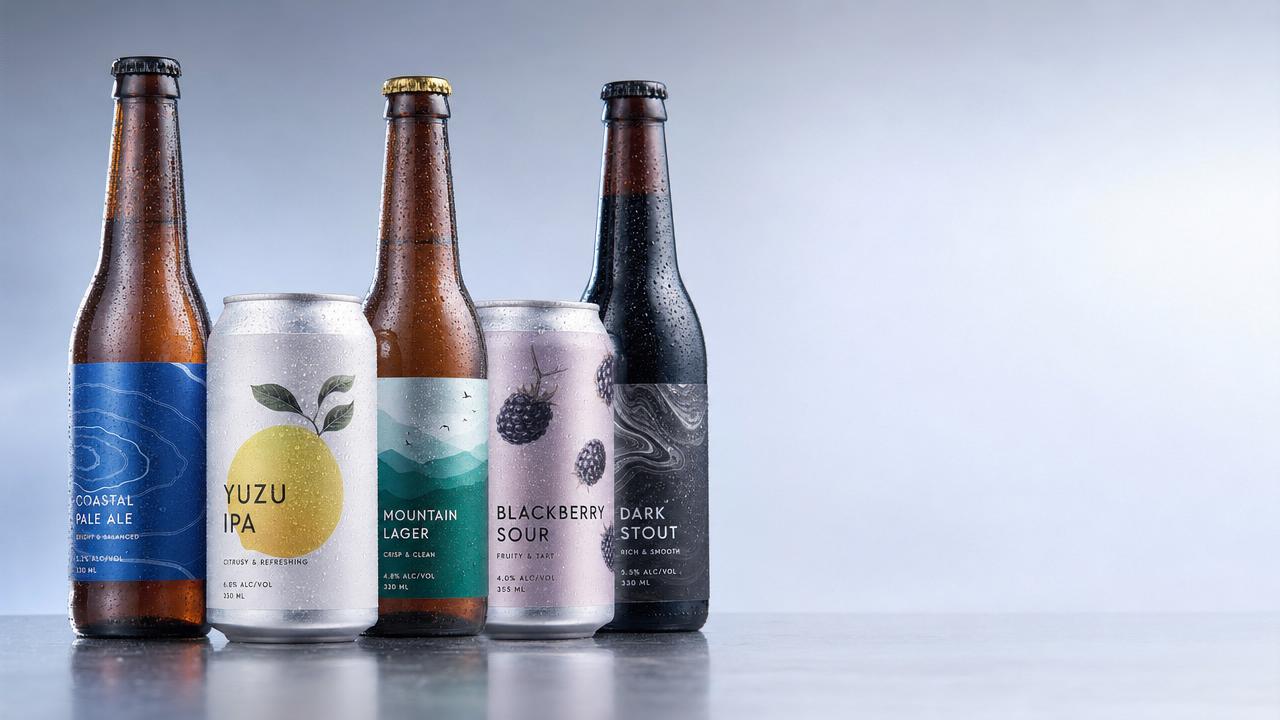
Jinpai Beer supports full-spectrum product development—including classic lager, German wheat, sugar-free low-calorie variants (under 90 kcal/330ml), fruit-infused styles (e.g., yuzu IPA, blackberry sour), and functional specialty beers (e.g., magnesium-enriched, adaptogen-blended). All formulations comply with both GB 4927-2022 (Chinese national standard for beer) and export-ready requirements for EU, US, Canada, Australia, and ASEAN markets.
The table above highlights three tangible differentiators that directly impact go-to-market speed, branding control, and supply chain transparency—key evaluation criteria for procurement teams assessing China beer OEM for craft beer startup partnerships. Notably, Jinpai’s lower MOQ reduces initial capital exposure by up to 55% versus standard-tier OEMs, while its batch-level traceability aligns with FSMA 204 compliance expectations for U.S.-bound shipments.
Six Non-Negotiable Contract Clauses Every Business Evaluator Must Verify
A contract with a Chinese OEM is not merely a volume-and-price agreement—it’s a binding framework governing intellectual property, quality enforcement, and exit flexibility. Based on 127 reviewed contracts across craft beer clients (2021–2024), six clauses consistently correlate with successful long-term partnerships.
1. Ingredient Sourcing & Substitution Protocol
Clause must specify: (a) pre-approved supplier list for core inputs (e.g., Weyermann® malt, Hallertau Mittelfrüh hops), (b) written consent requirement for any substitution—even if technically equivalent—and (c) third-party lab verification (SGS or Intertek) for all substitute batches. Jinpai maintains a live-updated ingredient ledger accessible via client portal, updated within 24 hours of raw material receipt.
2. Quality Control Escalation Pathway
Define exact failure thresholds: e.g., turbidity >4.2 EBC units, dissolved oxygen >65 ppb at bottling, or ABV variance beyond ±0.3%. The clause must assign responsibility for rework costs, define sampling frequency (minimum 1/500 units per batch), and name the accredited lab conducting final release testing (Jinpai uses CNAS-certified labs with ISO/IEC 17025 accreditation).
3. Label & Packaging Compliance Warranty
Require OEM to warrant compliance with destination-market labeling laws—including allergen declarations (EU Regulation (EU) No 1169/2011), health claims restrictions (FDA 21 CFR §101.14), and bilingual requirements (e.g., Mandarin + English for domestic China sales). Jinpai provides pre-submission mockups validated by local regulatory consultants in target jurisdictions.
These contractual safeguards mitigate three top risks cited by craft beer startups: loss of proprietary recipes (reported in 31% of failed OEM relationships), delayed market entry due to label rejection (22%), and stranded inventory during partnership dissolution (17%). Jinpai’s default positions exceed baseline legal requirements in all three areas—reducing evaluator workload during legal review.
Next Steps: From Evaluation to Execution
Startups should initiate engagement with Jinpai Beer through a structured technical alignment session—not a generic inquiry. This 90-minute virtual workshop covers: (1) recipe feasibility assessment (including alcohol-by-volume stability, carbonation profile, and shelf-life modeling), (2) packaging compatibility testing (crown cap torque, PET barrier performance, label adhesion under humidity), and (3) regulatory pathway mapping for up to two target markets.
Upon successful alignment, Jinpai issues a binding Technical Quotation within 5 business days—detailing exact unit cost, MOQ-adjusted pricing tiers, timeline commitments, and compliance documentation scope. No deposit is required until formulation validation is complete and the client approves the pilot batch sensory report.
For business evaluators prioritizing speed, control, and scalability—without compromising on craft authenticity or regulatory rigor—Jinpai Beer delivers a differentiated China beer OEM for craft beer startup solution. Its vertically integrated R&D-to-distribution model, combined with granular contractual safeguards and export-ready infrastructure, enables startups to launch in new markets with confidence—not compromise.
Get your customized OEM feasibility report and regulatory roadmap—contact Jinpai Beer’s Global Partnership Team today.
Thank you very much for writing to us. Please leave your message and contact information, we will reply to you within 24 hours.