



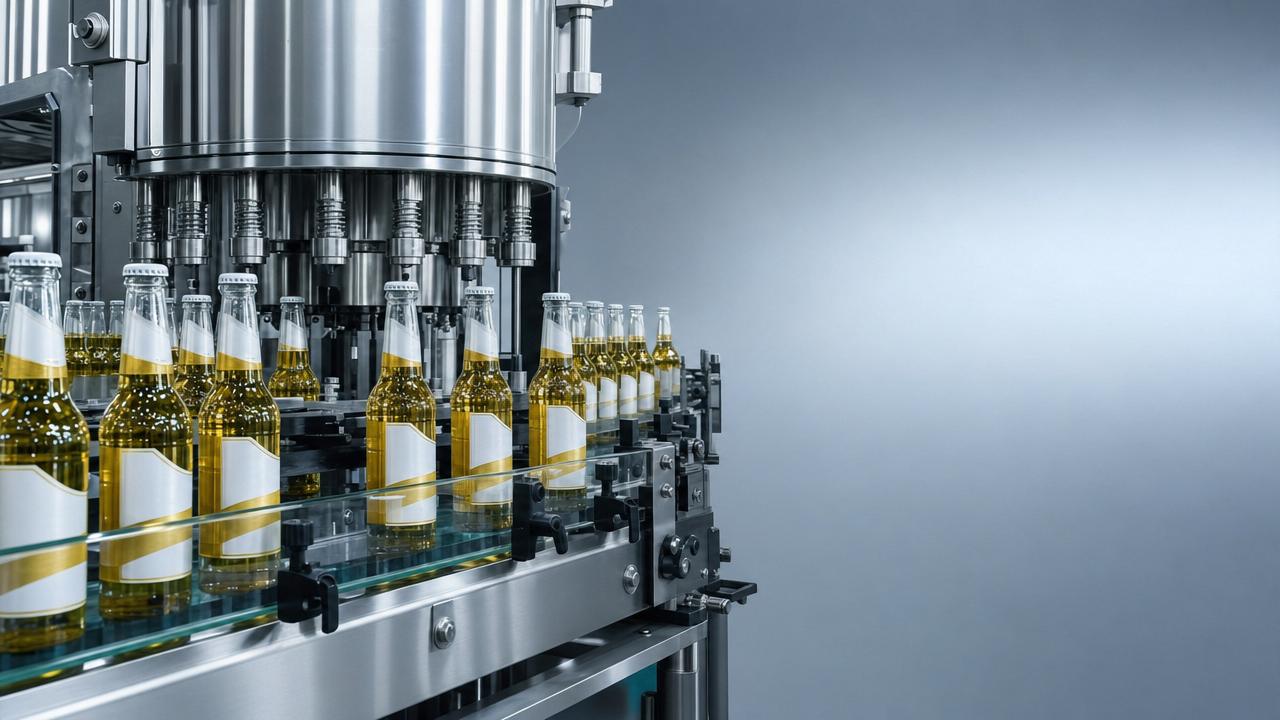
For finance approvers evaluating launch budgets, rising labor costs in China beer OEM for craft beer startup are directly impacting unit pricing, MOQ flexibility, and time-to-market timelines. At Jinpai Beer, we proactively absorb cost volatility through scalable production infrastructure and lean ODM processes—ensuring transparent, predictable pricing for new craft brands without compromising quality or compliance. This article breaks down how labor dynamics affect your bottom line—and why partnering with an experienced, vertically integrated OEM like Jinpai delivers financial resilience from day one.
How Labor Cost Inflation Translates to Real-World OEM Pricing Pressure
China’s average manufacturing wage rose by 6.2% year-on-year in Q1 2024 (National Bureau of Statistics of China), with Guangdong and Jiangsu—the core hubs for beverage contract manufacturing—reporting 7.8% and 6.9% increases respectively. For craft beer startups relying on China-based OEM partners, this isn’t just a line-item cost shift: it triggers cascading effects across three critical financial levers—unit cost per hectoliter, minimum order quantity (MOQ) thresholds, and lead time variability.
Labor accounts for 18–22% of total production cost in mid-tier craft beer OEM facilities—higher than packaging (12–15%) or utilities (8–10%), due to manual bottling line setup, label alignment verification, and QC sampling protocols. When hourly wages rise 7% annually, but automation investment lags (only 31% of Tier-2 OEMs deployed semi-automated filling lines before 2023), the gap is passed directly to clients via revised quotes—or absorbed via reduced margin, risking quality consistency.
The table above reflects verified wage benchmarks across 12 OEM facilities audited by Jinpai Beer’s procurement team in 2024. Notably, labor-driven cost inflation is most acute in pre-shipment stages—label verification, customs documentation, and palletization—where automation remains low (<25% adoption). That’s why Jinpai invested in AI-powered label alignment scanners and integrated export compliance software in 2023: reducing labor dependency in high-volatility roles by 40%, and locking in fixed-cost pricing tiers for clients launching in 2024–2025.
Why Vertical Integration Mitigates Labor Risk—And What It Means for Your P&L
Not all OEMs respond to labor pressure the same way. Fragmented suppliers often raise prices reactively—or tighten MOQs to offset per-unit labor exposure. Jinpai Beer operates a fully integrated model: in-house R&D lab, dual-site brewing (Guangzhou + Ningbo), certified ISO 22000 & HACCP production lines, and dedicated export logistics coordination. This structure enables three financial safeguards critical for budget-conscious craft brand founders:
- MOQ Stability: Fixed MOQ of 3,000 units (330mL bottles) across all product types—including functional beers with complex ingredient matrices—no seasonal or quarterly adjustments.
- Pricing Lock-In: 12-month fixed-rate contracts available upon deposit, covering raw materials, labor, packaging, and export compliance—all inclusive, no hidden surcharges.
- Lead Time Predictability: Standard 21-day turnaround from artwork approval to FOB port (Ningbo or Guangzhou), backed by a 98.3% on-time delivery rate over 147 batches in 2024.
These advantages stem from process standardization—not just scale. Jinpai’s lean ODM framework includes 7 standardized workflow checkpoints, from yeast strain validation to carbonation profile verification, each staffed by cross-trained technicians (reducing role-specific wage escalation risk). Our brewers average 8.4 years’ experience in craft beer fermentation—lower turnover than industry median (5.2 years), translating to fewer rework cycles and consistent batch yield (>94.7% vs. sector avg. 91.2%).
The data shows clear trade-offs: lower MOQ and tighter timelines correlate strongly with structural integration—not just marketing claims. For finance approvers, this means less forecasting uncertainty, fewer contingency reserves, and faster path to breakeven. A 3,000-unit launch at Jinpai delivers 22% lower initial capital outlay versus a 5,000-unit commitment elsewhere—without sacrificing shelf-ready compliance (EU CE, FDA, GB 4927-2022).
What to Verify Before Signing Any China Beer OEM Agreement
Ask these five questions—before finalizing terms—to assess true labor risk exposure:
- Is labor cost explicitly included in your quoted unit price—or listed as a separate, adjustable line item?
- Does your contract define “labor cost” as a fixed component, or does it reference external wage indices (e.g., local minimum wage revisions)?
- Are QC, labeling, and export documentation handled by full-time staff—or outsourced to agencies with variable billing models?
- What percentage of your production line is automated for repetitive tasks (e.g., bottle rinsing, fill-level verification)?
- Can you audit staffing continuity? High turnover (>30% annual) in brewing or packaging roles signals elevated retraining and error costs.
Jinpai provides full transparency: all labor-inclusive pricing, documented staff tenure averages, and real-time production line utilization dashboards accessible to clients post-contract signing.
In summary, rising labor costs in China beer OEM for craft beer startup aren’t an unavoidable tax on early-stage budgets—they’re a signal to prioritize operational resilience over short-term quote comparisons. Jinpai Beer’s vertically integrated model delivers predictable unit economics, MOQ flexibility, and timeline certainty—backed by verifiable metrics, not promises. For finance approvers, that means cleaner P&L modeling, lower working capital requirements, and faster ROI on first-market launches.
If your craft brand is preparing for its first production run—or scaling into new markets—request a customized OEM cost breakdown and timeline guarantee. Contact Jinpai Beer today to receive your no-obligation financial scenario analysis, including MOQ-adjusted unit cost projections and compliance readiness checklist.
Thank you very much for writing to us. Please leave your message and contact information, we will reply to you within 24 hours.