



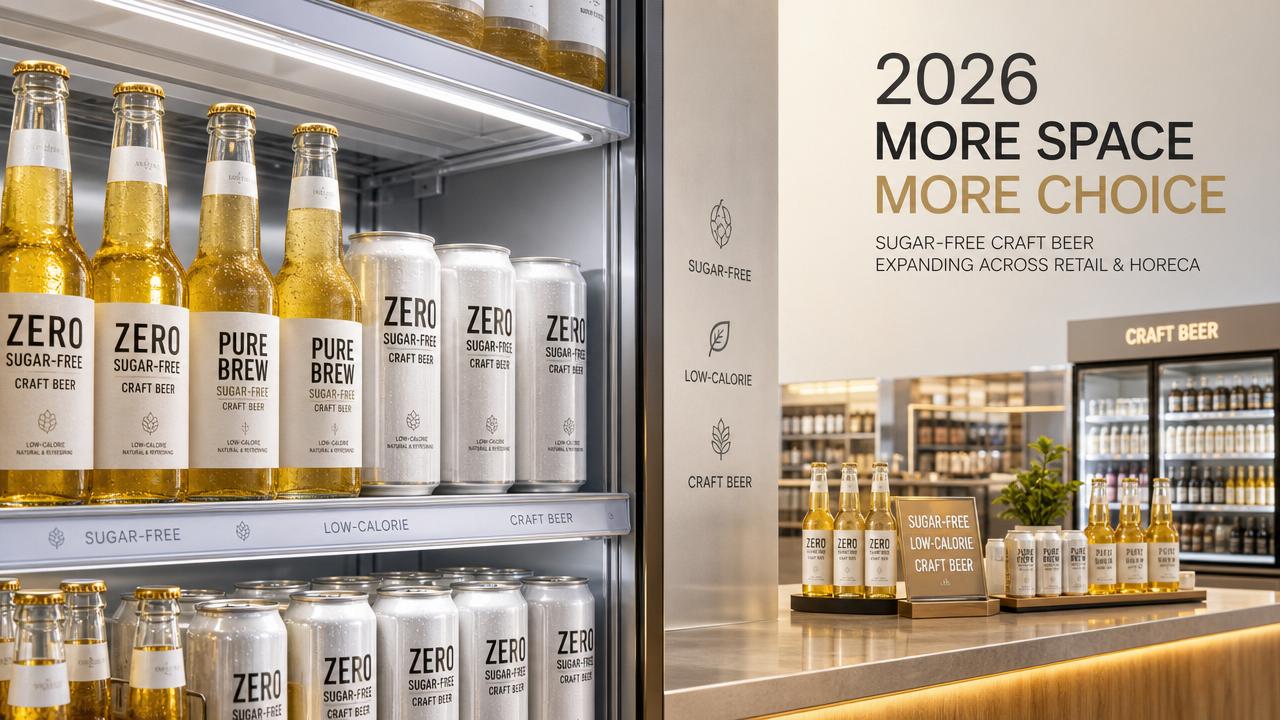
Sugar-free craft beer is moving from niche to mainstream as distributors, agents and retail buyers respond to rising demand for healthier, low-calorie alcoholic options. In 2026, more shelf space is being allocated to products that combine craft flavor, functional appeal and stronger market differentiation. For partners seeking high-growth beer categories, this shift creates new opportunities in supermarkets, bars and multi-channel retail.
Why are distributors giving more shelf space to sugar-free craft beer?
Shelf space is never neutral. It reflects buyer confidence, expected turnover and category strategy. In 2026, sugar-free craft beer is gaining visibility because it answers several retail pressures at once.
First, health-aware consumers are still drinking beer, but they are reading labels more carefully. They want lower sugar, fewer calories and cleaner product positioning without giving up taste, refreshment or craft identity.
Second, retailers and distributors need fresh growth stories. Traditional lager remains important, but margin expansion often comes from differentiated products that can command better placement, promotional support and repeat trial.
Third, bars, convenience channels and supermarkets increasingly segment beer shelves by occasion. A sugar-free craft beer can fit lunch dining, post-work social drinking, fitness-conscious consumers and mixed-gender purchasing behavior.
- It creates a clear point of difference versus mainstream standard beer.
- It supports premium but accessible pricing in modern retail.
- It improves assortment balance for buyers targeting wellness-driven shoppers.
- It gives distributors a stronger story when pitching new accounts and category resets.
The shift is not only consumer-driven
Many channel partners assume sugar-free craft beer is just a branding trend. In reality, it also solves a portfolio problem. Distributors need products that can sit beside classic lager, wheat beer and flavored variants without cannibalizing everything else.
That is where a broad producer matters. Jinpai Beer develops and supplies multiple craft beer styles, including classic lager, German wheat, sugar-free low-calorie beer, fruit-flavored beer and functional specialty beers. This makes range planning easier for partners building multi-SKU programs.
What makes sugar-free craft beer attractive across retail and on-trade channels?
Not every beer trend translates into stable sell-through. Sugar-free craft beer stands out because it works across several channel environments, each with a slightly different purchase trigger.
Supermarkets and chain retail
In supermarkets, the product performs well when shoppers compare labels quickly. “Sugar-free” is easy to understand, while “craft” adds taste credibility. This combination helps the beer compete in premium refrigerated shelves and wellness-adjacent alcohol sections.
Bars and restaurants
In bars and foodservice, sugar-free craft beer works as a menu extender. It offers a lighter option for customers who want beer with food but are reducing sugar intake or avoiding heavier drinking occasions.
E-commerce and social selling
Online channels benefit from strong search intent. Buyers actively look for low-calorie beer, sugar-free craft beer and better-for-you alcoholic beverages. That makes digital conversion easier when listings include flavor notes, nutritional positioning and pack details.
The table below shows how sugar-free craft beer aligns with different beverage sales environments and what distributors should emphasize in each channel.
For distributors, the value is clear: one category can be adapted to several sales narratives without losing focus. That lowers portfolio risk compared with novelty products that only work in one niche channel.
How does sugar-free craft beer compare with other growing beer segments?
Buyers rarely decide in isolation. They compare sugar-free craft beer with low-alcohol beer, fruit beer, standard craft lager and other premium alternatives. Each segment has a different role in the assortment.
Sugar-free craft beer often wins when the goal is to balance health positioning with authentic beer taste. Fruit-flavored beer may attract younger trial, but it does not always fit every retail program. Standard craft beer offers depth, yet can feel too broad without a distinct claim.
This comparison table can help agents and wholesalers evaluate where sugar-free craft beer sits within a broader beverage strategy.
The smart move is not to replace every existing SKU with sugar-free craft beer. It is to use it as a strategic growth layer inside a balanced beer portfolio. That is especially effective when one supplier can support multiple styles under one cooperation model.
What should distributors evaluate before sourcing sugar-free craft beer?
The biggest sourcing mistake is focusing only on the front-label claim. A successful sugar-free craft beer program depends on taste consistency, packaging fit, production stability and market readiness.
Key product checks
- Flavor profile: confirm whether the beer is crisp, malty, fruity or bitter enough for your market preference.
- Calorie and sugar positioning: verify how the product should be described under local labeling rules.
- Packaging format: cans, bottles and outer case configuration should match supermarket, horeca or e-commerce needs.
- Shelf-life management: confirm storage guidance, batch traceability and delivery planning for import or domestic distribution.
Key supplier checks
- Can the supplier support OEM or ODM if you want an exclusive market label?
- Can they scale from trial orders to container or recurring wholesale supply?
- Do they offer a product mix beyond sugar-free craft beer for account expansion later?
- Can they coordinate online and offline channel requirements without forcing one standard solution?
Jinpai Beer is positioned well in this regard because its business covers R&D, production and distribution, with OEM/ODM services, wholesale supply and customized solutions for different retail and foodservice channels worldwide.
How can agents reduce risk when launching a sugar-free craft beer line?
A new category does not need to be a high-risk launch. Good rollout discipline can protect budgets and improve reorder confidence. Distributors should treat sugar-free craft beer as a managed introduction, not just a product listing.
- Start with channel matching. Choose one or two strong-fit channels instead of launching everywhere at once.
- Use a focused SKU plan. Too many pack sizes at launch can slow inventory rotation and confuse buyers.
- Build a tasting narrative. Staff and buyers need to explain how sugar-free craft beer differs from ordinary low-calorie beer.
- Monitor repeat purchase, not just first shipment. Sustainable shelf space depends on consumer pull-through.
Agents also benefit from sampling support, packaging consultation and realistic lead-time communication. Those details often matter more than headline pricing when entering chain retail or regional distribution programs.
What about compliance, labeling and export-readiness?
For cross-border beverage business, compliance discipline is a serious buying factor. Even the best sugar-free craft beer can face delays if labels, ingredient statements or product descriptions do not align with destination market requirements.
Exact rules differ by country, but distributors should always review alcohol labeling, nutrition-related claims, packaging language, barcode readiness and shipping documentation. Claims such as sugar-free or low-calorie should be assessed carefully under local regulatory definitions.
The checklist below summarizes the main compliance and execution points that matter when evaluating sugar-free craft beer for wholesale or agency distribution.
A supplier that understands both beer production and international channel needs can save buyers time, especially when customized packaging, private label or region-specific documentation is required.
Common misconceptions about sugar-free craft beer
“Sugar-free means weak flavor”
Not necessarily. Quality depends on recipe design, fermentation control and style balance. A well-developed sugar-free craft beer can still deliver body, aroma and a satisfying finish.
“It only sells to a very narrow audience”
The audience is wider than many buyers think. It includes calorie-conscious drinkers, light-occasion beer consumers, female shoppers, office professionals and customers who want modern alcohol choices without extreme positioning.
“It will replace standard craft beer”
Sugar-free craft beer is usually an addition, not a total replacement. It works best as a complementary SKU that attracts new drinkers while keeping the craft portfolio relevant to changing demand.
FAQ: what do buyers ask before adding sugar-free craft beer?
How should a distributor choose the right sugar-free craft beer SKU?
Start with channel and consumer fit. For supermarkets, choose packaging with clear front-label communication. For bars, prioritize drinkability and menu compatibility. For e-commerce, detailed product storytelling and pack convenience matter more.
Which markets are most suitable for sugar-free craft beer?
Markets with visible health-aware purchasing behavior, premium retail development and growing craft beer education tend to respond faster. However, the segment can also work in emerging markets when supported by effective sampling and clear retail positioning.
What should buyers ask about OEM or ODM cooperation?
Ask about minimum order expectations, packaging customization scope, flavor adjustment possibilities, lead time, documentation support and whether the supplier can help align the product with local distribution channels.
Is sugar-free craft beer only a short-term trend?
The stronger signal is structural, not seasonal. Health-conscious purchasing, category premiumization and the need for more differentiated beer assortments are long-term forces. That does not guarantee success for every SKU, but it does support the category’s continued relevance.
Why work with a supplier that offers more than one beer solution?
Distributors and agents rarely want a single-product relationship. They want a supplier who can support account expansion, private label opportunities and changes in channel demand. That is especially true in beverage distribution, where assortment planning affects margins and logistics.
Jinpai Beer combines craft beer R&D, production and distribution with a full product range that includes classic lager, German wheat, sugar-free low-calorie beer, fruit-flavored beer and functional specialty beers. This allows partners to build layered programs instead of fragmented one-off purchases.
- OEM and ODM support for exclusive labels or channel-specific packaging
- Wholesale supply for distributors serving supermarkets, bars, restaurants and retail chains
- Customized solutions based on taste profile, positioning and market route
- Global cooperation orientation across online and offline sales networks
Why choose us for sugar-free craft beer sourcing?
If you are evaluating sugar-free craft beer for distribution, agency representation or retail expansion, the best next step is a practical discussion, not a generic sales pitch. The right cooperation model depends on your target channel, order structure and brand strategy.
We can support conversations around product selection, packaging format, OEM/ODM options, lead time planning, sample arrangements, channel matching and export-oriented documentation needs. If you are balancing sugar-free craft beer with classic lager, wheat beer or flavored beer in one portfolio, we can also help compare suitable combinations.
For distributors, wholesalers and agents looking for long-term beverage cooperation, this is the right time to assess whether sugar-free craft beer can add premium shelf value, broader consumer reach and stronger category differentiation in 2026 and beyond.
Thank you very much for writing to us. Please leave your message and contact information, we will reply to you within 24 hours.