



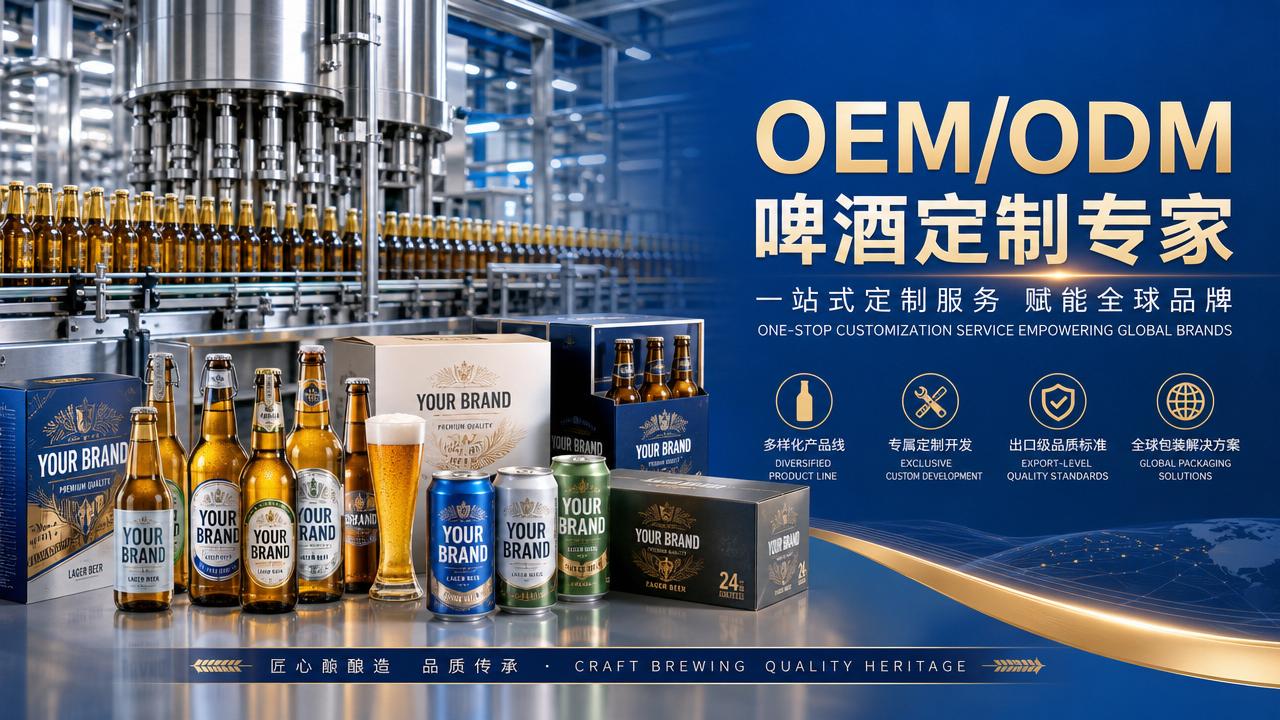
For business decision-makers evaluating global sourcing, understanding China beer factory trends is becoming essential to smarter export planning. From product innovation and private-label flexibility to compliance, cost control and faster customization, China’s beer manufacturing landscape is evolving quickly. These shifts are creating new opportunities for importers, distributors and retail buyers seeking reliable partners, differentiated products and stronger long-term market competitiveness.
China beer factory trends in today’s export environment
A China beer factory is no longer defined only by scale and low-cost output. It is increasingly judged by flexibility, formulation capability, packaging diversity, and export readiness.
In the beverage industry, buyers now compare factories on recipe development, batch consistency, shelf-life control, and responsiveness to private-label requirements.
This shift matters because export planning is no longer only about price. It also involves speed, product positioning, compliance risk, and channel fit.
A capable China beer factory can support classic lager programs, premium craft launches, health-led concepts, and seasonal flavored beer lines under one sourcing strategy.
For companies building long-term beverage portfolios, this broader capability changes how supplier evaluation should be structured.
Core changes reshaping China beer factory selection
Several developments are influencing how a China beer factory supports export growth. These signals are practical, measurable, and directly linked to market performance.
- More diverse product portfolios beyond standard lager.
- Rising demand for OEM and ODM beer solutions.
- Greater focus on low-sugar, low-calorie, and functional beer concepts.
- Shorter development cycles for private-label launches.
- Improved packaging formats for retail and on-trade channels.
- Higher expectations around documentation, traceability, and export compliance.
These trends show why factory capability now influences brand planning, route-to-market choices, and category expansion timing.
Product development is moving faster
A modern China beer factory often supports quicker concept testing. This includes flavor adjustment, alcohol level refinement, sweetness balancing, and packaging mockup coordination.
Speed matters when launching fruit beer, German wheat beer, sugar-free options, or functional specialty beers for trend-sensitive channels.
Customization is becoming standard
Export buyers increasingly expect tailored ABV, bitterness, aroma profile, can size, label language, and carton format. A strong China beer factory is prepared for this level of variation.
This is especially relevant for supermarket private labels, bar-exclusive SKUs, and regional promotional programs.
Why these trends matter for export planning
Export planning improves when sourcing decisions align with consumer demand, import regulations, and channel economics. The right China beer factory can support all three areas together.
This creates practical business value beyond production. It affects inventory strategy, launch sequencing, and brand architecture in different regions.
A China beer factory with integrated development, production, and export coordination can reduce fragmentation across the supply chain.
That matters when timelines are tight or when multiple SKUs are planned for parallel channel rollout.
Key evaluation points for a China beer factory partner
Not every China beer factory delivers the same operational value. A structured review helps separate simple production capacity from genuine export support capability.
1. Product range depth
Look for breweries offering classic lager, wheat beer, low-calorie beer, fruit beer, and specialty functional lines. This indicates stronger formulation resources and broader market adaptability.
2. OEM and ODM execution
A reliable China beer factory should manage recipe co-development, packaging customization, compliance labeling, and sample iteration with clear timelines.
3. Quality consistency
Beer exports depend on flavor stability, carbonation control, microbiological safety, and shelf-life performance. Batch-to-batch consistency is essential for repeat purchase behavior.
4. Export documentation readiness
Documentation capability should cover ingredient specifications, labeling data, shelf-life records, and shipment support materials required by destination markets.
5. Packaging suitability
A strong China beer factory should offer packaging formats aligned with channel demand, including bottled beer, canned beer, gift packaging, and retail-ready case configuration.
Typical export applications by channel and product type
Different markets require different beer positioning. The value of a China beer factory often becomes clearer when viewed by application scenario.
This channel-based approach helps connect sourcing with actual sales conditions, rather than relying only on generic capacity claims.
Practical sourcing considerations in the beverage sector
When reviewing a China beer factory, practical execution details often determine long-term success more than brochure-level positioning.
- Confirm minimum order quantities by SKU and packaging format.
- Review lead times for sampling, production, and replenishment.
- Check whether flavor profiles can be tuned for local tastes.
- Ask about carton strength and transport protection.
- Verify labeling support for multilingual or regulated markets.
- Assess communication speed during revisions and approvals.
A China beer factory that performs well in these areas can support more predictable inventory flow and fewer post-shipment corrections.
How Jinpai Beer aligns with emerging factory trends
Jinpai Beer reflects several priorities now shaping China beer factory selection. Its business combines R&D, production, and distribution across multiple beer categories.
The portfolio includes classic lager, German wheat, sugar-free low-calorie beer, fruit-flavored beer, and functional specialty beers.
This range supports differentiated channel strategies and helps reduce the need for separate suppliers across adjacent beer segments.
Jinpai Beer also provides OEM and ODM services, wholesale supply, and customized solutions for online and offline global channels.
That model is relevant for businesses seeking private-label development, regional flavor adaptation, or mixed-product portfolio expansion.
With applications across restaurants, supermarkets, bars, and retail channels, this type of China beer factory profile fits practical export planning needs.
Next-step guidance for better export decisions
The most useful response to current China beer factory trends is a structured sourcing review. Focus on range, compliance, customization, and channel fit at the same time.
Shortlist factories that can support both present demand and future category expansion. This protects planning flexibility as consumer preferences continue to shift.
When assessing a China beer factory, request samples across more than one product style, compare packaging options, and evaluate communication during the development process.
For businesses exploring long-term beer sourcing, Jinpai Beer offers a practical foundation for OEM, ODM, and customized export programs across diverse market channels.
A well-matched China beer factory can do more than produce beer. It can strengthen launch speed, product differentiation, and export resilience over time.
Thank you very much for writing to us. Please leave your message and contact information, we will reply to you within 24 hours.