



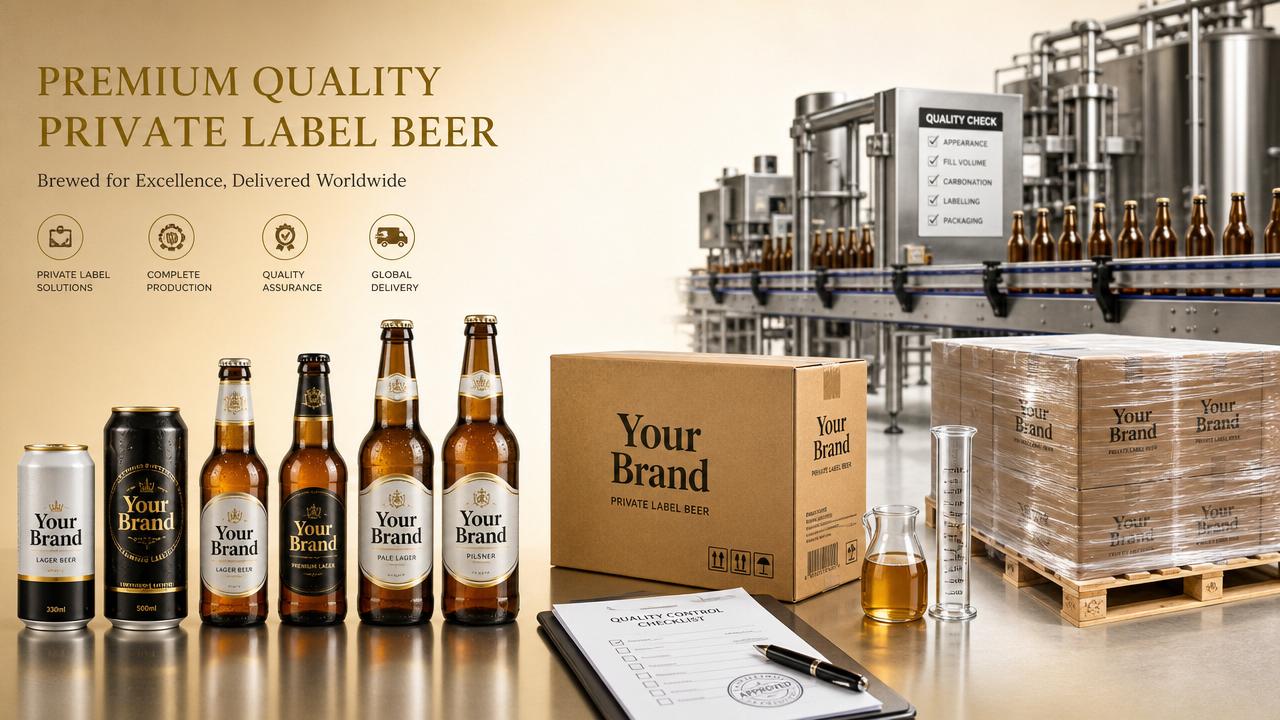
Launching a beer brand looks simple on paper, yet many projects run into delays, quality disputes or weak market response once production begins. Working with a reliable Chinese beer factory for private label can reduce these risks, but success still depends on clear positioning, realistic planning and strong communication. In this article, we explore why some private label beer projects fail after production starts and how to avoid costly mistakes.
For importers, distributors, bar chains, supermarket buyers, and startup beverage brands, the hard part usually begins after the first purchase order is placed. Formula confirmation, packaging accuracy, minimum order quantity, lead time control, and channel fit can all become points of failure within the first 30 to 90 days.
When working with a Chinese beer factory for private label, the goal is not only to produce beer on time. The real goal is to launch a product that tastes consistent, complies with destination market requirements, arrives in good condition, and sells through the right channels without excessive discounting.
Where Private Label Beer Projects Usually Start Going Wrong
Many failed projects do not collapse because of one major problem. They fail because 4 to 6 smaller issues build up during production. A label revision may delay printing by 7 days, ingredient confirmation may take another 5 days, and shipping booking changes may add 1 to 2 weeks.
In beer manufacturing, these delays can affect freshness windows, launch timing, and inventory cash flow. If a buyer planned a seasonal release for summer but receives goods 3 to 4 weeks late, the sales impact can be significant even if the beer itself is acceptable.
Unclear product positioning before production
A common mistake is approving production before the product concept is fully defined. Buyers may ask for a craft-style beer, but that description is too broad. Is the product a 4.2% easy-drinking lager, a 5.0% German wheat beer, a sugar-free low-calorie option, or a fruit-flavored product aimed at younger consumers?
Without a precise position, the factory can only execute incomplete instructions. This often leads to reformulation, packaging redesign, or channel mismatch after production starts. A beer developed for bars may not perform in supermarkets, and a premium concept may fail if shelf pricing exceeds the target by 10% to 20%.
Typical positioning gaps
- No clear alcohol by volume target, such as 2.5%, 4.5%, or 6.0%
- No decision on flavor profile, bitterness, sweetness, or body
- No channel-specific pack format, such as 330ml cans, 500ml cans, or glass bottles
- No defined retail price range or distributor margin expectation
Weak communication between buyer and factory
Even when the beer recipe is good, execution can fail if communication is too informal. A Chinese beer factory for private label may handle brewing, filling, labeling, and export documentation in separate workflows. If the buyer sends fragmented comments across email, chat, and image markups, mistakes become more likely.
The safest process is to confirm one version of each critical file: recipe sheet, packaging artwork, carton marks, packing list details, and shipping terms. A single incorrect barcode, language issue, or date format can hold goods at customs or force relabeling at extra cost.
The table below shows frequent failure points after production starts and what usually causes them in real beverage supply projects.
The key lesson is that post-start failure is usually operational, not theoretical. Most problems can be reduced early through clearer specifications, file control, and a buyer-factory communication rhythm with response checkpoints every 24 to 48 hours during active production.
Production-Side Risks That Buyers Often Underestimate
Beer is not a generic dry product. It is sensitive to formulation, process control, filling conditions, and storage timing. A Chinese beer factory for private label may have strong manufacturing capability, but buyers still need to understand which production variables affect final commercial performance.
Recipe approval is not the same as mass production stability
A small pre-production sample and a commercial batch are different stages. Once production scales from trial volume to a larger batch, carbonation, aroma retention, sweetness balance, and color consistency may shift. This is especially relevant for fruit-flavored beer and functional specialty beer, where taste balance can change more easily.
Buyers should define 3 practical acceptance areas before mass production: basic sensory profile, visible appearance, and pack integrity. If there is no written standard, disputes later become subjective and difficult to resolve.
Packaging choices can create hidden cost and quality issues
Packaging is often treated as a design matter, but in beverage export it is also a logistics and shelf-performance issue. For example, 330ml slim cans may support a modern premium image, while 500ml cans may fit value-focused channels better. Glass bottles can work well for restaurants and bars, but increase breakage risk and freight cost.
If outer cartons are too light for long-distance shipping, damage rates can rise during container loading and unloading. Even a 2% to 3% breakage or dent rate can erase margin for an importer running a tight launch budget.
Practical checks before final packaging confirmation
- Confirm pack size and consumption scene
- Review label language, ingredients, alcohol statement, and barcode
- Check carton strength for export stacking and transit
- Verify pallet or loading plan if needed for warehouse handling
- Align design finish with the intended price segment
The comparison below helps buyers match product and packaging strategy with realistic market use rather than personal preference alone.
This kind of planning is where an experienced supplier adds value. A factory should not only brew beer but also help buyers avoid mismatch between product style, packaging format, route to market, and total landed cost.
Commercial Mistakes That Damage a Good Production Run
Some projects fail even when production quality is acceptable. The issue is commercial planning. Buyers may secure a competitive ex-factory price from a Chinese beer factory for private label, yet still struggle because the product is overpriced in the destination market or under-supported after launch.
Ignoring the full cost structure
Beer buyers sometimes focus too much on unit production cost and too little on total launch cost. Freight, duties, local warehousing, distributor margin, promotion, and breakage allowance can together add 20% to 50% or more depending on market conditions and order size.
If the final retail price lands outside the expected range, sales slow down immediately. This problem is common when packaging is premium but channel shoppers are value-driven. A low-margin launch can survive one shipment, but rarely survives 2 or 3 reorder cycles.
Starting with unrealistic order planning
Order size should match both factory MOQ and market absorption. If the first order is too small, production and freight costs may be inefficient. If the first order is too large, the buyer risks aging inventory and cash pressure. The right balance usually depends on shelf life, launch geography, and monthly sell-through expectations.
For many private label beer projects, a phased launch across 1 to 3 channels is safer than trying to enter every possible outlet at once. That allows the buyer to test consumer response, gather feedback, and refine reorder mix without locking into the wrong product strategy.
Questions every buyer should answer before launch
- What is the target retail or on-trade selling price?
- How many cases can each channel realistically move per month?
- Is the beer built for repeat drinking or novelty trial?
- How much promotional support is available in the first 60 days?
- What reorder trigger will be used to avoid stockout or overstock?
How to Reduce Failure Risk When Working With a Chinese Beer Factory for Private Label
A successful project needs more than a capable brewery. It needs a working method. Buyers that perform well usually use a structured approval process from concept to shipment. This reduces misunderstanding, shortens decision cycles, and improves the odds of a second and third order.
Use a 5-step execution framework
- Define target market, style, ABV range, pack format, and price band
- Approve sample with written notes on taste, appearance, and positioning
- Lock artwork, carton details, and compliance text before printing
- Confirm production timeline, inspection points, and shipping schedule
- Review first-launch sales data within 30 to 60 days for adjustments
Choose a supplier with broad product adaptability
Not every market wants the same beer profile. A factory with experience across classic lager, German wheat, sugar-free low-calorie beer, fruit-flavored beer, and functional specialty beer can support more than simple manufacturing. It can help buyers compare options based on channel use, consumer behavior, and branding goals.
Jinpai Beer, for example, operates across R&D, production, and distribution, while also offering OEM and ODM support, wholesale supply, and customized solutions. That combination is useful for partners who need one supplier to coordinate recipe development, packaging alignment, and export-oriented execution.
Build in review points instead of reacting after shipment
The biggest cost savings often come from catching issues before goods leave the factory. Review points can include sample confirmation, artwork sign-off, packaging inspection, and final shipping document check. Even 4 simple checkpoints can prevent expensive corrections later in the destination market.
For buyers entering private label beer for the first time, it is often smarter to spend an extra 3 to 5 days on approvals than to rush production and lose an entire launch window due to avoidable errors.
Who Should Be Most Careful With Post-Start Project Risk
Certain buyers face a higher failure risk because their margin for error is smaller. New beer brands, first-time importers, hospitality groups with seasonal demand, and retailers launching exclusive labels usually need tighter planning than established beverage distributors.
High-risk buyer profiles
- Startups with only one initial SKU and limited cash reserve
- Distributors entering a new category without beer-specific sales feedback
- Retailers requiring exclusive packaging and strict promotion timing
- Bar or restaurant groups relying on one seasonal launch window
What these buyers should prioritize
They should prioritize simpler SKU planning, clearer timelines, and faster decision-making loops. In many cases, 1 well-positioned product launched correctly is stronger than 3 uncertain SKUs launched without channel testing or packaging discipline.
They should also work closely with a Chinese beer factory for private label that can explain not just what can be produced, but what is practical for export, labeling, shelf placement, and replenishment planning.
Final Thoughts for Buyers Planning Their Next Beer Launch
Private label beer projects usually fail after production starts because early assumptions were not tested thoroughly enough. Unclear positioning, uncontrolled revisions, weak packaging planning, and unrealistic sales expectations create pressure that production alone cannot solve.
A dependable Chinese beer factory for private label should help reduce risk through structured communication, flexible product development, and practical execution support. For buyers targeting supermarkets, bars, restaurants, distributors, or multi-channel retail, the strongest results come from aligning recipe, pack format, pricing, and launch timing from the beginning.
If you are evaluating OEM or ODM beer production, planning a new craft beer line, or looking for a supplier that can support classic lager, wheat beer, sugar-free low-calorie beer, fruit beer, or specialty functional beer, now is the right time to clarify your requirements before production starts. Contact us today to discuss your project, get a customized solution, and explore the right path for a more stable and market-ready beer launch.
Thank you very much for writing to us. Please leave your message and contact information, we will reply to you within 24 hours.