



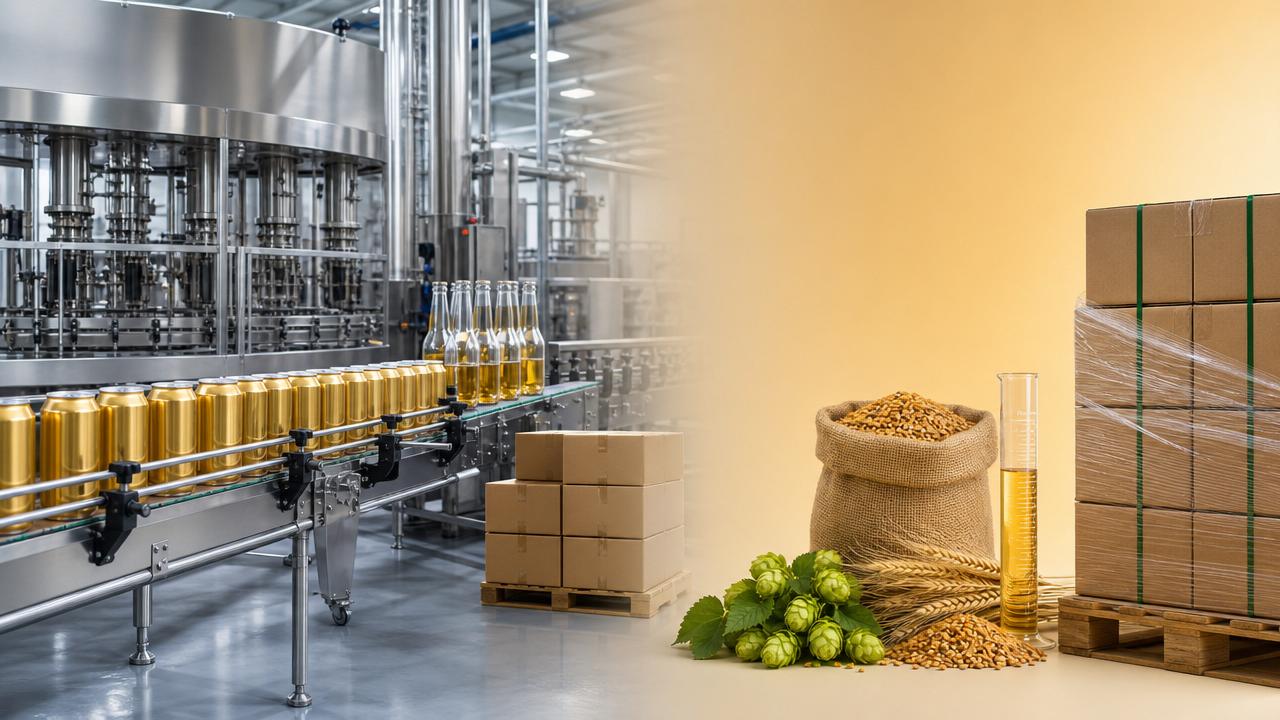
For financial approvers, China beer OEM pricing can look inconsistent at first glance—but the differences often reflect real cost drivers rather than simple supplier markups. Recipe complexity, packaging choices, order volume, compliance needs, logistics, and customization all affect the final quotation. Understanding these variables helps procurement and finance teams compare offers more accurately, control budget risk, and identify partners capable of delivering stable quality, scalable production, and long-term value in competitive beverage markets.
In the alcoholic beverage sector, a low unit price rarely tells the whole story. A China beer OEM quote may include different assumptions about ingredients, packaging, testing, export documents, or delivery terms.
For finance leaders approving budgets for distributors, supermarkets, bars, restaurant groups, or private-label beverage brands, the key question is not only “How much per can?” but “What is included, controlled, and repeatable?”
What Really Sits Behind a China Beer OEM Quotation
A professional China beer OEM quotation usually combines 6 major cost blocks: formulation, raw materials, brewing capacity, packaging, compliance, and logistics. Each block can shift the final price by a visible margin.
Recipe complexity affects more than flavor
Classic lager, German wheat beer, sugar-free low-calorie beer, fruit-flavored beer, and functional specialty beer do not share the same production economics. Fermentation time, filtration, additives, and quality checks differ.
A standard lager may follow a stable production schedule, while a fruit-flavored beer often requires flavor stability evaluation, color protection, and sweetness balancing across 2–3 sampling rounds.
Typical cost drivers finance teams should isolate
- Malt, hops, yeast, adjuncts, fruit extracts, sweeteners, or functional ingredients used per batch.
- Fermentation cycle, which may range from about 10–35 days depending on style.
- Laboratory testing frequency, such as alcohol content, microbiology, carbonation, and shelf-life checks.
- Loss allowance during pilot brewing, filling, label adjustment, or flavor correction.
This is why two suppliers offering China beer OEM service may appear far apart even when the product name looks similar. The underlying formula and control points may be different.
Packaging decisions can reshape the landed cost
Packaging is often the most visible variable in OEM beer procurement. A 330ml can, 500ml can, glass bottle, keg, or gift pack creates different material and handling costs.
Private-label buyers may also request matte labels, embossed cans, multi-language cartons, shrink sleeves, or mixed-flavor packs. Each option can add design, printing, and minimum order requirements.
The following table helps financial approvers compare common beer OEM cost elements before approving a purchase order or annual supply budget.
The practical takeaway is simple: compare quotations line by line, not only by headline price. A higher China beer OEM quote may include services that reduce downstream risk.
Why Order Volume, MOQ, and Production Scheduling Change the Price
Beer OEM production is batch-driven. When order quantity changes from a trial run to a container-scale order, cost allocation changes across brewing, filling, packaging, and quality inspection.
MOQ is not only a sales threshold
Minimum order quantity reflects line setup, raw material purchasing, packaging procurement, and tank utilization. For customized beer, MOQ may be tied to labels, cartons, or cans.
A small pilot order can help validate market demand, but it often carries higher unit cost because fixed setup activities are spread over fewer units.
- Confirm expected first order volume, such as 1 pallet, 1 container, or several retail SKUs.
- Separate formula development fees from repeat production costs.
- Ask whether packaging MOQ is higher than liquid production MOQ.
- Review price breaks at 3 levels, for example trial, standard, and annual volume.
Capacity planning affects both cash flow and delivery risk
A China beer OEM supplier that schedules brewing, maturation, filling, and export loading clearly can help finance teams forecast inventory turnover and payment timing.
Typical private-label beer projects may require 2–4 weeks for formulation confirmation, 3–6 weeks for packaging preparation, and additional time for production and shipment.
Volume-related approval questions
- Is the quoted unit price based on one SKU or multiple SKUs sharing cartons?
- Does the supplier reserve production capacity after deposit, artwork approval, or raw material arrival?
- Can repeat orders use the same packaging stock to reduce lead time?
- Are storage fees applied if goods are not shipped within an agreed window, such as 7–15 days?
When these questions are answered early, finance approvers can avoid unexpected working capital pressure, especially when launching seasonal or promotional beer programs.
Compliance, Quality Control, and Hidden Risk Premiums
Beer is a regulated alcoholic beverage, so pricing must include more than production cost. Export documentation, destination labels, shelf-life validation, and inspection standards all matter.
Compliance requirements vary by destination market
A label accepted in one country may require changes in another. Alcohol by volume, allergen statements, nutrition claims, barcode placement, and importer information must be checked.
For sugar-free or functional specialty beers, finance teams should be more careful. Claims related to calories, ingredients, or benefits may require additional review before shipment.
Quality control points that influence budget
- Alcohol content tolerance checks, commonly reviewed against the declared ABV on the label.
- Microbiological testing before release, especially for flavored beer with added extracts.
- Carbonation and filling volume checks during canning or bottling runs.
- Sample retention for traceability during the product shelf-life period.
These checks add cost, but they can reduce far larger losses linked to customs delays, relabeling, rejected shipments, or product recalls.
How to read risk in a low quotation
A very low China beer OEM price may be legitimate when the product is simple, packaging is standard, and order volume is high. It may also omit necessary controls.
Financial approvers should ask whether the quotation includes pre-production samples, packaging proofing, batch testing, export documents, palletizing, and any destination-specific label review.
The table below outlines practical risk controls that can be built into beer OEM procurement without creating unnecessary bureaucracy.
The most useful quotation is not always the cheapest one. It is the one that makes risk visible before money, inventory, and market reputation are committed.
How Financial Approvers Can Compare China Beer OEM Suppliers
Finance teams often receive quotes from several suppliers using different formats. To compare fairly, convert each offer into the same commercial, technical, and service framework.
Build a 5-point supplier evaluation model
A structured model protects the company from choosing based only on the lowest price. It also supports internal approval meetings with procurement, marketing, and operations.
- Product fit: confirm whether the supplier can produce lager, wheat, low-calorie, fruit, and specialty beers.
- Cost transparency: separate liquid, packaging, development, documentation, and logistics charges.
- Scalability: assess whether production can grow from trial order to repeat wholesale supply.
- Quality control: request clear inspection steps, batch traceability, and sample retention practices.
- Communication speed: evaluate response time for artwork, formula changes, shipping updates, and after-sales issues.
This framework is especially useful when a distributor plans to serve multiple retail channels, such as supermarkets, restaurants, bars, online stores, and regional agents.
Normalize quotations before approving the budget
Finance approvers should request the same Incoterms, container assumptions, carton specifications, payment schedule, and validity period. Even a 15-day price validity can affect planning.
A quotation based on EXW, FOB, or CIF can look very different. Without normalization, the buyer may approve a price that excludes important logistics responsibilities.
Useful internal approval checklist
- Compare cost per liter as well as cost per can or bottle.
- Confirm whether samples, printing plates, and artwork revisions are included.
- Check whether payment terms align with production milestones and shipping dates.
- Review shelf-life assumptions and storage requirements for the selected beer style.
- Clarify responsibility for damaged cartons, shortage claims, or delayed loading.
- Request repeat-order pricing for 6-month or 12-month supply planning.
For private-label programs, this checklist creates a shared language between procurement and finance. It reduces approval friction and improves supplier negotiations.
Where Jinpai Beer Fits in OEM and ODM Procurement
Jinpai Beer focuses on R&D, production, and distribution of craft beer, supporting classic lager, German wheat, sugar-free low-calorie beer, fruit beer, and functional specialty beers.
Solutions for distributors and retail channels
For global distributors, agents, supermarkets, restaurants, bars, and retail channels, OEM and ODM cooperation should connect product development with commercial practicality.
That means discussing target price, taste profile, packaging format, market positioning, and delivery plan before mass production. A clear briefing can reduce revisions by several steps.
A practical 6-step cooperation path
- Define market channel, target consumer, ABV range, flavor direction, and expected retail price.
- Select product type, such as lager, wheat beer, low-calorie beer, fruit beer, or specialty beer.
- Confirm packaging, including can or bottle size, carton configuration, label language, and barcode needs.
- Review samples, tasting notes, artwork proof, and compliance information before production.
- Arrange production, filling, inspection, export preparation, and loading schedule.
- Evaluate repeat-order performance, sell-through feedback, and possible SKU expansion.
This process helps financial approvers link China beer OEM pricing to measurable deliverables, rather than treating the quotation as a single unexplained number.
Balancing price control with long-term value
A good supplier relationship should support stable quality, scalable production, and predictable communication. These factors can be as important as a small difference in unit price.
When a beer brand grows from one SKU to 3–5 SKUs, early decisions about packaging systems, formulation records, and repeat-order planning become financially significant.
For buyers building long-term beverage portfolios, Jinpai Beer can support OEM/ODM services, wholesale supply, and customized solutions across online and offline sales channels.
Key Takeaways for Smarter Beer OEM Budget Approval
China beer OEM pricing varies because real production variables vary. Recipe design, packaging, MOQ, compliance, quality control, and logistics all shape the final commercial offer.
Financial approvers can improve decision quality by comparing cost per liter, checking inclusion lists, normalizing delivery terms, and requiring clear risk controls before approval.
For distributors, agents, supermarkets, restaurants, and bars seeking reliable private-label beer supply, a transparent OEM partner can reduce budget uncertainty and support scalable growth.
If you are evaluating a China beer OEM project, contact Jinpai Beer to discuss product details, request a customized solution, and build a quotation framework aligned with your market plan.
Thank you very much for writing to us. Please leave your message and contact information, we will reply to you within 24 hours.