



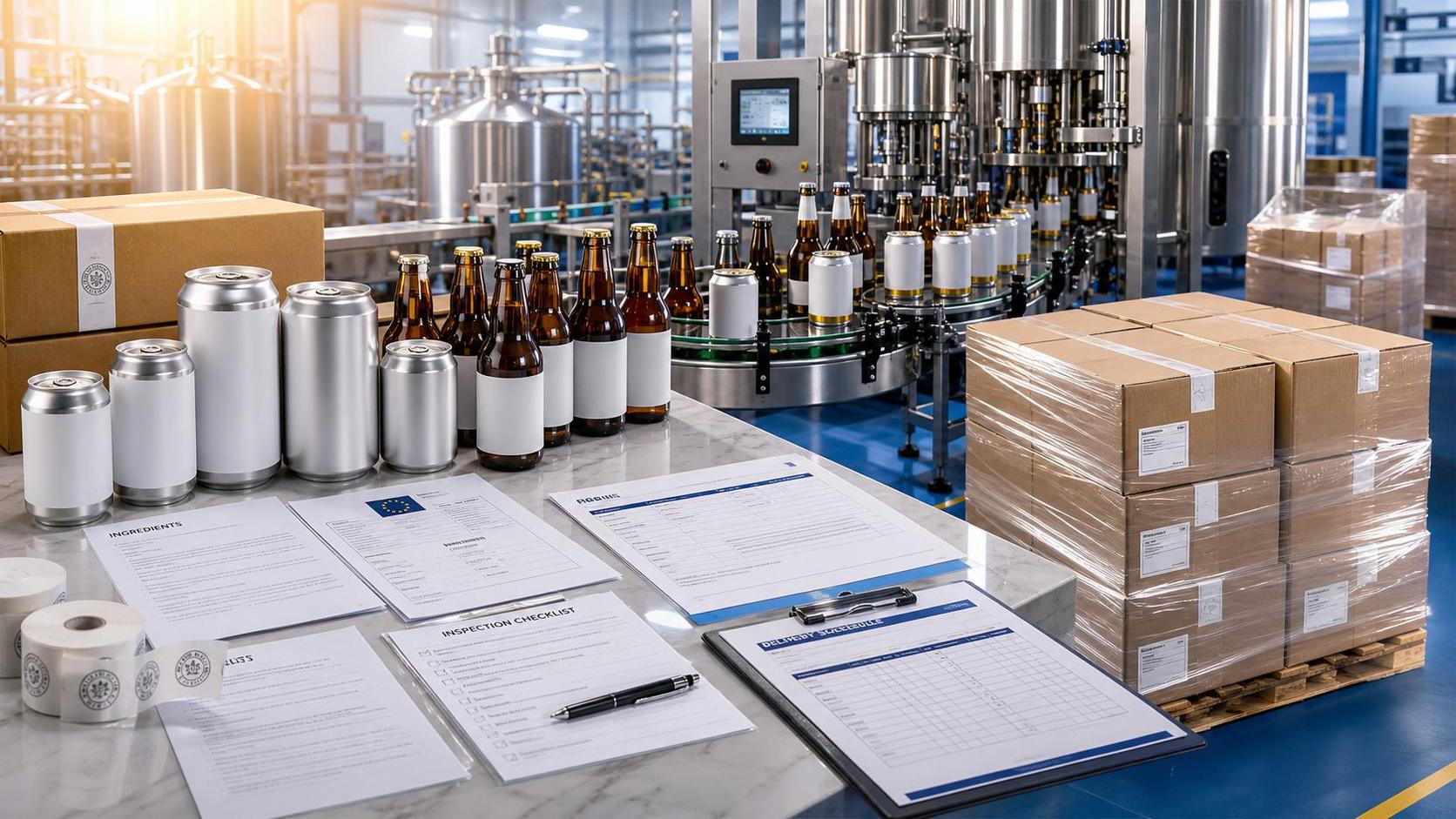
White Label Beer Europe: Minimum Order, Lead Time, and Compliance Questions to Ask
Sourcing White label beer Europe requires more than comparing prices.
For procurement decisions, the real pressure points sit elsewhere.
Minimum order quantities, production lead time, labeling options, and EU compliance often shape total cost.
A supplier may look competitive at first glance, then create delays, relabeling costs, or customs issues later.
That is why the right questions matter early.
This guide breaks down what to ask when evaluating White label beer Europe suppliers.
It also highlights how to reduce supply risk and plan for smoother long-term cooperation.
Why White Label Beer Europe Requires Deeper Supplier Screening
The European beer market is diverse, regulated, and highly channel-specific.
A product suitable for a bar chain may not fit a supermarket program.
A promotion-ready fruit beer may need different labeling than a classic lager for mainstream retail.
This also means White label beer Europe projects rarely succeed on price alone.
Reliable suppliers should support product development, packaging customization, and document readiness.
Jinpai Beer, for example, works across craft beer R&D, production, distribution, OEM, ODM, and wholesale supply.
Its portfolio covers classic lager, German wheat, sugar-free low-calorie beer, fruit beer, and functional specialty beer.
That kind of range helps when market testing different White label beer Europe concepts.
Minimum Order Questions That Affect Real Procurement Cost
MOQ is usually the first number buyers request.
But the useful question is not only, “What is your MOQ?”
The better question is, “How is the MOQ structured?”
Ask About MOQ by SKU, Flavor, and Packaging
Some White label beer Europe suppliers quote MOQ per order.
Others apply separate MOQ rules to each flavor, can size, bottle type, or carton design.
That difference changes inventory exposure immediately.
- Is MOQ based on total volume or each SKU?
- Can one order combine lager, wheat, fruit, and low-calorie options?
- Does custom packaging increase MOQ?
- Are repeat orders easier than first orders?
Check Hidden Cost Triggers Behind Small MOQ Offers
A low MOQ can look attractive, especially during market entry.
Still, small runs often come with higher unit prices, plate fees, or label change charges.
In practical terms, White label beer Europe sourcing should compare landed cost, not sample-order appeal.
Ask for a quotation at different order volumes.
That gives a clearer view of price breaks and scaling logic.
Lead Time Questions That Prevent Stock Gaps
Lead time is more than production days.
For White label beer Europe, the timeline usually includes formula confirmation, packaging approval, production scheduling, and shipping preparation.
Separate Sample Time From Bulk Production Time
Many delays begin before the factory starts filling cans or bottles.
Artwork revision, ingredient confirmation, and packaging material sourcing all take time.
Ask suppliers to break lead time into stages.
- Sample development time
- Label and packaging approval time
- Bulk production lead time
- Document preparation time
- Ready-to-ship date
This staged view is far more useful than a single promised number.
Ask What Causes Delays During Peak Seasons
A dependable White label beer Europe partner should explain seasonal constraints clearly.
Common issues include limited can supply, holiday shutdowns, and longer approval cycles for custom labels.
Also ask whether the supplier holds standard packaging materials in stock.
That flexibility can shorten replenishment for established SKUs.
Compliance Questions Every White Label Beer Europe Buyer Should Raise
Compliance mistakes are expensive because they hit packaging, customs clearance, and shelf readiness at the same time.
For White label beer Europe, regulatory readiness should be discussed before final pricing approval.
Confirm Labeling Support for EU Market Requirements
Beer labels must reflect the destination market accurately.
That may include ingredients, allergens, net content, alcohol by volume, best-before guidance, and importer details.
Ask whether the supplier reviews artwork for regulatory accuracy or only prints submitted files.
That distinction matters more than it seems.
Request Product Documents Early
Document readiness is a practical test of supplier maturity.
Ask in advance for typical export and product files.
- Product specification sheets
- Ingredient and allergen declarations
- Shelf life details and storage advice
- Quality certificates and test reports
- Export documentation support
When documents arrive late, shipments usually follow the same pattern.
Product and Packaging Questions That Shape Sell-Through
White label beer Europe is not just a supply exercise.
It is also a product-market fit exercise.
The best supplier for one channel may be the wrong one for another.
Ask Which Beer Styles Match Your Channel
Restaurants and bars may prefer distinct flavor profiles and faster rotation options.
Supermarkets often need broader appeal, stronger shelf visibility, and stable replenishment.
That is where a broad supplier lineup helps.
Classic lager, German wheat, fruit beer, and sugar-free low-calorie beer can address different buyer segments.
Review Packaging Flexibility Before Launch
Packaging affects both cost and sales performance.
For White label beer Europe, ask what can be customized without slowing delivery too much.
- Can size and bottle format
- Tray, carton, and pack configuration
- Private label design adaptation
- Multilingual label layouts
This is often where premium-looking concepts become commercially workable or unnecessarily expensive.
A Practical Supplier Checklist for White Label Beer Europe
To compare offers properly, keep the supplier review process structured.
This simple framework makes White label beer Europe comparisons more objective.
It also helps internal teams align on risk, cost, and launch timing.
Final Takeaway
A strong White label beer Europe decision starts with clear operational questions.
MOQ, lead time, compliance, packaging flexibility, and product fit all affect commercial success.
When a supplier can support craft beer development, private label customization, and steady global distribution, the project becomes easier to scale.
For buyers reviewing White label beer Europe options, the next move is straightforward.
Prepare a question list, request staged quotations, and verify compliance support before confirming your supplier shortlist.
Thank you very much for writing to us. Please leave your message and contact information, we will reply to you within 24 hours.