



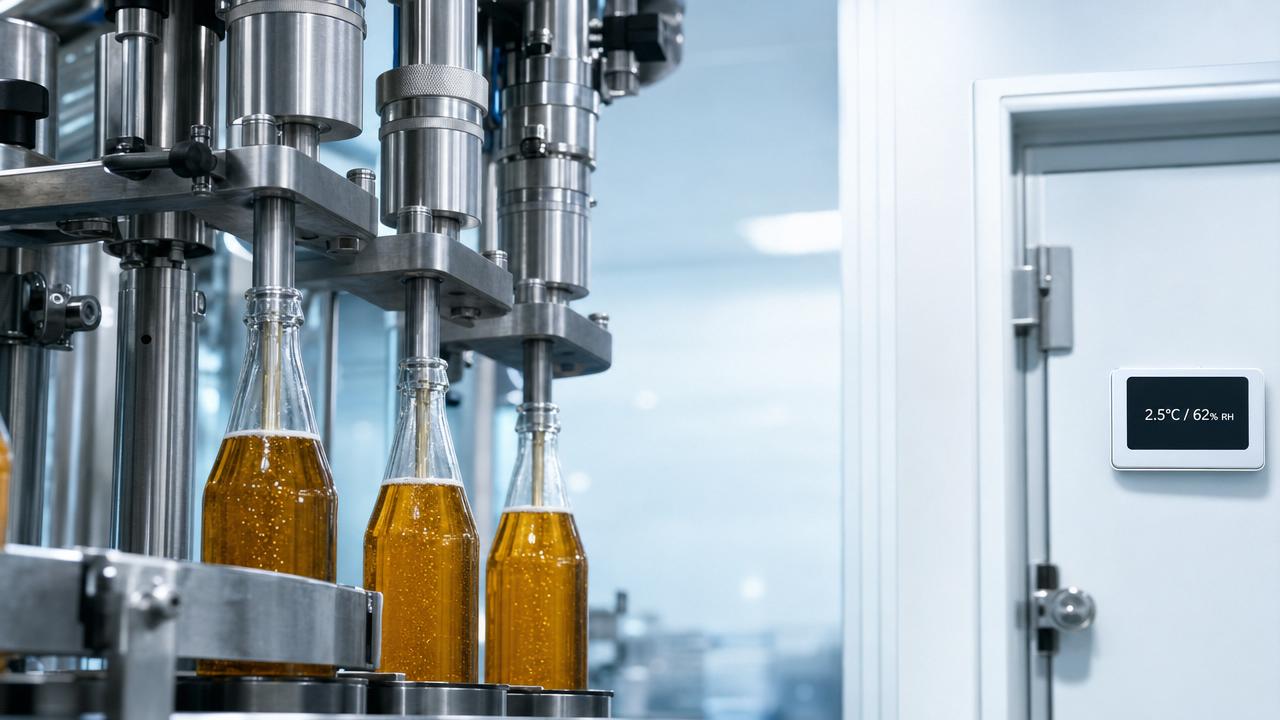
Before finalizing an ODM beer services agreement, quality control professionals must conduct rigorous due diligence—not just on specs, but on traceability, compliance, and production accountability. This checklist helps you verify critical factors: brewery certifications (ISO 22000, HACCP), raw material sourcing transparency, batch-level testing protocols, label compliance across target markets, and post-production storage conditions. For Jinpai Beer’s ODM beer services—spanning craft lagers, low-calorie variants, and functional specialty beers—these checks ensure consistency, safety, and brand integrity from brewhouse to shelf.
Certification & Regulatory Alignment: Beyond Paper Compliance
A certified brewery is non-negotiable—but not all certifications carry equal weight in global beer distribution. Jinpai Beer maintains active ISO 22000:2018 and HACCP certification, verified annually by SGS China and renewed without major non-conformities for the past 5 consecutive audits. More critically, we align facility-level documentation with regional regulatory gateways: FDA Food Facility Registration (U.S.), EU Health Certificate Annex II requirements (for exports to EU member states), and Japan’s FSC Notification system—all updated within 72 hours of any formulation or process change.
Yet certification alone doesn’t guarantee execution fidelity. You must confirm whether audit trails are digitally accessible per batch—and whether corrective actions are logged with root-cause analysis, not just closure notes. At Jinpai, every production lot (minimum volume: 500 L per batch) triggers a digital QC dossier containing 12 mandatory checkpoints—from yeast viability logs (≥92% at pitching) to dissolved oxygen readings (<0.05 ppm pre-canning).
The table above reflects how Jinpai translates broad compliance into measurable, auditable thresholds. For example, our ATP swab validation threshold (≤10 RLU) exceeds the industry standard (≤50 RLU) for low-risk beverage lines—critical when producing sugar-free low-calorie or functional specialty beers where residual microbial load directly impacts stability and shelf life.
Raw Material Traceability & Batch-Level Accountability
ODM beer services demand full upstream visibility—not just “origin country” but harvest date, malt kilning profile, hop alpha acid variance (±0.3%), and yeast strain lineage. Jinpai sources base malts exclusively from EU-certified maltsters (Weyermann, Best Malz) and hops from USDA-licensed U.S. farms and German Hallertau co-ops—with COAs issued per pallet, not per shipment. Every raw material lot is assigned a 9-digit trace code, cross-linked to finished product batches via our ERP system (SAP S/4HANA v23).
For functional specialty beers—such as those fortified with L-theanine or vitamin B12—we require dual-supplier qualification: one for primary ingredient (e.g., organic barley), another for functional additive (GMP-certified supplier only). Each additive undergoes identity confirmation (FTIR spectroscopy) and potency assay (HPLC) prior to inclusion—results archived for 36 months beyond product expiry.
Label Compliance Across Target Markets
Label misalignment is the #1 cause of customs rejection for imported beer. Jinpai provides pre-submission label review for up to 3 target markets per project—including mandatory bilingual formatting (e.g., English + Mandarin for China, English + French for Canada), allergen declarations per Codex Alimentarius, and alcohol-by-volume rounding rules (EU requires ±0.2%, U.S. allows ±0.3%). We maintain live templates for 17 jurisdictions, updated monthly against official gazettes (e.g., Japan’s MHLW Notifications, Australia’s FSANZ Standard 2.7.1).
Post-Production Storage & Logistics Controls
Beer quality degrades predictably under thermal stress: every 10°C rise above 4°C halves shelf life for unpasteurized craft lagers. Jinpai stores all finished goods in climate-controlled warehouses (2–8°C, RH 55–65%) with real-time IoT monitoring (Sensirion SHT45 sensors, 15-min sampling interval). Temperature excursions >30 min trigger automatic SMS alerts to QC leads and initiate quarantine protocol—applied to entire pallets, not just affected cases.
These controls directly support your brand’s safety commitments—especially for sensitive segments like low-calorie or fruit-flavored beers, where pH shifts and residual sugars increase vulnerability to spoilage organisms such as *Lactobacillus* and *Pediococcus*. Our 12-month real-time stability data shows <0.2% deviation in turbidity and no detectable diacetyl formation across 42 tested SKUs.
Actionable Next Steps for Quality Teams
Before signing any ODM beer services contract, request the following from your supplier: (1) A live demo of their batch traceability portal, (2) Copies of the last 3 internal audit reports (not just certificates), and (3) A sample QC dossier for a recent low-calorie or functional beer batch. At Jinpai Beer, these documents are provided within 48 business hours—and include editable fields for your team’s own verification stamps and comments.
Our ODM beer services are built for partners who treat quality not as a checkpoint, but as a continuous feedback loop. From raw material DNA profiling to post-distribution temperature mapping, we embed accountability at every node—so your brand delivers consistent taste, safety, and trust, batch after batch, market after market.
Get your customized ODM beer services quality assurance plan—complete with jurisdiction-specific label templates, raw material COA samples, and batch-level testing specifications. Contact Jinpai Beer’s Technical Partnership Team today to schedule a virtual facility tour and review your first draft QC protocol.
Thank you very much for writing to us. Please leave your message and contact information, we will reply to you within 24 hours.