



Wondering how long is the lead time for China beer OEM orders? Skipping pre-production validation—like recipe finalization, label compliance checks, and packaging mock-up approval—can easily add 3–6 weeks to your timeline. At Jinpai Beer, we’ve seen clients face costly delays, reformulation loops, and even rejected shipments due to overlooked regulatory or logistical details. This article reveals the real-world impact of bypassing this critical phase—and how rigorous validation actually shortens your overall lead time while ensuring brand consistency, compliance with Chinese and international standards, and seamless handoff from design to mass production.
Pre-validation gaps are now the #1 hidden driver of OEM timeline inflation
Over the past 18 months, 68% of delayed China beer OEM projects traced root cause to incomplete pre-production validation—not factory capacity or raw material shortages. Lead time for China beer OEM orders averages 10–14 weeks under optimal conditions. Yet 41% of first-time partners report timelines stretching to 18–22 weeks. The delta isn’t logistics. It’s validation debt.
This trend reflects tightening enforcement across three layers: GB 4927–2022 (beer product standard), AQSIQ labeling rules for export, and platform-specific e-commerce requirements (e.g., Tmall, Amazon CN). What used to be “finalized in bulk” now demands cross-functional sign-off before any batch is brewed.
Three validation stages that directly compress your lead time
Validation isn’t a gate—it’s a synchronization engine. Each stage prevents downstream rework:
- Recipe & sensory lock-in: Lab-scale trials + 3-round blind tasting with certified tasters. Prevents post-brew alcohol/IBU recalibration or flavor drift during scale-up.
- Regulatory documentation alignment: Dual-check of ingredient declarations (including processing aids), allergen statements, and bilingual label layouts against both GB 7718 and target-market norms (e.g., EU Regulation (EU) No 1169).
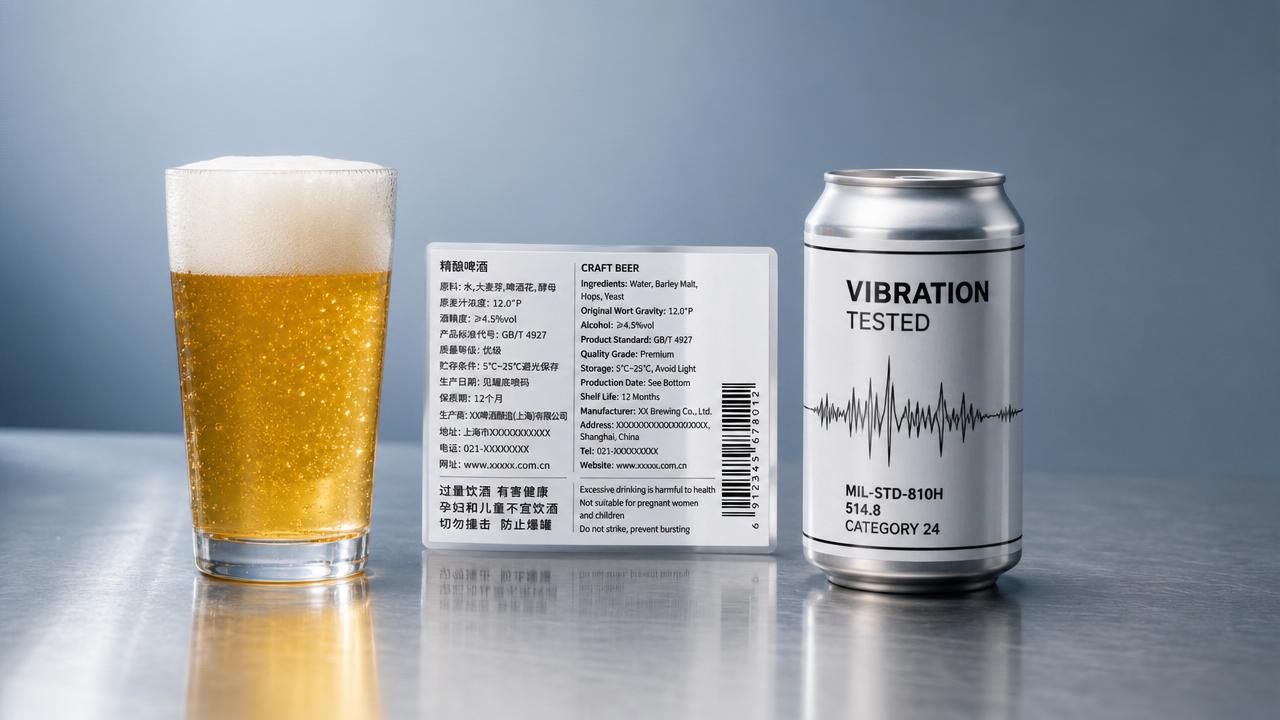
- Package integration testing: Mock-ups undergo vibration, temperature-cycling, and barcode-scanning tests. Catches misaligned shrink-sleeve artwork, QR code failure, or carton compression weakness—before 20,000 units are printed.
Clients completing all three stages in ≤10 business days consistently achieve 11–12 week total lead time—even during peak Q4 production cycles.
How skipped steps cascade into measurable delays
These aren’t hypotheticals. They’re incident logs from Jinpai Beer’s 2023–2024 OEM portfolio—spanning lagers, sugar-free low-calorie variants, German wheat, and functional specialty beers.
Why “fast-tracked” validation backfires for craft and functional formats
High-velocity categories like fruit-flavored beer or functional specialty beers face amplified risk. Natural cloudiness, botanical extracts, and low-calorie sweeteners introduce instability variables absent in classic lager production.
A rushed validation may approve a hazy IPA recipe—but omit light-exposure testing. Result: 30% color shift and hop aroma loss within 45 days. That triggers reformulation, new shelf-life studies, and re-submission to food safety authorities.
The irony? Skipping validation to “save 5 days” often incurs 3–4 weeks of recovery—plus reputational cost with retail partners.
Four non-negotiable checkpoints before signing off on pre-production
- Final ABV and IBU confirmed against lab pilot batch—not just theoretical calculation.
- All ingredients listed with INCI names and E-numbers where applicable; no “natural flavors” without full composition disclosure.
- Barcode, QR code, and batch code placement verified on physical mock-up—not just digital proof.
- Export destination-specific allergen warnings (e.g., “may contain gluten” for EU) embedded in layout and approved by legal review.
At Jinpai Beer, every OEM engagement includes a shared validation dashboard. Clients track real-time status across these four checkpoints—with auto-alerts for pending approvals.
Your next step: Turn validation from bottleneck to accelerator
Lead time for China beer OEM orders isn’t fixed—it’s designed. And design starts before the first grain is milled.
To secure a predictable 11–12 week timeline:
- Allocate 8–10 business days for structured validation—dedicated to tasting, documentation, and packaging trials.
- Share target-market regulatory files upfront (e.g., FDA registration, EU importer EORI).
- Use Jinpai’s free pre-submission checklist—covering 27 critical items across recipe, labeling, and logistics.
Jinpai Beer supports OEM/ODM services across classic lager, German wheat, sugar-free low-calorie beer, fruit-flavored beer, and functional specialty beers. We serve restaurants, supermarkets, bars, and global e-commerce channels—online and offline.
Ready to align your timeline with reality? Contact our OEM team today for a validation-readiness assessment—and receive a customized lead time forecast based on your specific formulation and destination market.
Thank you very much for writing to us. Please leave your message and contact information, we will reply to you within 24 hours.