



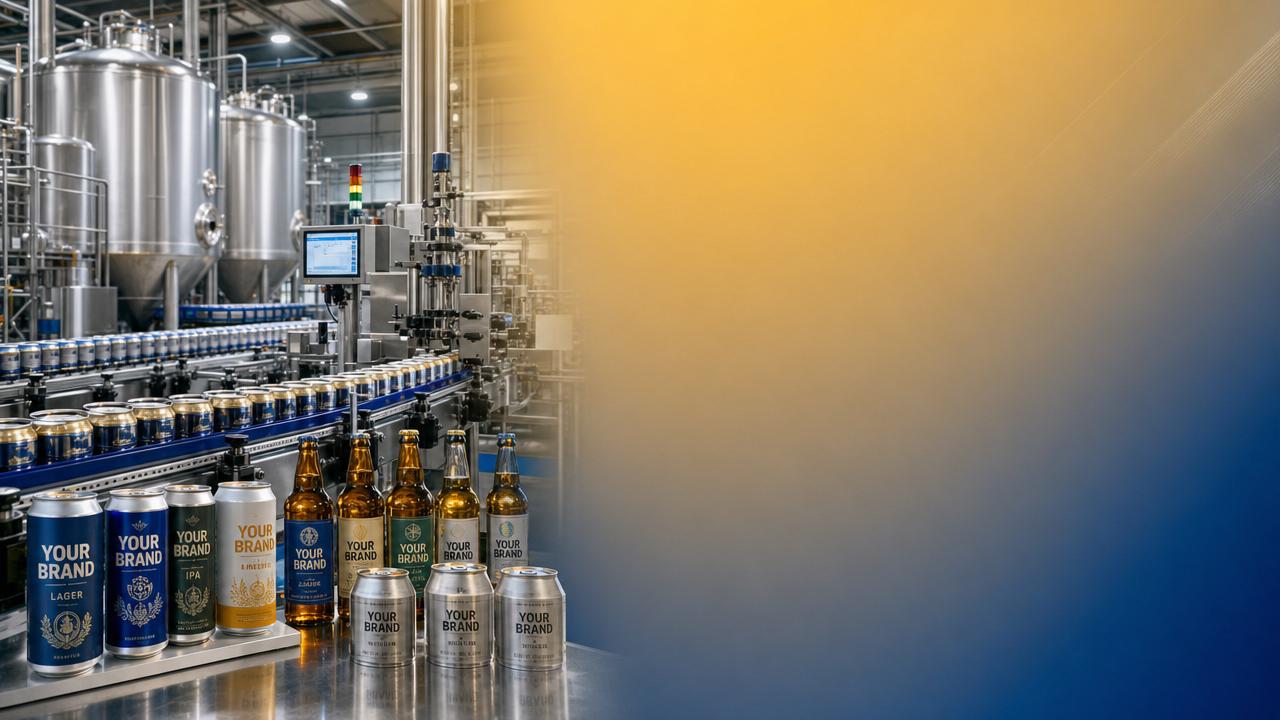
Choosing a Chinese beer factory for private label is more than comparing prices—it starts with verifying production capability, quality control and customization strength. For distributors, the right partner should offer stable brewing standards, flexible OEM/ODM support and products that fit local market demand. This guide explains the first checkpoints that help you reduce risk and build a reliable private label beer business.
For importers, supermarket buyers, bar supply chains, and regional beverage distributors, the first audit of a Chinese beer factory for private label should focus on what can be measured within the first 30 days: brewing capacity, batch consistency, packaging flexibility, compliance readiness, and communication efficiency. A low quotation may look attractive, but unstable output, slow label approval, or inconsistent taste can create far higher costs after launch.
In the beer and beverage sector, a reliable OEM/ODM partner should be able to support multiple product styles, from classic lager and German wheat to sugar-free low-calorie beer, fruit beer, and functional specialty beer. For a distributor building a long-term brand, the supplier must not only brew beer, but also help align formula, packaging, shelf appeal, and delivery planning with local market demand.
Start With Production Capability and Brewing Range
The first thing to check in a Chinese beer factory for private label is whether the factory can produce your target styles at stable quality and workable lead times. Many distributors ask about price on day 1, but production suitability should be confirmed before commercial negotiation.
Check if the factory can handle your product mix
A practical review starts with the factory’s active product portfolio. If your channel includes restaurants, convenience retail, and online sales, you may need 3 to 5 core SKUs rather than a single beer type. A factory that already works across lager, wheat beer, fruit-flavored beer, and low-calorie lines usually has stronger formulation control and packaging coordination.
Distributors should ask how many brewing styles are in regular production each month, what batch volume is typical, and how pilot runs are managed. A sample batch may be acceptable at 500 liters, but your launch order may require 5,000 to 20,000 liters with the same flavor profile. That gap matters.
Key production questions to ask early
- What is the minimum order quantity per SKU for bottles, cans, and draft formats?
- How many days are needed for sample development, label confirmation, and first bulk production?
- Can the factory support seasonal products in 2 to 3 short production windows per year?
- What alcohol by volume ranges are currently produced, such as 2.5% to 8.0% ABV?
- Can sugar-free or functional beer formulas be adjusted for local taste preferences?
These questions help identify whether the factory is a true manufacturing partner or simply a standard-output supplier with limited flexibility. For private label beer, flexibility is often worth more than the lowest unit price.
The table below shows the first production checkpoints distributors should compare before moving to samples or contract review.
A distributor evaluating a Chinese beer factory for private label should not treat these four points as optional. They determine whether your product launch can scale from trial to repeat order without reformulation, stockouts, or packaging delays.
Review line compatibility and packaging options
Packaging is often the second hidden bottleneck. A factory may brew good beer but have limited filling options. Before approving a supplier, check whether they can support 330 ml and 500 ml cans, common glass bottle formats, carton variations, tray packs, and mixed retail-ready configurations.
If your sales channels include supermarkets and bars at the same time, the supplier should be able to run at least 2 packaging formats under one product family. That reduces formula fragmentation and helps preserve brand consistency across different channel needs.
Audit Quality Control Before You Compare Price
The next priority in a Chinese beer factory for private label is quality control. Price differences of 3% to 8% are easy to see. The cost of a rejected shipment, unstable carbonation, or shelf-life complaint is much harder to recover. This is why technical control should be reviewed before final quotation approval.
Focus on consistency from raw materials to finished beer
Distributors should ask how the factory controls raw material intake, brewing process records, filling conditions, and finished product checks. In practical terms, quality is not one final test. It is a chain of controls from malt, hops, yeast, fruit ingredients, or functional additives through fermentation, filtration, and packaging.
For example, if you are sourcing fruit-flavored beer or sugar-free low-calorie beer, flavor stability and sweetness balance may shift more easily between batches than standard lager. That means sample approval alone is not enough. You should ask for routine control points and how deviations are handled within each batch cycle.
Important quality indicators to discuss
- Flavor consistency between sample and mass production
- Carbonation stability during storage and transport
- Packaging seal integrity for cans and bottles
- Shelf-life planning for domestic storage plus export transit
- Label and carton accuracy for multilingual retail compliance
A well-managed factory should be able to explain its internal inspection flow in 3 to 5 steps, not just say that quality is checked carefully. Clear process language usually reflects stronger operating discipline.
The following table helps distributors separate visible quality checks from deeper control points that affect repeat business.
If a supplier cannot answer these questions in a structured way, it is difficult to trust long-term batch consistency. In private label beer, consistency is what protects distributor margin after the first order, not only what wins the first order.
Confirm export-readiness and documentation support
A Chinese beer factory for private label must also be operationally ready for export business. That includes faster artwork review, clear carton marking, production date control, and response times that match shipment schedules. In many beverage projects, a 48-hour delay in label confirmation can move the whole production queue by several days.
For distributors entering a new market, the factory should support documentation communication in a practical, business-friendly way. Even when import requirements differ by country, a responsive supplier helps reduce rework and customs-related risk.
Evaluate OEM/ODM Strength and Market Fit
After production and quality checks, the next decision point is customization strength. A Chinese beer factory for private label should offer more than logo printing. It should help shape a product line that fits your target segment, whether that is mass retail, casual dining, premium bars, or health-oriented beverage channels.
Look beyond label design to product positioning
Many distributors underestimate formulation strategy. In practice, a successful private label range often starts with 2 or 3 highly focused SKUs, not 8 scattered concepts. For example, a supermarket launch may perform better with a classic lager, a wheat beer, and a fruit-flavored SKU than with a broad but unfocused assortment.
If your local market is price-sensitive, the factory should be able to suggest packaging and formula combinations that maintain acceptable taste while keeping landed cost under control. If your audience prefers premium or differentiated products, then fruit beer, low-calorie beer, or specialty functional beer may offer stronger shelf distinction.
Signs of strong OEM/ODM capability
- Ability to adjust flavor profile for different consumer groups
- Support for multiple packaging materials and visual styles
- Fast sample turnaround, often within 7 to 15 days for standard concepts
- Commercial guidance on MOQ, price structure, and launch sequence
- Experience serving restaurants, supermarkets, bars, and retail chains
For a distributor, this matters because market fit drives repeat orders. Even a technically strong beer can fail if the package size, sweetness level, alcohol strength, or branding concept does not match the channel.
Assess communication speed and project management
Private label supply is rarely a one-step transaction. It usually includes formula discussion, sample approval, packaging revision, production scheduling, deposit confirmation, and shipment release. That means you should test not only the product but also the supplier’s communication system during the first 2 to 3 weeks.
Ask how artwork changes are handled, how many review rounds are practical, and who coordinates sales, production, and packaging. A factory that responds clearly within 24 to 48 hours is usually easier to work with than one that gives incomplete answers across multiple teams.
Build a Safer Purchasing Process for Long-Term Distribution
Once a supplier passes the first technical review, distributors should structure the purchasing process to reduce avoidable risk. This is especially important when ordering from a Chinese beer factory for private label for the first time or when launching into more than one regional market.
Use a staged approval process
A practical method is to divide cooperation into 4 stages: supplier review, sample confirmation, packaging approval, and first bulk order. Each stage should have written checkpoints. This reduces disputes and keeps quality expectations visible on both sides.
For example, stage 1 may confirm product range and MOQ. Stage 2 can verify taste, appearance, and target ABV. Stage 3 should lock artwork, barcode, and carton details. Stage 4 should confirm lead time, loading plan, and final inspection method before shipment.
Watch the most common distributor mistakes
The most frequent error is selecting a supplier based only on ex-works price. The second is approving a sample without checking whether the same profile can be reproduced at bulk volume. The third is using too many SKUs in the first order, which increases packaging complexity and slows turnaround.
A safer first order often includes 1 to 3 core products, one packaging format, and a clear reorder plan. That approach gives better visibility on sell-through speed, customer feedback, and replenishment timing.
Recommended first-order checklist
- Confirm MOQ and container planning by SKU
- Approve production sample and packaging mock-up
- Review outer carton markings and shelf display logic
- Set target lead time, usually 15 to 35 days depending on complexity
- Agree on pre-shipment verification points
- Prepare reorder timing before stock reaches the final 25% level
This structured approach helps distributors turn a supplier into a dependable brand-building partner rather than a one-off manufacturer.
Why Product Breadth Matters for Beverage Distributors
A final checkpoint is whether the factory can support your portfolio growth over the next 12 to 24 months. Distributors that start with one private label beer often expand into adjacent segments once the first product gains traction. That makes product breadth a strategic factor, not just an operational one.
Choose a supplier that can grow with your channels
A brewery partner with experience in classic lager, German wheat, sugar-free low-calorie beer, fruit-flavored beer, and functional specialty beer can help you adapt to shifting demand without restarting the supplier search. This is valuable for distributors serving mixed channels such as bars, supermarkets, restaurants, and e-commerce.
Jinpai Beer operates in beer R&D, production, and distribution, and provides OEM/ODM services, wholesale supply, and customized solutions for global partners. For distributors looking for a Chinese beer factory for private label, this kind of product breadth can shorten development cycles and make portfolio expansion more practical.
Think in terms of repeatability, not only launch cost
The strongest private label partnerships are built on repeatability: repeat taste, repeat supply, repeat communication quality, and repeat market response. If a factory can support stable brewing standards, suitable packaging options, and timely OEM/ODM coordination, the distributor gains more control over margin and brand reputation.
That is why the first check is never price alone. It is the supplier’s ability to deliver the same commercial result over multiple orders, across multiple channels, and under changing market demand.
When evaluating a Chinese beer factory for private label, start with production capability, quality control, OEM/ODM flexibility, export coordination, and long-term product fit. These checkpoints help reduce launch risk, protect your brand image, and improve reorder confidence.
If you are planning a private label beer program for supermarkets, bars, restaurants, or retail distribution, Jinpai Beer can support customized solutions across classic and specialty beer categories. Contact us now to discuss your target market, request product details, or get a tailored OEM/ODM proposal for your next beer project.
Thank you very much for writing to us. Please leave your message and contact information, we will reply to you within 24 hours.