



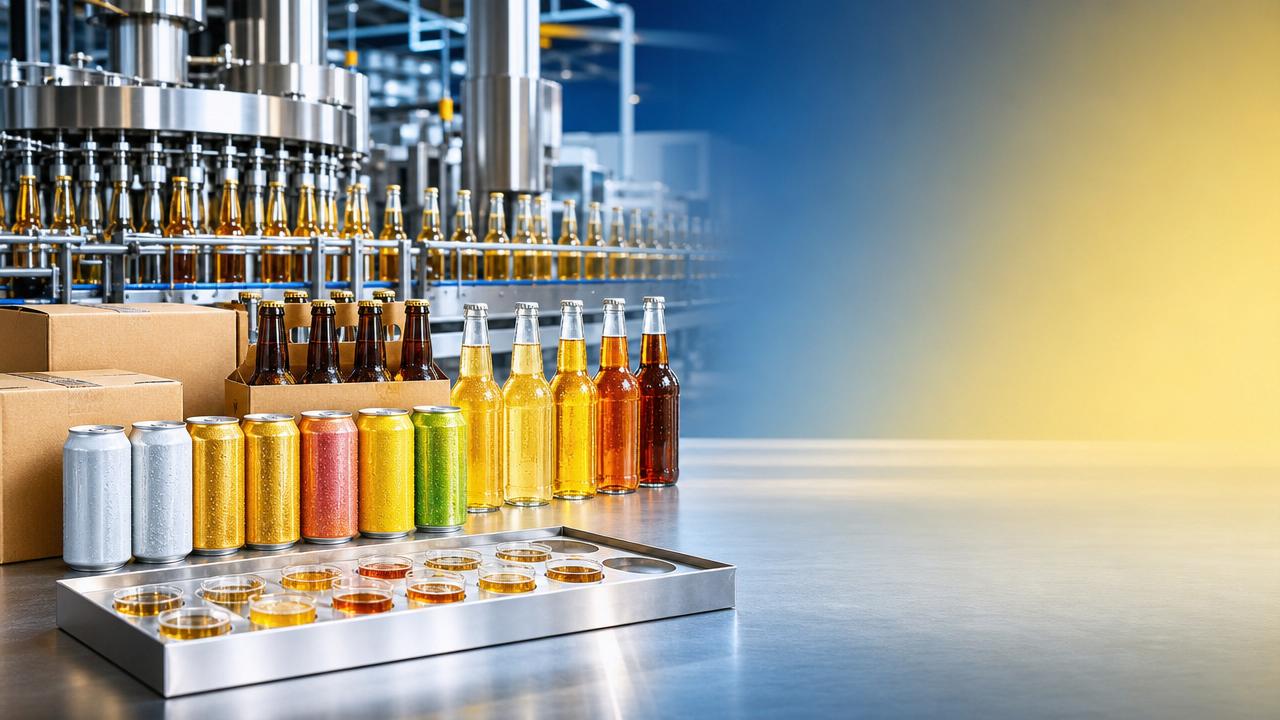
Choosing a Chinese beer factory for private label can be a smart move for brands aiming to scale with flexibility, quality and faster market entry. From classic lager to fruit beer and functional craft options, the right manufacturing partner can help you control costs, customize products and meet diverse consumer demand. But is it the right fit for your growth strategy? Let’s explore the key factors that matter.
For importers, beverage startups, retail chains, bar groups and regional distributors, the decision goes beyond price per carton. A reliable Chinese beer factory for private label must align with your target market, packaging plan, flavor positioning, launch timeline and repeat-order expectations.
In the beer and beverage sector, private label success often depends on 4 practical variables: product differentiation, production consistency, compliance readiness and supply responsiveness. If one of these areas is weak, brand growth can slow even when initial samples look promising.
Why a Chinese Beer Factory Can Support Private Label Expansion
A Chinese beer factory for private label is often attractive because it combines broad manufacturing capacity with a wide product matrix. This matters when a buyer wants to launch 2 to 5 SKUs quickly instead of testing only one standard lager.
Jinpai Beer, for example, focuses on R&D, production and distribution of craft beer and offers categories such as classic lager, German wheat, sugar-free low-calorie beer, fruit-flavored beer and functional specialty beer. That range helps buyers cover mainstream demand and niche positioning within one supply chain.
Category breadth creates room for faster market testing
In many export markets, buyers no longer rely on a single beer style. A supermarket may need 330ml cans for entry-level lager, while a bar chain may prefer wheat beer or fruit beer in glass bottles. Launching 3 formats through one factory can reduce coordination time by 2 to 4 weeks.
This is especially useful for private label programs that need seasonal rotation. A core lager can run year-round, while low-calorie or sugar-free beer may target health-conscious drinkers, and fruit-flavored lines may perform best during summer or promotional campaigns.
Common private label growth goals
- Build a differentiated shelf presence within 6 to 12 months
- Expand from 1 SKU to 3 or more styles without changing factories
- Improve gross margin through OEM or ODM sourcing
- Adapt packaging for online retail, bars, restaurants and supermarkets
The table below shows how different beer categories can serve different private label channel strategies.
The key takeaway is simple: the right Chinese beer factory for private label should not lock you into one beer style. It should help you build a portfolio that matches different price points, consumption occasions and channel requirements.
OEM and ODM flexibility matters in B2B beverage growth
OEM works well when a buyer already has a recipe, packaging identity or market concept. ODM is useful when a brand needs faster development support, flavor direction or market-ready options. In practice, many buyers start with 1 ODM product and later shift to a more customized OEM range.
For a new private label program, speed is often critical. If sample development takes 7 to 15 days and packaging confirmation takes another 2 to 3 weeks, a responsive factory can significantly shorten your route to market compared with fragmented sourcing.
How to Evaluate Whether the Fit Is Right
Not every Chinese beer factory for private label is the right partner for every buyer. The best fit depends on your order volume, brand positioning, product complexity, destination regulations and channel mix. A low-MOQ trial project has different needs than a national retail rollout.
Review 5 practical buying criteria
- Product range and formulation adaptability
- Packaging options such as cans, bottles and secondary cartons
- MOQ and production scheduling flexibility
- Export documentation and market compliance support
- Communication speed across sampling, revisions and repeat orders
A factory may offer an attractive unit price, but if it cannot support flavor adjustment, packaging variation or stable replenishment every 30 to 60 days, the long-term fit may be weak. Private label growth depends on continuity, not just first-order economics.
Questions to ask before confirming a supplier
Ask whether the factory can support multiple ABV profiles, sweetness levels, flavor additions and packaging runs. Also ask how sample approval, artwork review and bulk production are sequenced. A transparent 5-step workflow is usually easier to manage than an informal quote-only approach.
The following comparison can help procurement teams screen private label partners more efficiently.
This checklist shows why fit should be measured across operations, commercial logic and market readiness. A Chinese beer factory for private label becomes much more valuable when it can support both launch efficiency and follow-up volume growth.
Packaging and channel alignment are often underestimated
In beverage procurement, packaging is not just a design issue. It affects freight efficiency, shelf impact, consumption convenience and channel acceptance. A 330ml can may work well for e-commerce and convenience retail, while a bottled format may better suit restaurants or premium dining accounts.
If your target market includes supermarkets, bars and online channels at the same time, you may need 2 packaging strategies instead of one. That can include different carton counts, label formats or outer-box markings for each route to market.
Key Risks, Quality Controls and Operational Considerations
A Chinese beer factory for private label can deliver strong value, but buyers should still assess risk carefully. In beer exports, common concerns include flavor consistency, packaging accuracy, shelf-life management, shipping coordination and communication gaps during specification changes.
Quality consistency matters more than a low first quote
A low offer may look attractive on the first order, but inconsistent repeat batches can damage brand reputation quickly. For private label beer, buyers should define at least 3 acceptance areas before mass production: sensory profile, packaging conformity and finished-goods inspection.
Sensory profile includes aroma, bitterness, carbonation feel and finish. Packaging conformity includes label placement, date coding and carton accuracy. Finished-goods inspection should confirm quantity, visible defects and shipment readiness before dispatch.
Useful control points in private label beer projects
- Confirm sample standard before bulk production starts
- Lock artwork and language version before printing
- Review final packing list and shipment marks 3 to 5 days before loading
- Plan replenishment timing based on sales cycle, not only on factory lead time
The table below outlines typical risk areas and practical control actions for private label beer sourcing.
The strongest protection is a structured process. When a Chinese beer factory for private label can support clear milestones from product selection to shipment, buyers gain better visibility and lower commercial risk.
Compliance and export readiness should be discussed early
Different countries may have different labeling rules, alcohol declaration formats and packaging language requirements. These details should be checked before final artwork approval, not after production. Even a minor wording issue can delay customs clearance or retail listing.
Buyers should prepare a market checklist that includes local label requirements, barcode needs, importer information and destination packaging rules. Reviewing these points 2 to 3 weeks before production can prevent expensive corrections later.
Who Benefits Most from This Sourcing Model
A Chinese beer factory for private label is not only for large importers. It can also be a good fit for mid-sized distributors, retail-own brands, hospitality groups and digital-first beverage brands that want to move from concept to product with manageable complexity.
Best-fit buyer profiles
Retailers benefit when they want exclusive SKUs with stronger margin control. Distributors benefit when they need a differentiated portfolio for local channel partners. Bar and restaurant groups benefit when they want a house brand that supports identity and repeat consumption.
E-commerce sellers may also benefit, especially when they need visually distinctive packaging and trend-driven products such as fruit beer or low-calorie beer. In these cases, a supplier with both OEM/ODM capability and a broad flavor range can be more useful than a factory focused only on standard lager output.
When the model may be less suitable
If your business only needs very small one-time volumes, or if your product concept requires highly unusual formulation standards that are still undefined, you may need a longer development phase before placing full private label orders. Clarity improves results.
A practical path to launch
- Select target beer style and channel plan
- Confirm sample requirements and packaging direction
- Evaluate MOQ, lead time and export support
- Approve final formula and artwork
- Schedule bulk production and shipment
This 5-step approach helps buyers reduce confusion and compare suppliers more effectively. It also makes conversations with a Chinese beer factory for private label more productive because expectations are defined from the beginning.
Choosing the right manufacturing partner is ultimately a growth decision, not just a sourcing decision. If you need a supplier that can support craft beer R&D, multiple beer styles, OEM/ODM cooperation, wholesale supply and customized solutions for restaurants, supermarkets, bars and retail channels, a capable Chinese beer factory may be the right fit.
Jinpai Beer’s product range and private label support model can help buyers build a more flexible beverage portfolio, respond to changing consumer preferences and shorten the path from idea to shelf. To discuss your target market, packaging plan or beer style requirements, contact us today to get a customized solution and learn more about available private label options.
Thank you very much for writing to us. Please leave your message and contact information, we will reply to you within 24 hours.